
BUILT IN THE USA. READY FOR YOUR PROJECT.
Hospitals Switchgear
A hospital's electrical distribution design must support care while coordinating normal power, alternate sources and the equipment that transfers between them.
DIRECT FROM THE MANUFACTURER / NEW EQUIPMENT
THE MANUFACTURER’S PERSPECTIVE — 02
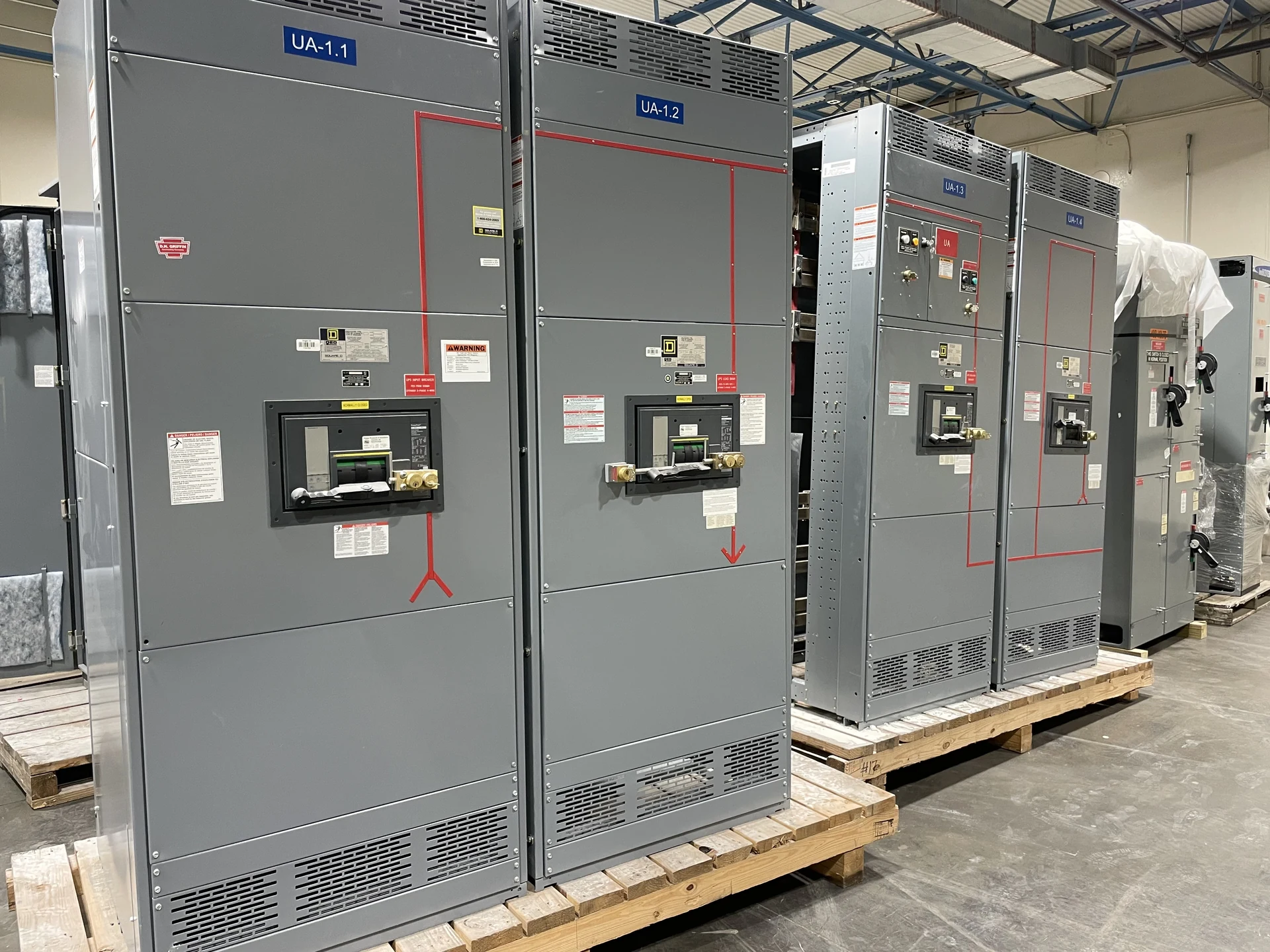
A hospital's electrical distribution design must support care while coordinating normal power, alternate sources and the equipment that transfers between them. A new switchgear or switchboard purchase is therefore more than a capacity decision. Facility owners and electrical engineers need an agreed picture of critical loads, source behavior, construction constraints and the responsibilities surrounding any interruption.
Map essential loads before selecting a lineup
Start with the current one-line diagram and a load schedule that identifies patient-care functions, life-safety loads, equipment systems and other building demands. The design team should determine how each circuit belongs within the facility's essential electrical system under the applicable requirements. Record present demand, anticipated additions, motor starting effects and the owner's assumptions about simultaneous operation.
An emergency source does not make every load interruption-free. Transfer equipment may introduce an interruption, while equipment requiring ride-through may need a separate, appropriately designed uninterruptible power system. Identify which clinical and support functions can tolerate transfer and which need additional continuity measures; the clinical team, engineer and authority having jurisdiction should resolve those requirements.
Define the normal and alternate source interfaces
Show the utility service, generators, transfer switches and any other sources on the design documents, including their connection points and operating states. Provide source characteristics, grounding arrangements, available fault current and planned generator control interfaces. The manufacturer can then assess the assembly against the information supplied rather than assume that an ordinary feeder arrangement meets the hospital's needs.
Specify which party supplies transfer equipment and who is responsible for start signals, source-available indications, alarms and communications. Decide whether transfer switches are separate from the distribution assembly or part of the proposed scope, subject to engineering review. Source arrangements and interlocks must address unintended parallel operation where the design does not permit it.
Balance protection and continuity
A protective device should clear a fault without unnecessarily disconnecting unaffected hospital loads. The specifying engineer should identify the required selective coordination, fault-current range and operating modes, including both normal and generator supply. Device selection and settings depend on the project study; a larger breaker or an advertised feature alone does not establish coordination.
Request proposed device information, interrupting ratings and assembly short-circuit ratings for review against the calculated duties. The engineer should also consider arc-flash study inputs and any project-specific risk-reduction provisions. Compare the serviceability and space demands of switchgear and switchboards with the owner's operating objectives rather than selecting solely on initial equipment cost.
Make the equipment fit the hospital
Provide room dimensions, access routes, floor loading, cable entry and required working clearances early. Feeder counts and conductor sizes influence termination space, while future circuits may require bus capacity as well as physical space. Room ventilation, ambient conditions and any environmental restrictions should be included in the design basis instead of resolved after the lineup is released.
When replacing a lineup with newly manufactured equipment, document existing connection locations and verify field dimensions. Shipping splits, lifting access and the space needed to move sections into an occupied facility can affect layout. The owner's contractor coordinates site measurements and installation; the equipment proposal should make field connections and any excluded work explicit.
Plan shutdowns around patient care
The owner should bring facilities, clinical leadership, the electrical contractor and the design engineer together before committing to an outage strategy. Map the affected loads and dependent systems, including medical equipment, network connections and building services. Decide whether temporary power, staged installation or an alternate clinical arrangement is needed, and evaluate the capacity and protection of any temporary source.
Document proposed outage windows, approvals, communications and a contingency plan if work cannot be completed as expected. Infection-control and access restrictions may affect both staging and the schedule. Qualified electrical personnel must plan and perform isolation, installation, testing and energization under site procedures and applicable requirements; the manufacturer supplies equipment information for that owner-led coordination.
Buy against documented scope and acceptance criteria
Send the manufacturer the one-line, load schedule, site constraints, required standards, target milestones and a list of deliverables. Request an itemized quotation identifying the equipment boundary, transfer and controls interfaces, deviations, proposed drawings and factory checks. For an appropriate switchboard, specify any required UL 891 listing and verify that the actual assembly and configuration carry the project-required listing.
Set review dates for submittals and allow time for component availability, approvals, fabrication, inspection and delivery without assuming a fixed lead time. Define factory test scope and witness requirements, then assign responsibility for field testing, protection settings and integrated source-transfer commissioning. At turnover, obtain approved drawings, manuals, test records and a clear list of outstanding items.
LET'S BUILD SOMETHING RELIABLE — 03
Ready to talk
switchgear?
Tell us about the new equipment your project needs. Include as much or as little detail as you have today.
(951) 403-5738CALL TO DISCUSS YOUR PROJECT