
BUILT IN THE USA. READY FOR YOUR PROJECT.
Buy Electrical Switchgear
Buying electrical switchgear directly from an American manufacturer starts with a defined electrical system, not a catalog label.
DIRECT FROM THE MANUFACTURER / NEW EQUIPMENT
THE MANUFACTURER’S PERSPECTIVE — 02
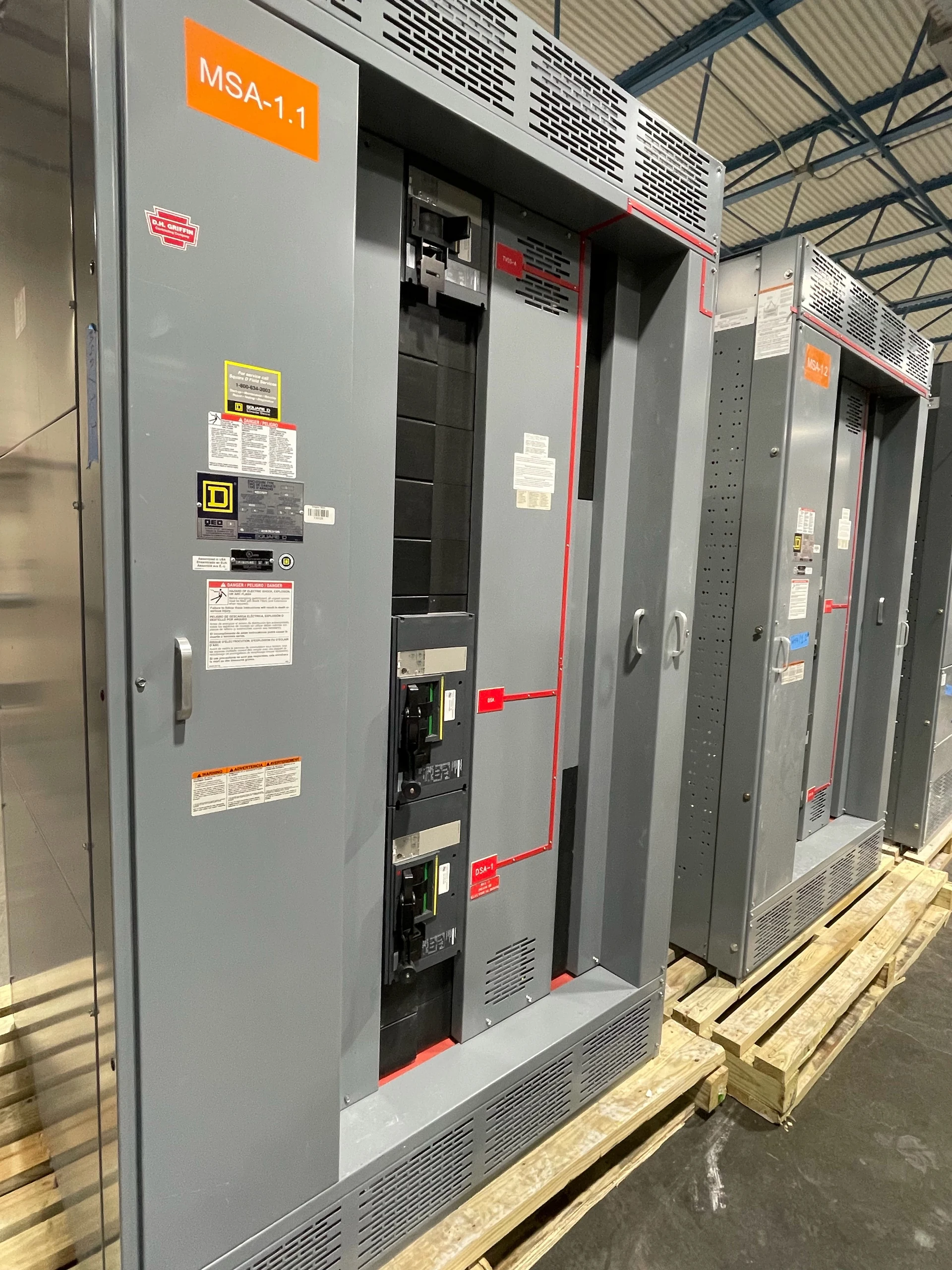
Buying electrical switchgear directly from an American manufacturer starts with a defined electrical system, not a catalog label. A useful purchase aligns the new assembly with the engineer’s design, the installation contractor’s constraints, and the owner’s operating priorities. For projects in San Antonio, South Texas, or elsewhere nationwide, that preparation makes quotations easier to compare and reduces late design changes.
Turn the electrical design into a purchase scope
Provide the manufacturer with the latest one-line diagram, load schedule, design specifications, and known utility requirements. Identify every power source, main and feeder device, destination, and expected future load. Mark unresolved information rather than presenting estimates as final. A clear revision date and a named technical contact help keep the quotation tied to the right design.
Explain the intended operating arrangement: for example, whether a facility needs independent sources, a tie, or provisions for later expansion. A spare installed feeder may cost more upfront than prepared space, but it can reduce future work; either choice still requires confirmation of capacity, protection, physical space, and the equipment’s approved configuration.
Separate continuous load from fault duty
The engineer should identify system voltage, phase and wire configuration, load currents, and the available fault current at the equipment connection. Continuous current capacity is not the same as short-circuit performance. Ask the manufacturer to evaluate the assembly, bus, and protective devices against the project’s specified duty rather than selecting equipment solely by a main breaker size.
Describe required protective functions, coordination objectives, control power, metering, and communications. If a utility connection is involved, obtain its service and metering criteria as early as possible. The applicable equipment standard depends on the assembly; where a switchboard calls for UL 891, confirm the specific listing and configuration instead of assuming that the standard covers every switchgear product.
Resolve the physical and field interfaces
Share the available room or outdoor location, access route, environmental exposure, and required clearances. Indicate cable entry direction, conductor material, size and quantity, and any transformer or busway connections. These details influence section width, termination space, enclosure features, and whether the lineup can be delivered as one piece or needs shipping splits.
Make the boundary between factory work and site work explicit. Identify who supplies the foundation, anchors, field conductors, interconnecting wiring, and reconnection of shipping sections. The contractor and design professionals should verify dimensions, access, structural requirements, and applicable working clearances; a drawing review cannot substitute for actual site conditions.
Compare quotations on an equivalent basis
Request an itemized scope with the proposed equipment arrangement, electrical characteristics, enclosure, major devices, drawings, inspection and test scope, freight assumptions, and exclusions. A lower initial quote may omit metering, control integration, witness testing, or field support that another proposal includes. Reconcile those differences before making a commercial comparison.
Ask for a written list of specification exceptions and the process for approving alternatives. If US-made components are required, specify the applicable origin criteria and evidence, then confirm sourcing and availability for the particular components. Review payment terms, warranty conditions, taxes, delivery responsibilities, and change-order treatment in the purchase agreement rather than assuming they are identical across suppliers.
Build a schedule around decisions, not assumptions
Agree on milestones for quotation, purchase order, submittal delivery, review, release for manufacturing, testing, and shipment. Component availability and the completeness of the design can affect the sequence. Ask which selections must be fixed before material is committed and how an owner-requested revision would affect cost and the proposed schedule.
Assign reviewers for the one-line, elevations, device schedule, control diagrams, and connection details. Return consolidated comments so conflicting instructions do not become a production issue. For a replacement project, the owner and contractor should plan outage windows and temporary service separately, using the manufacturer’s interface information without assuming a delivery date is guaranteed.
Define acceptance and the handoff
Specify which factory inspections and functional checks are required, whether the customer will witness them, the acceptance criteria, and how deficiencies will be resolved. Request the agreed test records, final drawings, equipment identification, and operation and maintenance documents. Clarify whether protection settings and system studies are included or remain the responsibility of the project engineer.
Before delivery, coordinate shipping splits, weights, lifting information, receiving access, and storage conditions. After installation, qualified electrical personnel must perform the site inspection, testing, and commissioning under applicable codes, site procedures, and manufacturer instructions. The owner should retain the final documentation and identify who authorizes energization and accepts the completed installation.
LET'S BUILD SOMETHING RELIABLE — 03
Ready to talk
switchgear?
Tell us about the new equipment your project needs. Include as much or as little detail as you have today.
(951) 403-5738CALL TO DISCUSS YOUR PROJECT