
BUILT IN THE USA. READY FOR YOUR PROJECT.
Metal-Clad Switchgear: New Equipment Replacement Planning
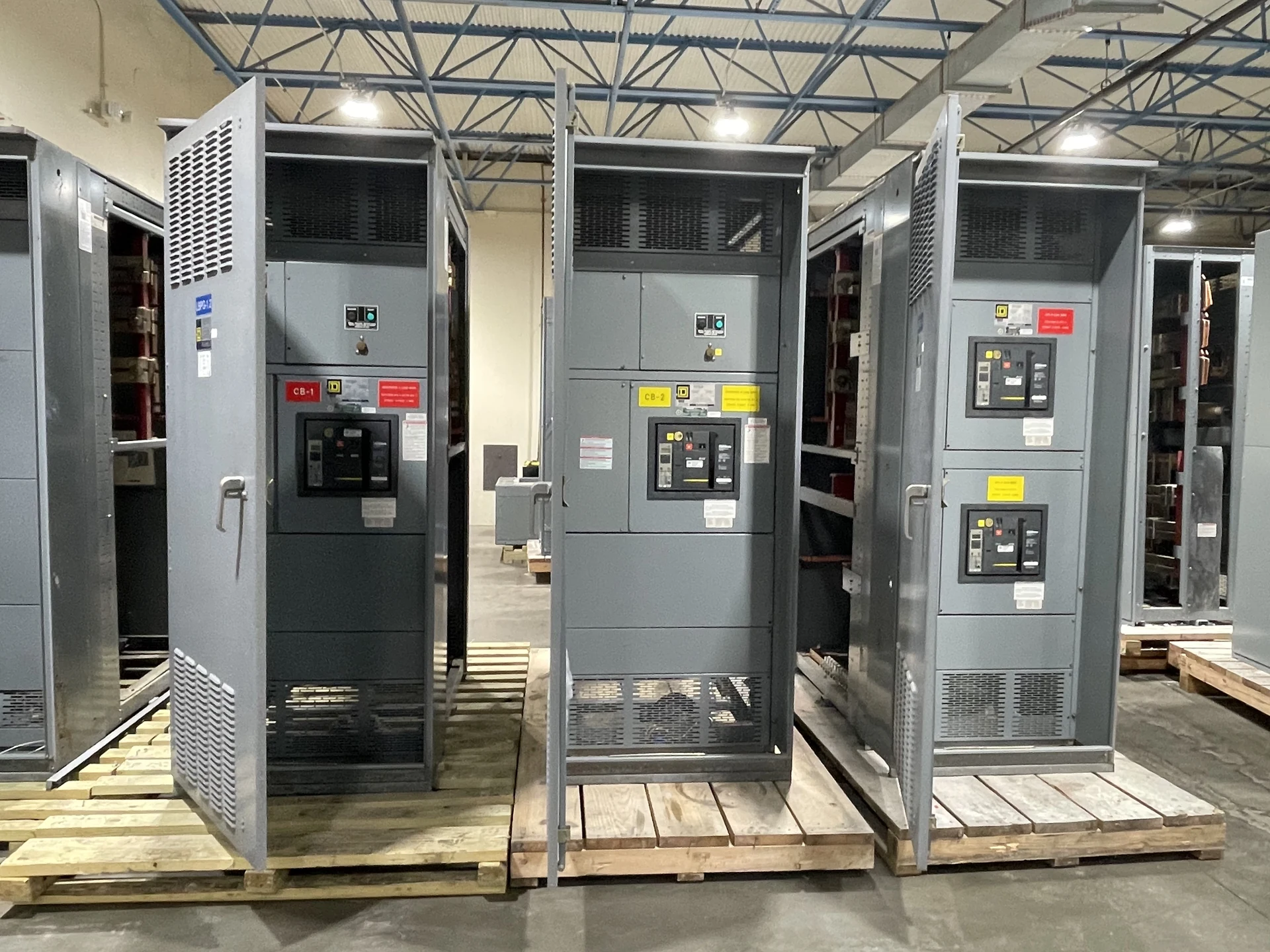
Replacing a metal-clad lineup is more than matching the number of existing breakers.
DIRECT FROM THE MANUFACTURER / NEW EQUIPMENT
THE MANUFACTURER’S PERSPECTIVE — 02
Replacing a metal-clad lineup is more than matching the number of existing breakers. The new medium-voltage assembly must fit the power system, the room and an outage plan that the owner can execute. For owners, engineers and contractors, the first task is to turn incomplete site information into a documented set of interfaces before committing to equipment.
Build a reliable existing-system baseline
Start with the latest available one-line, equipment drawings, nameplate data and feeder schedule. Compare them with owner records of modifications, operating constraints and expected load growth. A qualified survey should identify each source, tie and downstream circuit, including alternate supplies that could affect the planned outage. Record uncertainties rather than treating an old drawing as proof of current conditions.
Photographs and dimensions should capture lineup ends, cable entry locations, adjacent structures and the route into the room. The owner and engineer should confirm which existing cables, bus connections and controls must reach the replacement. Missing cable slack or an undocumented connection can change the required transition design, construction scope and shutdown duration.
Engineer the electrical duty, not just the footprint
The specification needs the actual system voltage and frequency, grounding arrangement, present and future load, available fault current and expected clearing times. The engineer can use these inputs to evaluate equipment voltage class, insulation, continuous current, interrupting capability and short-time withstand. Ratings must be confirmed for the proposed assembly and devices, not inferred from the equipment being replaced.
Metal-clad construction uses grounded metal barriers to separate major primary components; the proposed compartment arrangement and drawout features should be verified for the selected design. Identify applicable IEEE and project standards, required verification evidence and any listing or certification requirements. A familiar name or appearance alone does not establish interchangeability with the existing lineup.
Resolve space and connection geometry
A new lineup that fits between two walls may still lack space for cable bending, doors, breaker withdrawal or required electrical working clearances. Compare the manufacturer’s preliminary plan and elevations with the surveyed room, including ceiling obstructions, floor penetrations and access paths. The engineer and installer should also coordinate anchorage, structural loads and shipping-section assembly.
Document conductor sizes and quantities, termination types, phase arrangement and top or bottom entry for every incoming and outgoing circuit. Where a transformer throat or bus duct remains, provide its connection dimensions, support and tolerance information. A transition section may solve a mismatch, but it consumes space and adds engineering and field coordination.
Reconcile protection and control interfaces
Replacement can change the relationship between breakers, instrument transformers and protective relays. Supply the coordination and short-circuit study inputs, current and voltage transformer requirements, relay functions and any utility protection criteria. The responsible protection engineer must review settings and coordination against the new equipment and the wider system rather than simply copying existing values.
Map control power sources, trip circuits, interlocks, alarms and remote indications to a terminal and signal schedule. If the lineup communicates with a supervisory system, define protocols, point lists and ownership of configuration and testing. Agree on behavior during loss of control power and on any source-transfer permissives before drawings are approved.
Put the outage sequence under owner control
The owner should lead the shutdown plan with the utility, operations staff and installing contractor. Identify affected processes, permitted outage windows, prerequisites, decision points and a recovery or rollback plan. A phased cutover can preserve some loads, but temporary barriers, connections and separate work periods may increase design complexity and total schedule risk.
If continuity requires temporary power, have the project engineer assess source capacity, protection, grounding and connection arrangements before treating it as an option. Qualified electrical personnel must plan and perform isolation, verification, installation and commissioning under site procedures and applicable requirements. No schedule should depend on unverified access to energized compartments.
Purchase against an agreed scope and review schedule
Request a proposal for newly manufactured equipment with the one-line, interface drawings, room constraints, required standards, testing expectations and outage milestones. Ask the direct manufacturer to identify engineering assumptions, exceptions, components and any unconfirmed interfaces. Specify domestic component origin where required, but confirm actual sourcing and availability rather than assuming every part has a particular origin.
Compare quotations by scope as well as cost: equipment sections, shipping splits, documentation, factory tests, spares and field responsibilities may differ. Schedule review of drawings and component availability before releasing construction or finalizing outage dates. Require an agreed turnover package with final drawings, equipment instructions and test records, and assign responsibility for field tests and energization authorization.
LET'S BUILD SOMETHING RELIABLE — 03
Ready to talk
switchgear?
Tell us about the new equipment your project needs. Include as much or as little detail as you have today.
(951) 403-5738CALL TO DISCUSS YOUR PROJECT