
BUILT IN THE USA. READY FOR YOUR PROJECT.
Electrical Switchboards: Selection and Equipment Scope
An electrical switchboard brings service or feeder distribution into a coordinated assembly, but its usefulness depends on more than a headline ampere rating.
DIRECT FROM THE MANUFACTURER / NEW EQUIPMENT
THE MANUFACTURER’S PERSPECTIVE — 02
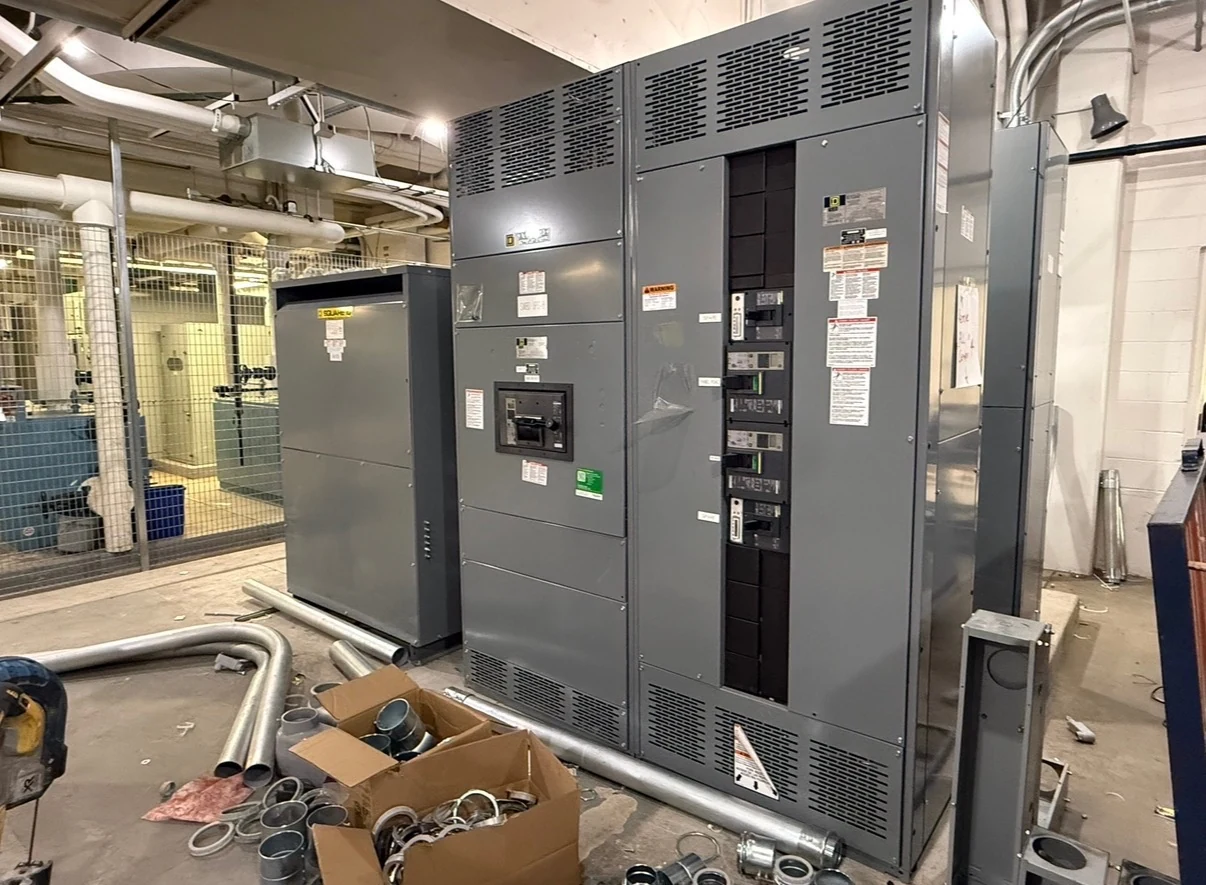
An electrical switchboard brings service or feeder distribution into a coordinated assembly, but its usefulness depends on more than a headline ampere rating. Owners, engineers and contractors need to define the sources, protective devices, outgoing circuits and physical interfaces before comparing proposals. A direct manufacturer of new distribution assemblies can develop a scope from those project requirements for work in San Antonio, South Texas or elsewhere nationwide.
Start with the distribution arrangement
Provide an up-to-date one-line diagram showing the supply, any transformer, the proposed main device and each feeder destination. Identify the nominal voltage, phases and wires, along with normal and alternate sources. If a generator or transfer switch is involved, show the intended connection and which party supplies the transfer equipment.
Decide whether the board is service equipment or downstream distribution. A service application brings utility and authority requirements into the design, including metering and disconnect arrangements where applicable. An ordinary feeder board may have different incoming protection and grounding interfaces; the engineer should not assume the two scopes are interchangeable.
Size the bus around actual loads and growth
A load schedule should distinguish present demand from connected load, identify large motors and nonlinear equipment, and show realistic future additions. The design team uses this information to establish main bus and feeder current requirements. Ambient conditions and enclosure characteristics can influence the assembly design, so a nominal current number alone is not a complete selection.
Future capacity has a physical dimension as well as an electrical one. A spare breaker, an equipped feeder space and a planned future section have different initial costs and expansion implications. Specify the desired option, expected feeder sizes and any capacity reserved on the bus; adding a circuit later still requires an engineering and compatibility review.
Match protection to the available fault duty
Obtain available fault-current information at the proposed installation point and provide relevant upstream source and protection data. The switchboard assembly short-circuit rating and the interrupting ratings of its protective devices must be evaluated for the application. Continuous-current sizing does not establish that the equipment can safely withstand or interrupt a fault.
Breaker trip functions and fused-switch choices affect coordination, replacement planning and cost. Ask the engineer to review time-current behavior against upstream and downstream devices across the relevant fault range. Where a series-rated combination is proposed, its recognized combination and applicability need verification; it should not be assumed to deliver selective coordination.
Choose a construction that supports the operating plan
Compare a switchboard with low-voltage switchgear on the basis of the project’s protective devices, construction, maintainability and applicable standards, rather than treating the names as interchangeable. Within a switchboard, device type, compartment arrangement and front or rear access affect footprint, service access and the work needed for future changes.
For an appropriate low-voltage switchboard, specify whether a UL 891 listing is required and confirm that the proposed assembly and options fall within the manufacturer’s project-specific listing. Also identify metering, surge protection, barriers and labeling requirements. Each option consumes space or adds interfaces, so its benefit should be weighed against complexity and procurement cost.
Resolve the site and utility interfaces early
Provide room or outdoor site dimensions, access paths and intended cable entry. Conductor quantity, size, material and termination arrangement influence lug selection, bending space and section layout. If busway is proposed, coordinate the connection location, phase arrangement, support responsibilities and tolerances with the adjoining equipment supplier.
State exposure to moisture, dust, heat or corrosive conditions and request an enclosure suitable for the documented environment. Coordinate working clearances, ventilation, foundation and anchorage with the design team. For service equipment, obtain the utility’s metering and service requirements early, including ownership and approval of the meter section and instrument transformer provisions.
Turn the scope into a comparable purchase
Request proposals against the same one-line, load schedule and specifications, and compare included devices, enclosure construction, ratings, listing requirements and stated exceptions. Define whether shop drawings, device schedules, installation instructions, factory inspection records and operation manuals are included. Component origin requirements, if any, should be stated and verified for the actual proposed items.
Set a schedule around drawing review, utility approval where needed, component availability, fabrication, shipping and site readiness rather than assuming a fixed lead time. Assign delivery, rigging, field connections, protective-device settings and acceptance testing explicitly. Installation, testing and energization belong to qualified personnel working under applicable codes, manufacturer instructions and the owner’s site safety procedures.
LET'S BUILD SOMETHING RELIABLE — 03
Ready to talk
switchgear?
Tell us about the new equipment your project needs. Include as much or as little detail as you have today.
(951) 403-5738CALL TO DISCUSS YOUR PROJECT