
BUILT IN THE USA. READY FOR YOUR PROJECT.
Electrical Panelboards
A panelboard brings power from a feeder into individual circuits serving lighting, receptacles, equipment and other loads.
DIRECT FROM THE MANUFACTURER / NEW EQUIPMENT
THE MANUFACTURER’S PERSPECTIVE — 02
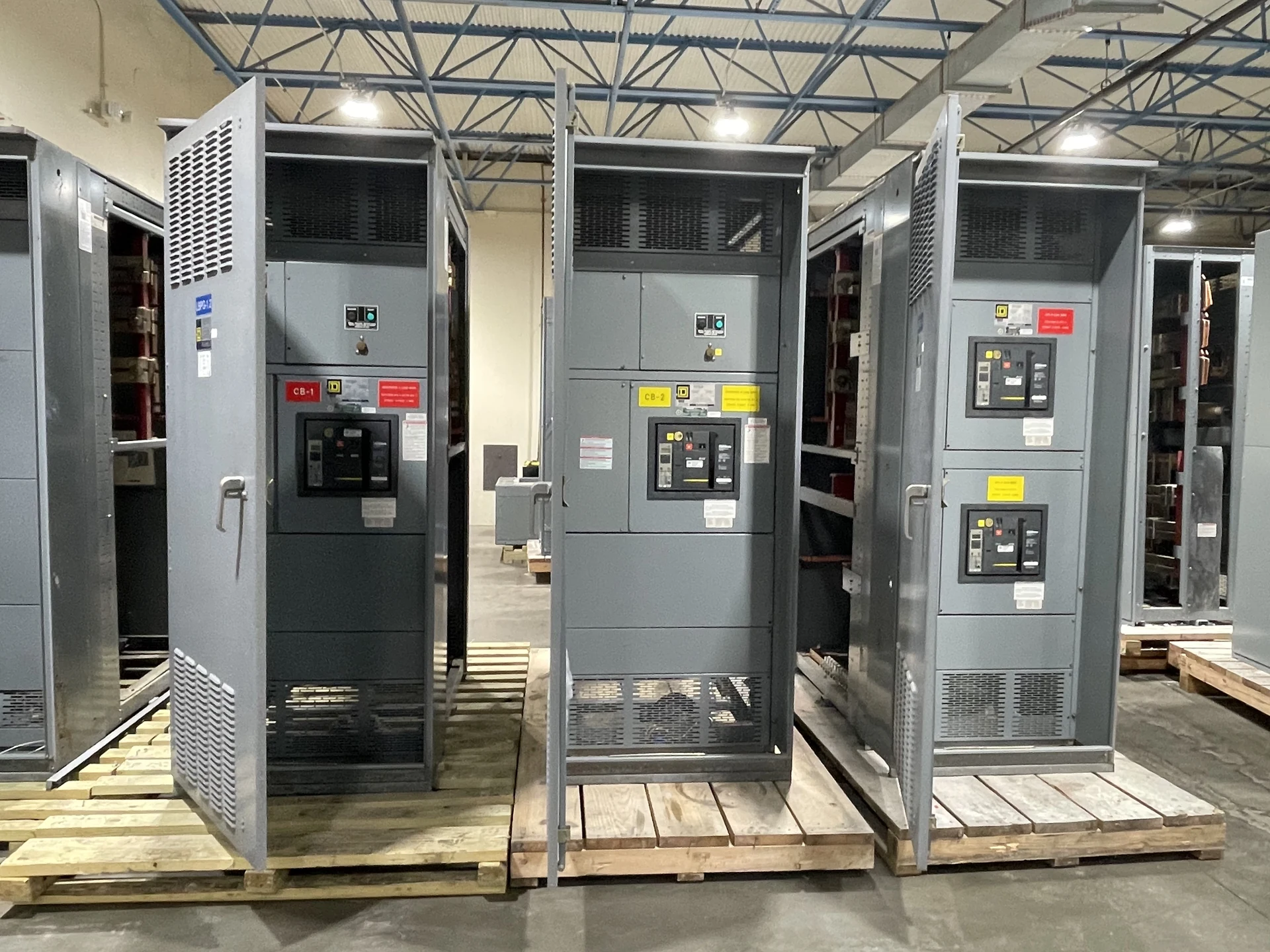
A panelboard brings power from a feeder into individual circuits serving lighting, receptacles, equipment and other loads. Selecting one involves more than counting breakers: the assembly must fit the electrical system, the available fault duty and the building. Engineers, contractors and owners can avoid purchasing surprises by resolving those interfaces before requesting a new panelboard.
Start with the feeder and load schedule
A switchboard or other upstream distribution assembly may supply several panelboards, each located near the loads it serves. The engineer should identify the source, nominal system voltage, phase and wire configuration, feeder protection and whether the panel needs a main device or will be protected upstream. The intended arrangement affects both space and equipment selection.
Provide a current one-line diagram and a circuit schedule showing load descriptions, poles, demand assumptions and planned additions. Continuous loads, motor starting and nonlinear equipment may affect conductor, neutral and protective-device decisions. A spare space in a cabinet is not proof that the feeder or bus has capacity for a future load.
Match protection to the whole system
The available short-circuit current at the panel location and the source characteristics matter when specifying the assembly and its protective devices. The engineer must check the panelboard short-circuit rating and breaker interrupting ratings against the calculated duty. A device rating alone does not establish the rating of the complete assembly.
Coordination with upstream protection can limit the extent of an outage, but should be evaluated across the relevant fault-current range rather than assumed from breaker sizes. If a series-rated combination is proposed, verify the permitted device combination and its conditions of use. Identify any ground-fault or arc-fault protection required by the applicable design and code.
Plan circuits, neutrals and future changes
Circuit count alone can conceal a layout problem: a three-pole load occupies different space from a single-pole circuit, and device types may have different physical requirements. Identify dedicated circuits, multi-pole loads, required breaker features and labeling conventions. A realistic schedule helps the manufacturer check the arrangement instead of leaving essential choices to installation.
Distinguish installed spare breakers from empty spaces reserved for future devices. Either choice has an initial cost, but both depend on verified bus capacity and compatible components when expansion occurs. Neutral sizing and termination quantities should reflect the actual load characteristics, including possible harmonic currents; grounding and bonding arrangements depend on the panel’s system location.
Fit the enclosure to the room
Share the intended mounting method, available wall area, enclosure environment and preferred cable-entry locations. Indoor and exposed locations can require different enclosure characteristics. Conduit routing, conductor sizes and quantities influence termination and bending space, so a cabinet that fits on a drawing may still be difficult to wire in the field.
The contractor and design team should check door swing, access to circuits and the working space required by the applicable code, as well as room ventilation and anticipated ambient conditions. Coordinate the enclosure finish and environmental protection with the actual site; do not assume a standard indoor cabinet is suitable for moisture or corrosive exposure.
Make the quotation comparable
A useful request identifies panel quantities, electrical characteristics, device schedules, enclosure details and the required project standards or equipment listing. Ask for confirmation of the applicable panelboard listing and its scope for the proposed assembly. Compare offers by reviewing included breakers, lugs, labeling, spare provisions and any exceptions, not just the headline amount.
As a direct American manufacturer of new electrical distribution assemblies serving San Antonio, South Texas and nationwide, the company can review a defined scope with the project team. Specify any domestic component-origin requirement separately and confirm sourcing and availability. Engineering approval, component availability and changes after submittal all influence the production schedule; agree on milestones rather than assuming a delivery date.
Set the installation and turnover boundaries
Request submittals showing a one-line, panel schedule, dimensions, mounting details, terminal provisions and ratings, with exceptions clearly identified. Agree on applicable factory inspection or testing, records and shipment details before ordering. The design team should reconcile the approved drawings with feeder routing and the equipment schedule before releasing the assembly for manufacture.
Define who receives and installs the panelboard, supplies field conductors, updates circuit directories and completes site acceptance checks. The owner and contractor should coordinate any outage around affected loads. Installation, testing and energization belong to qualified personnel following approved procedures, applicable codes and manufacturer instructions; final records should reflect the circuits actually connected.
LET'S BUILD SOMETHING RELIABLE — 03
Ready to talk
switchgear?
Tell us about the new equipment your project needs. Include as much or as little detail as you have today.
(951) 403-5738CALL TO DISCUSS YOUR PROJECT