
BUILT IN THE USA. READY FOR YOUR PROJECT.
Switchgear Quote Checklist
A useful switchgear quote starts with a defined electrical system and a clear division of responsibilities, not just a requested ampere rating.
DIRECT FROM THE MANUFACTURER / NEW EQUIPMENT
THE MANUFACTURER’S PERSPECTIVE — 02
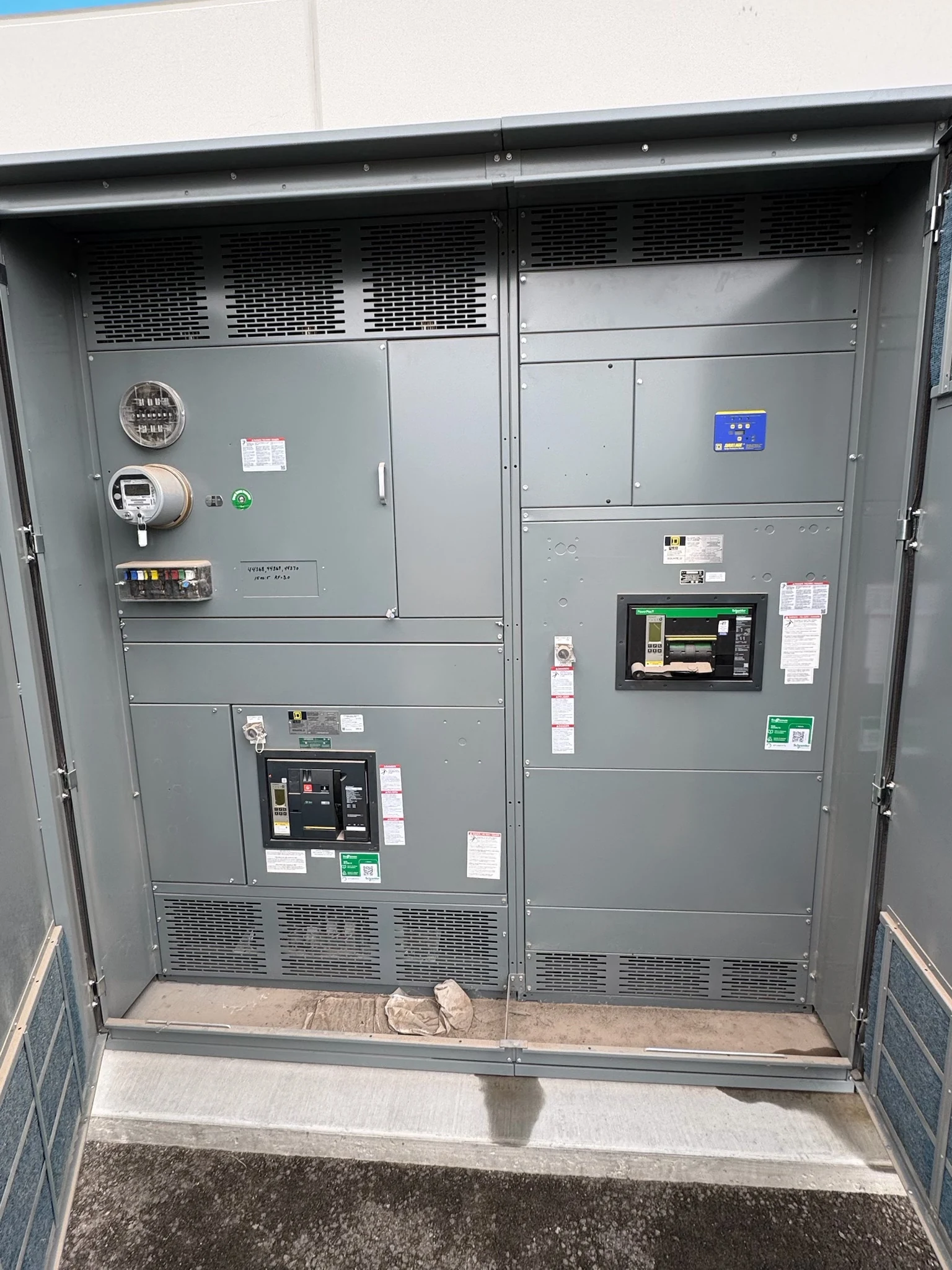
A useful switchgear quote starts with a defined electrical system and a clear division of responsibilities, not just a requested ampere rating. This checklist helps specifying engineers, contractors and facility owners prepare an inquiry for a new assembly. A direct manufacturer can then identify design assumptions, open questions and the information needed to turn a preliminary proposal into an actionable order.
Start with the system one-line
Send the latest one-line diagram with its revision date and show each source, transformer, main device, bus arrangement, tie and outgoing feeder. Label normal and alternate sources, intended operating states and major loads. If future sections or feeders matter, distinguish equipment needed now from capacity or space reserved for later.
Add a load schedule identifying demand assumptions, motor starting requirements and planned growth. Note the phase and wire configuration, grounding arrangement and service point. A sketch can start a discussion, but mark missing information and identify the engineer responsible for resolving it before the design is finalized.
Define ratings and protective requirements
State system voltage, frequency and required continuous current for each main bus and feeder, together with the number and size of conductors. Provide available fault-current information and the source, date and assumptions behind it. When utility data is pending, ask the manufacturer to identify the assumed duty and the consequence of changing it.
Describe protective device functions, metering and any selective-coordination objectives; distinguish an equipment rating from a breaker interrupting rating. Identify who will provide short-circuit, coordination and arc-flash studies and final protective settings. These analyses affect the design and cannot be replaced by an unsupported selection made solely from the load schedule.
Document the physical installation
Provide the equipment room or outdoor site plan, available footprint, ceiling height, access routes and required working space. Identify ambient conditions, ventilation, moisture, corrosive exposure and any specified enclosure characteristics. More compact construction may save floor area, but cable bending space, heat management and future maintenance access still need engineering review.
Show top or bottom cable entry, conductor quantities and sizes, termination preferences, ground and neutral requirements, and interfaces to transformers or busway. Include foundation, anchorage and seismic criteria when applicable. Ask for preliminary dimensions, shipping splits, weights and lifting information so the contractor can check delivery and placement before approval.
Identify utility and controls interfaces
For service equipment, provide the utility’s requirements for metering, service connections and approval, including any information still awaiting confirmation. Separate utility-owned devices from customer monitoring. Identify the party obtaining utility acceptance and the point at which that decision is needed to prevent a late change to the assembly.
Where the lineup connects to a generator, transfer system or building controls, describe required signals, operating sequences, interlocks and control-power sources. Supply a preliminary point list and communications protocol if remote monitoring is specified. Assign responsibility for network connections, programming and integrated field verification; the equipment interface alone does not establish the complete control sequence.
Set standards and scope boundaries
Name the applicable project specifications, codes and equipment standards, and flag owner or authority requirements for listing and labeling. UL 891 may be relevant to an appropriately specified switchboard; verify the proposed assembly’s actual listing and scope rather than assuming it applies to every type of switchgear. Identify any material or component-origin requirements for review.
Request a written scope that separates the manufactured assembly from site work. Clarify who supplies field cables, foundations, terminations, protective settings, installation, testing and commissioning. For a new lineup at an existing facility, document connection interfaces and assign the owner and contractor responsibility for outage planning and field conditions.
Compare deliverables and schedule assumptions
Ask for a proposal with a one-line, device and feeder schedule, drawing and test deliverables, stated exclusions and a list of deviations from the specification. Define any factory witness testing, acceptance criteria and records required. Compare quotations against the same scope: a lower initial quote may omit integration, documentation or verification another proposal includes.
Provide the requested delivery window, site readiness date and desired drawing-review milestones. Ask which dates depend on approved submittals, utility decisions, component availability or scope changes, rather than treating an estimate as a guarantee. Agree on how revisions affect price and schedule, and reserve installation and energization for qualified personnel under the site’s safety procedures.
LET'S BUILD SOMETHING RELIABLE — 03
Ready to talk
switchgear?
Tell us about the new equipment your project needs. Include as much or as little detail as you have today.
(951) 403-5738CALL TO DISCUSS YOUR PROJECT