
BUILT IN THE USA. READY FOR YOUR PROJECT.
3,000-Amp Switchgear
A 3,000-amp switchgear request identifies a current class, not a complete equipment specification.
DIRECT FROM THE MANUFACTURER / NEW EQUIPMENT
THE MANUFACTURER’S PERSPECTIVE — 02
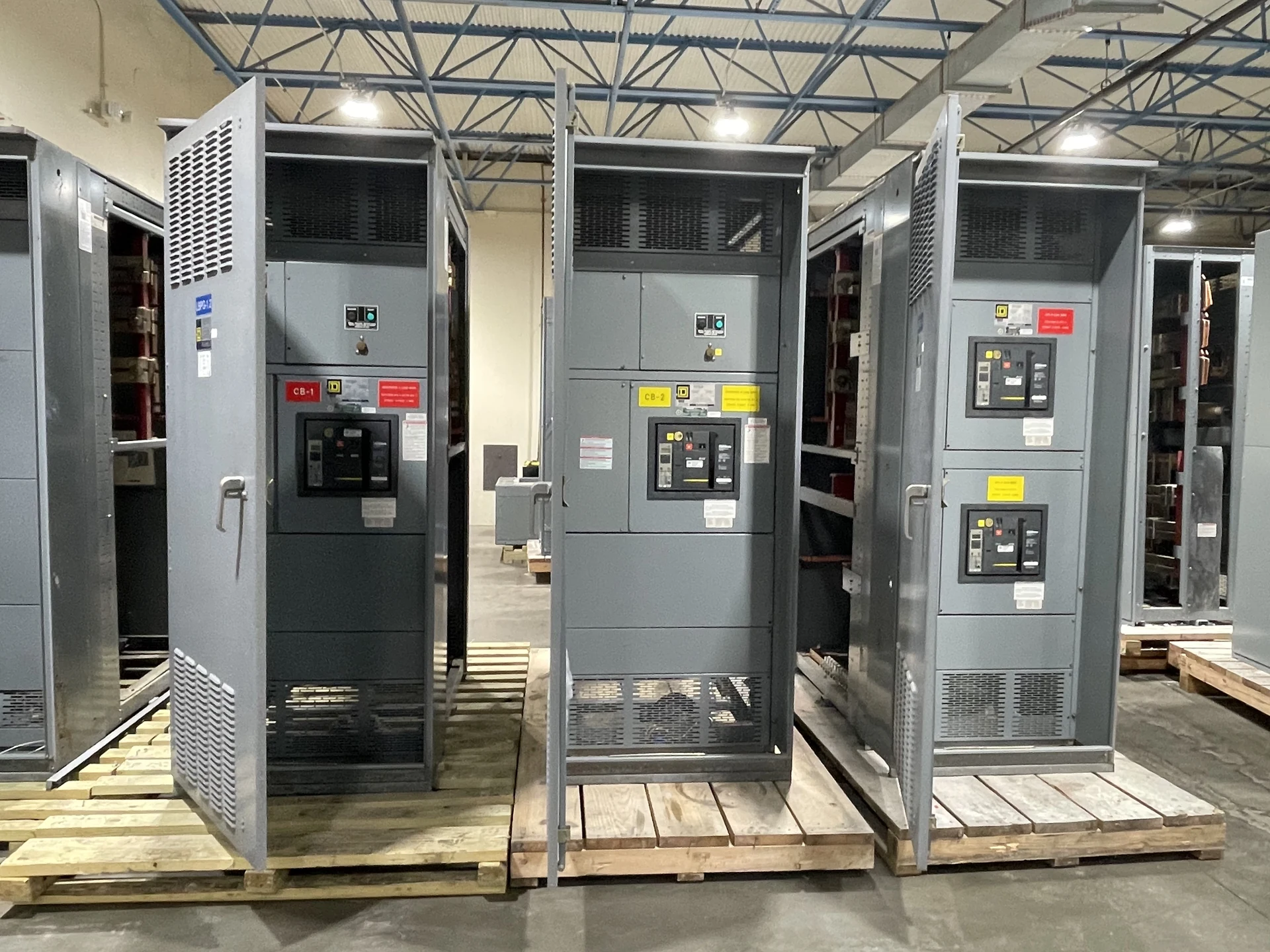
A 3,000-amp switchgear request identifies a current class, not a complete equipment specification. The source, calculated demand, available fault current and physical installation all influence whether a particular new assembly is suitable. Facility owners, engineers and contractors in San Antonio, South Texas and nationwide can obtain a more useful proposal by defining those conditions before choosing a lineup.
Start with demand, not the number on the bus
Provide a current one-line diagram and a load schedule showing connected loads, calculated demand, operating patterns and planned additions. A facility with large motors may need its starting and simultaneous operating conditions reviewed separately from its normal demand. The engineer should also identify multiple sources and any limits on how those sources may operate together.
A 3,000-amp main bus does not make every feeder, main device or connection suitable for that current. Each element needs its own rating and application review. Ambient conditions, ventilation, harmonic-producing loads and the assembly design can affect the usable configuration; reserve capacity should be based on documented growth rather than an arbitrary margin.
Select the assembly and confirm its actual ratings
Explain whether the specification calls for power circuit breaker switchgear or a switchboard, and why: maintenance strategy, protective functions, available space and budget may favor different construction. The term switchgear is often used broadly in purchasing, but the equipment type and applicable standards should be resolved before comparing quotations.
Ask the manufacturer to confirm whether a suitable 3,000-amp configuration is available and identify its rated voltage, continuous current and short-circuit ratings. If the requested arrangement is not available, an alternative current class may be proposed for engineering approval. A larger nominal bus alone does not validate the service, devices, cables or associated installation.
Treat fault duty and protection as separate decisions
A high continuous-current rating does not establish the assembly’s ability to withstand a fault or a breaker’s ability to interrupt it. Supply the utility and system data needed for a short-circuit study, including transformer characteristics, source contributions and the possible operating arrangements. Ratings must be checked at the equipment location, not assumed from a different point in the system.
Describe the protective devices, trip functions and coordination objectives, including any required ground-fault protection and alternate-source arrangements. Where short-time withstand is relevant, its time basis must be compatible with the protection scheme. The responsible engineer should determine settings and study requirements; the equipment proposal should distinguish those services from factory-supplied devices.
Make the 3,000-amp connections fit the room
Large incoming and outgoing circuits can drive enclosure width, cable space and shipping splits. Identify conductor material, quantities and sizes, top or bottom entry, terminal preferences and any busway or transformer connection. Have the design team verify termination capability, bending space and the interface with adjacent equipment rather than relying on the current label alone.
Share room dimensions, door and route restrictions, working and maintenance clearance requirements, and floor or foundation constraints. State whether the installation is indoors or outdoors and describe heat, moisture, dust or corrosion exposure. The contractor and structural team should review weights, lifting arrangements, anchorage and delivery access against the proposed drawings.
Define metering, neutral and control interfaces
Document phase and wire configuration, neutral and ground requirements, and the loads that may influence neutral sizing. For service equipment, obtain the utility’s metering, termination and approval requirements early. A revenue-metering compartment and customer power-monitoring equipment may have different ownership and interface requirements; distinguish them in the request.
If the lineup interfaces with a generator, transfer equipment or a building control system, provide the intended operating states, interlocks, control-power source and signal list. Specify who supplies external wiring, networking and programming. These details influence device selection and testing, and late changes can alter the enclosure layout and project schedule.
Compare complete proposals and plan the handoff
Request a one-line, elevations, equipment ratings, device schedule, connection details, scope exclusions and a list of proposed deviations. For an appropriate switchboard, identify any required UL 891 listing and verify that the proposed assembly and configuration carry the project-specific listing. For other equipment types, confirm the applicable standard and required evidence separately.
Agree on submittal review dates, component approvals, inspection or witness testing, shipping splits and required test records before releasing the order. Define who handles unloading, installation, field testing, protection settings and commissioning. Schedule site outages and energization through the owner and qualified electrical personnel under applicable procedures; the manufacturer’s delivery scope should not be confused with field authorization.
LET'S BUILD SOMETHING RELIABLE — 03
Ready to talk
switchgear?
Tell us about the new equipment your project needs. Include as much or as little detail as you have today.
(951) 403-5738CALL TO DISCUSS YOUR PROJECT