
BUILT IN THE USA. READY FOR YOUR PROJECT.
1,000-Amp Switchgear
A 1,000-amp switchgear request starts a conversation about distribution capacity, not a finished equipment specification.
DIRECT FROM THE MANUFACTURER / NEW EQUIPMENT
THE MANUFACTURER’S PERSPECTIVE — 02
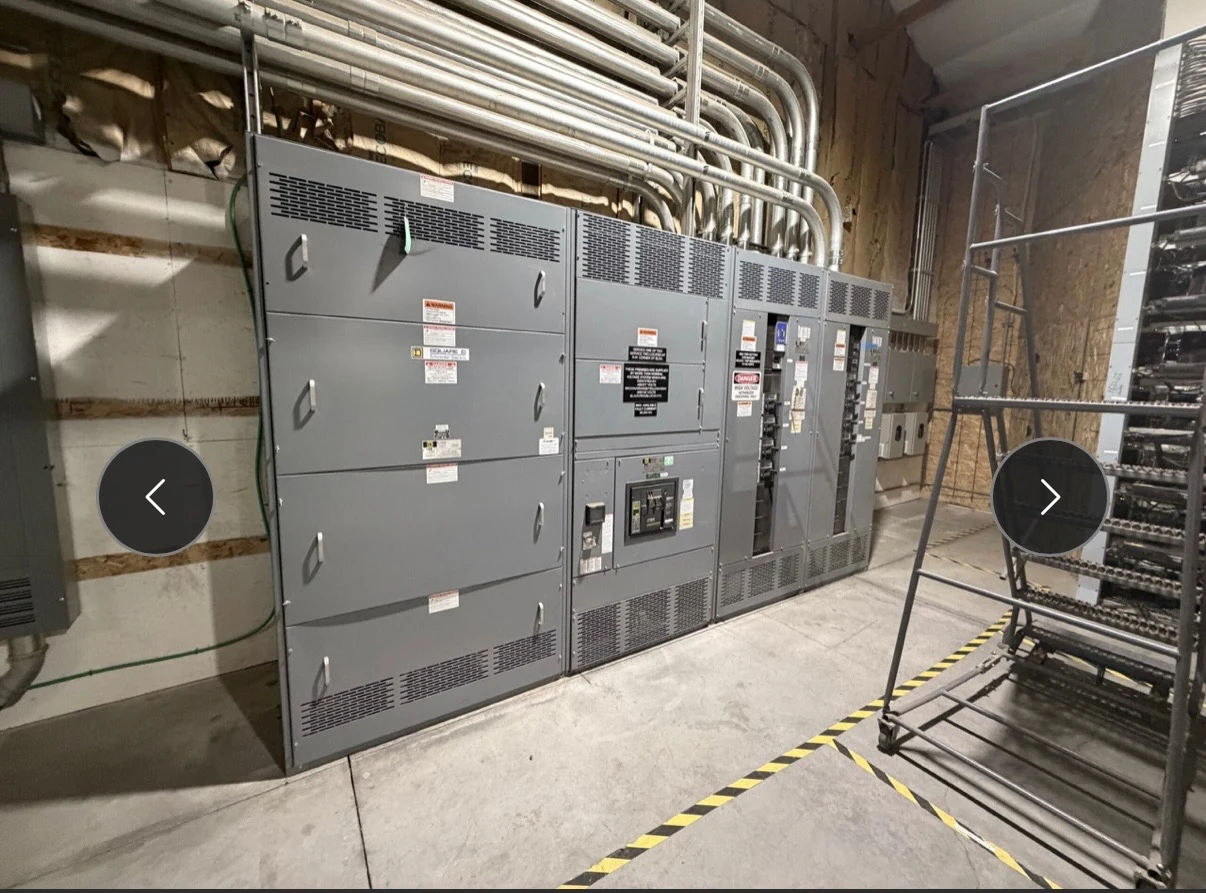
A 1,000-amp switchgear request starts a conversation about distribution capacity, not a finished equipment specification. A facility owner may need a new service lineup, a feeder distribution assembly, or a new assembly for a planned facility upgrade. The direct manufacturing process begins by defining the system and checking whether the proposed construction and actual ratings fit the project.
Translate the current target into a load plan
Provide a current one-line diagram and a load schedule showing present demand, planned additions, major motors, and other significant loads. Identify which loads operate together and which are expected to run continuously. The engineer uses the applicable design method and project data to assess capacity; adding every nameplate value is not necessarily the same as calculating demand.
The requested 1,000-amp class does not by itself establish the continuous current rating of the main bus, incoming device, or each feeder. Ambient conditions, enclosure construction, conductor terminations, and applicable requirements affect the complete design. Ask for the proposed ratings and any conditions or limitations in the submittal rather than assuming a single number applies everywhere.
Choose the assembly around the service
Describe the system voltage, phase and wire configuration, grounding arrangement, and whether the lineup is service equipment or downstream distribution. Identify each source, including a generator or another utility feed, and the intended operating arrangements. A 1,000-amp current designation does not establish the voltage class or the suitability of a particular product.
A switchboard and power circuit breaker switchgear can serve different design priorities. Compare protection, maintenance access, physical size, and the applicable assembly standard with the specifying engineer. If a low-voltage switchboard is appropriate and UL 891 is required, confirm the proposed assembly’s project-specific listing and scope; do not treat that standard as a universal switchgear designation.
Resolve fault duty and protection early
Supply the available fault-current information at the proposed connection point, including utility and upstream equipment data as available, and identify alternate source contributions. The engineering review must consider both the assembly’s short-circuit duty and the interrupting capabilities of its protective devices. A 1,000-amp continuous-current target says nothing conclusive about either fault rating.
Request the desired main and feeder protective functions, metering, and coordination objectives. For a facility that cannot tolerate a broad outage from a feeder fault, the engineer can compare device time-current characteristics across the expected fault range. Selectivity depends on the actual devices, settings, and study results; it should not be assumed from an arrangement alone.
Fit the lineup to real connections
Give the manufacturer room dimensions, access restrictions, indoor or outdoor exposure, ambient conditions, and the intended cable or busway entry. Include conductor sizes and quantities, termination material, grounding and neutral needs, and any utility metering interface. The connection arrangement can determine section width and cable space even when the main current target remains unchanged.
Coordinate working and maintenance clearances, ventilation, door swing, the route from delivery vehicle to final position, and structural support with the project team. Shipping sections may make access easier but introduce field assembly interfaces. The contractor and engineer should review proposed dimensions, weights, lifting provisions, and connection responsibilities before approving the layout.
Compare quotes by scope, not amperage
Request a proposal for new equipment directly from the manufacturer, with the one-line, feeder schedule, environment, standards, desired testing, and drawings attached. Ask for a device and feeder schedule, ratings, enclosure description, stated exceptions, and a list of customer-furnished interfaces. Confirm the availability and actual ratings of the proposed design before making comparisons.
A spare feeder device costs more initially than an empty prepared space, but it may shorten a later expansion if the bus, physical space, and protection scheme also support it. Ask how each option affects the scope. If US-made components are specified, identify the required items and documentation; sourcing and availability must be confirmed.
Plan reviews, delivery, and safe handoff
Agree on milestones for proposal review, drawing approval, release of components, fabrication, inspection, and shipment. Device availability, revisions, and outstanding utility decisions can change the schedule, so obtain an updated project-specific plan rather than relying on an assumed lead time. For an occupied facility, align delivery and installation with the owner’s outage planning.
Specify the required submittals, inspection and test records, final drawings, equipment instructions, and any factory witness arrangements. Define who provides field connections, protection settings, commissioning, and energization authorization. Qualified personnel must perform electrical work under applicable codes, site safety procedures, and manufacturer instructions; the finished documentation should support that team’s independent review.
LET'S BUILD SOMETHING RELIABLE — 03
Ready to talk
switchgear?
Tell us about the new equipment your project needs. Include as much or as little detail as you have today.
(951) 403-5738CALL TO DISCUSS YOUR PROJECT