
BUILT IN THE USA. READY FOR YOUR PROJECT.
About Our Manufacturing Approach
A useful switchgear purchase starts with a shared understanding of the electrical system and the boundaries of the order.
DIRECT FROM THE MANUFACTURER / NEW EQUIPMENT
THE MANUFACTURER’S PERSPECTIVE — 02
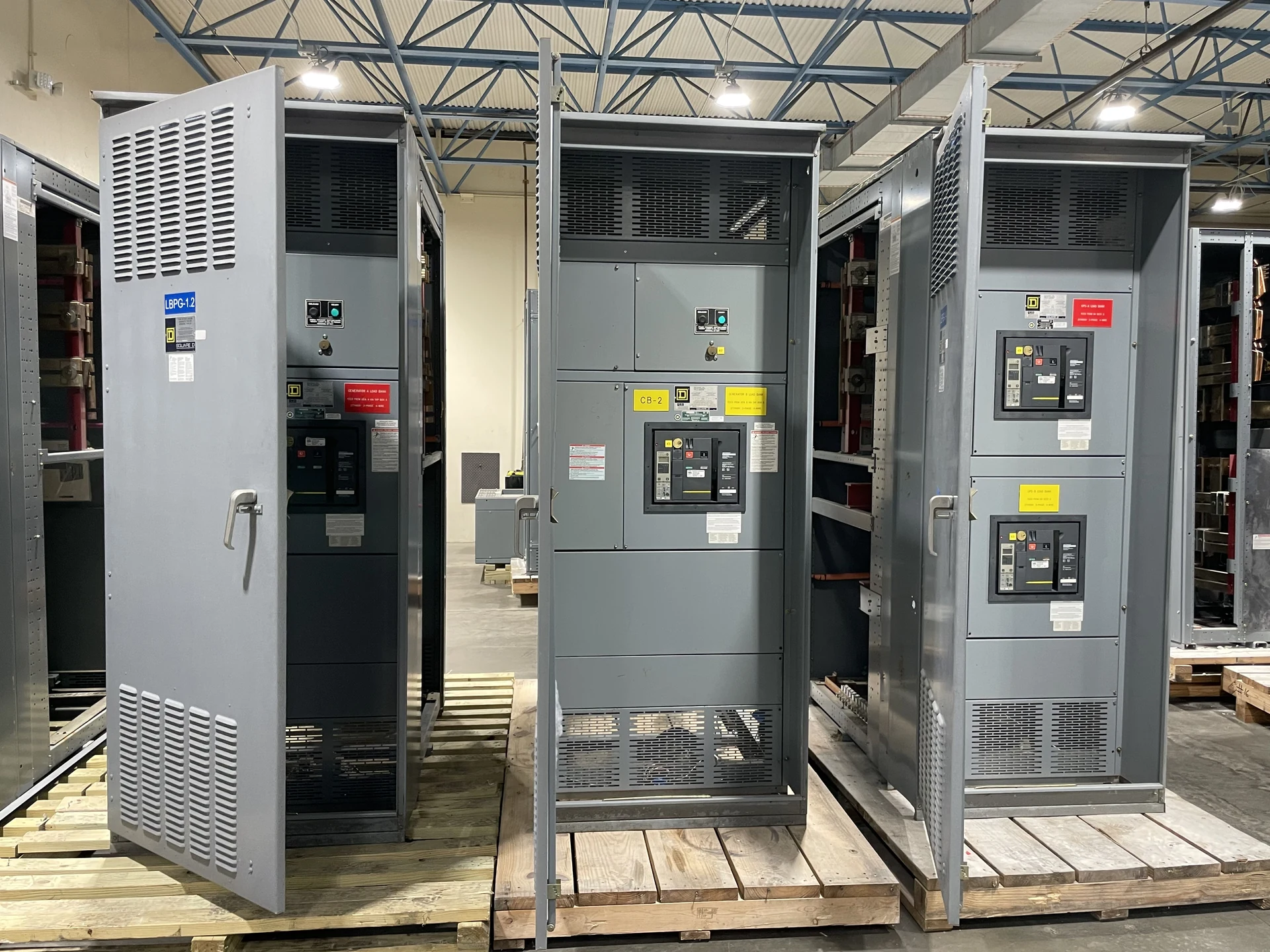
A useful switchgear purchase starts with a shared understanding of the electrical system and the boundaries of the order. As a direct American manufacturer of new switchgear and power-distribution assemblies, we coordinate the proposed equipment around project requirements for customers in San Antonio, South Texas and nationwide. That coordination helps owners, engineers and contractors identify decisions before they become costly changes.
A direct route from requirements to an assembly
Working directly with the manufacturer gives the purchasing team a path to discuss construction, components and documentation together. A quotation should describe the assembly being proposed, the information it depends on and any exceptions to the specification. This makes differences between bids visible instead of leaving the buyer to compare descriptions that may cover very different scopes.
The manufacturer’s equipment design does not replace the project engineer’s system design or the contractor’s installation planning. Establish who supplies the system studies, utility approvals, foundation, field wiring and commissioning. Clear boundaries matter particularly when an assembly connects to equipment or controls furnished under a separate contract.
Start engineering with the system, not a catalog label
A current one-line diagram and load schedule show sources, distribution paths, protective devices and feeder destinations. Add nominal system voltage, phase and wire configuration, expected loads and available fault-current information at the proposed connection. Where data is preliminary, identify its source and the date a final value is expected.
The engineering review can then evaluate the required equipment voltage class, continuous current, short-circuit duty and protective-device functions against the proposed assembly. A higher capacity or additional feeder space may support future growth, but can affect footprint and cost. The design team should define a realistic expansion case rather than assume spare space alone provides electrical capacity.
Resolve physical and control interfaces early
Room dimensions are only a starting point. Share the delivery route, required working and maintenance clearances, cable entry direction, conductor quantities and sizes, and any shipping-split restrictions. Outdoor applications also require a defined exposure and enclosure requirements. These details influence section arrangement, termination space and access for future inspection.
For metering, transfer or remote monitoring, provide the intended functions, control-power source, interface points and responsibility for external wiring. Utility metering requirements and approvals should be coordinated with the utility by the appropriate project parties. A point list and interface drawings can expose an omitted signal or incompatible connection before assembly begins.
Specify component origin with evidence
If US-made components are important, identify the requirement in the inquiry rather than treating it as an assumption. Define whether it applies to selected devices, fabricated parts or another stated scope, and specify the documentation needed to substantiate origin. Country of manufacture, assembly location and contractual domestic-content rules are not necessarily interchangeable.
Component selection also depends on electrical duty, compatibility and availability. Request an itemized component schedule and a process for reviewing proposed alternatives when an origin or other requirement cannot be met as written. Confirm sourcing and supporting documentation for the actual order; a general sourcing preference does not establish the origin of every part.
Connect fabrication, inspection and listing requirements
Approved drawings translate the agreed design into an enclosure, bus arrangement, protective devices and control wiring. Define the inspection and test scope in the purchase documents, including any witness requirements, acceptance criteria and records. Visual checks, wiring verification and functional checks may be appropriate, depending on the equipment and the agreed project scope.
Applicable standards depend on the type of assembly and the project specification. UL 891 can be relevant to an appropriate low-voltage switchboard, but it is not a blanket designation for all switchgear. When a listing is required, verify the specific assembly, construction and labeling with the manufacturer and the project’s approving parties.
Plan approvals, delivery and turnover together
A practical schedule identifies when drawings will be submitted, who will review them, when comments are due and how design changes are authorized. Component availability, unresolved utility requirements and late revisions can affect the sequence. Request a project-specific schedule and update it as decisions are confirmed, rather than relying on an unqualified delivery promise.
Before shipment, agree on lifting and shipping information, field connection responsibilities, manuals and test records. At turnover, the owner’s qualified personnel and contractors should use the approved documents, applicable codes, site procedures and manufacturer instructions to plan installation, verification and energization. Final settings and field acceptance remain with the responsible project parties unless the contract states otherwise.
LET'S BUILD SOMETHING RELIABLE — 03
Ready to talk
switchgear?
Tell us about the new equipment your project needs. Include as much or as little detail as you have today.
(951) 403-5738CALL TO DISCUSS YOUR PROJECT