
BUILT IN THE USA. READY FOR YOUR PROJECT.
Service Entrance Switchgear for Wastewater Facilities
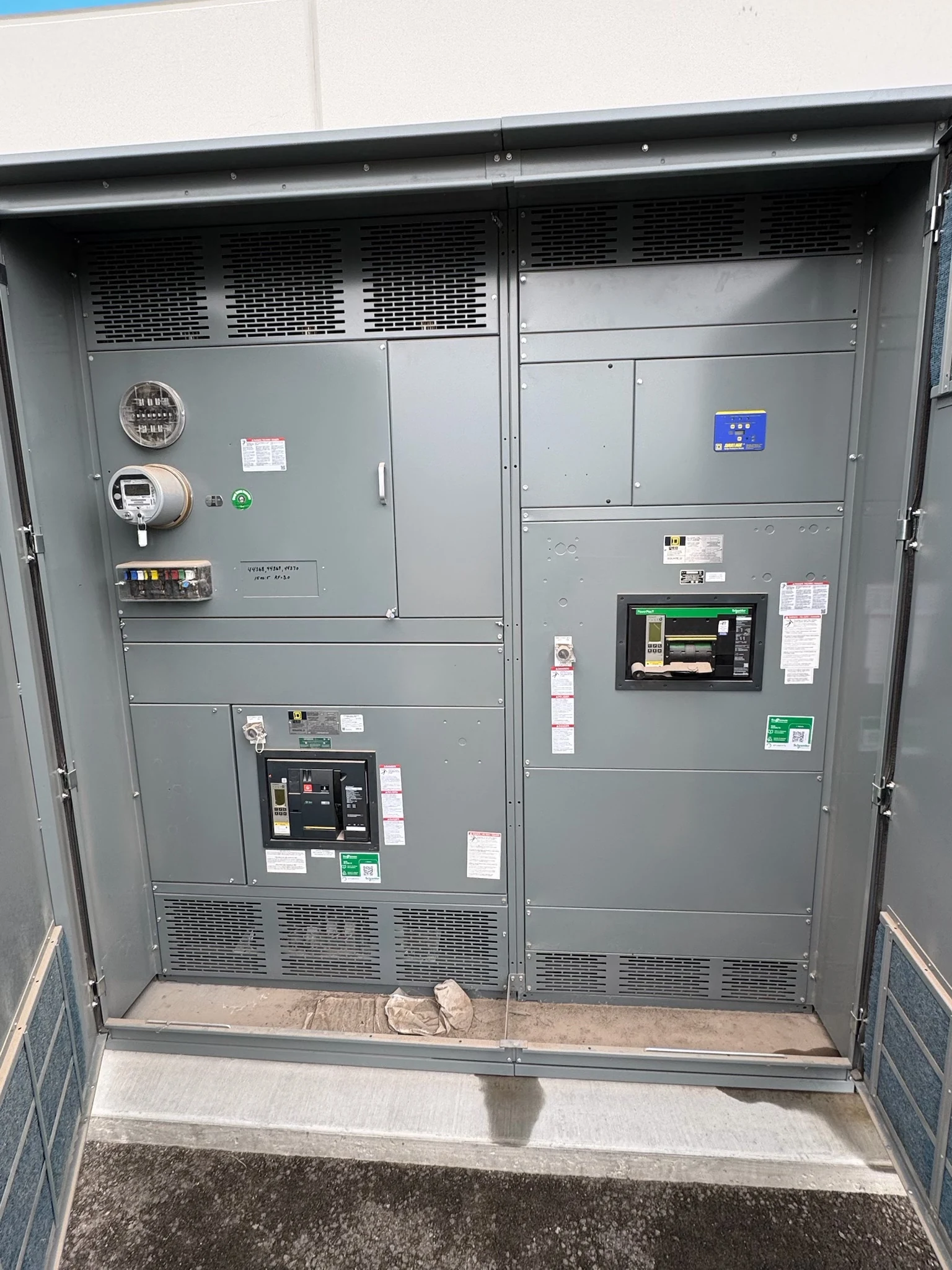
A wastewater facility’s service entrance is the connection between utility supply and the distribution system supporting treatment.
DIRECT FROM THE MANUFACTURER / NEW EQUIPMENT
THE MANUFACTURER’S PERSPECTIVE — 02
A wastewater facility’s service entrance is the connection between utility supply and the distribution system supporting treatment. A disruption can affect pumping, aeration and process controls at once. For owners and specifying engineers, a new assembly must fit the utility interface, the plant’s electrical loads and an environment that can be hard on electrical equipment.
Define the service boundary with the utility
Start with the utility’s proposed service characteristics, available fault current, metering requirements and transformer connection. Identify who supplies the meter, instrument transformers and associated compartments, and obtain the utility’s approval requirements. The engineer can then distinguish the utility’s equipment from the customer’s service disconnect and distribution responsibilities.
The one-line should show the system voltage, phases, conductors, grounding arrangement and every intended source. Equipment continuous-current and short-circuit duties must be evaluated against the actual service data. If generator power or a second source is planned, define the transfer interface and any restrictions on paralleling rather than assuming the entrance assembly handles them.
Account for treatment loads and protection
List influent pumps, blowers, sludge-handling equipment, disinfection and control loads by feeder. Provide motor sizes, starting methods, duty cycles and planned variable-frequency drives. Starting demand and process sequencing can affect source capacity and voltage performance; a motor control center may handle individual motors downstream while the service assembly distributes and protects its supply.
Ask the project engineer to assess available fault current and coordinate protective devices with downstream equipment. A device that interrupts the calculated fault is not automatically selective with every feeder. Protection choices should consider which process interruptions the plant can tolerate and the study’s findings, not a blanket promise that every fault remains confined to one circuit.
Plan spare feeders as an engineered allowance
Wastewater plants often add pumping or treatment capacity in stages. A spare breaker can provide a defined future feeder position, while reserved space may defer device expense but still require a compatible addition later. Either choice needs an identified destination, expected load and cable route; an empty compartment alone does not establish available electrical capacity.
Record the bus capacity, spare device duty, termination space and any provisions for monitoring that the owner expects. Have the engineer review future demand, fault duty and coordination before the spare is committed to a new load. Confirm the scope and compatibility of any future addition with the assembly manufacturer and applicable approval authorities.
Balance corrosion resistance, cooling and access
Describe the equipment location relative to wet process areas, chemical storage and corrosive gases, as well as washdown, humidity and salt exposure where relevant. The specifying team can evaluate enclosure construction, coatings, fasteners and the room environment against those conditions. Identify any area classification or special enclosure requirements instead of assuming a general outdoor enclosure addresses chemical exposure.
More environmental protection can complicate heat removal and condensation control. Coordinate equipment heat losses and allowable ambient conditions with the room ventilation design, and define any heaters or other provisions as project-specific items. For outdoor equipment, civil plans should address flooding exposure, drainage, foundation and access without locating working areas where water or process activity routinely interferes.
Buy to a complete physical and electrical scope
Give the direct manufacturer a current one-line, load schedule, utility criteria, site dimensions and a proposed equipment location. Show incoming and outgoing cable quantities, conductor sizes, entry directions and termination responsibilities. Review door swings, meter access, applicable working clearances and the path for delivery; limited space can change lineup arrangement or require shipping sections.
Request a quotation identifying devices, enclosure features, metering interfaces, drawings, inspection and test scope, shipping splits and exclusions. Specify component-origin requirements if relevant, and verify availability. If a switchboard is proposed, identify whether a project-specific UL 891 listing is required and verify the proposed assembly’s listing; other equipment types require their own applicable standards and approvals.
Coordinate reviews, outage planning and turnover
Schedule utility review, design submittals, component procurement, manufacturing, inspection and delivery as linked milestones. Allow time for drawing comments and resolve changes before release, because metering revisions or feeder changes can alter construction. Agree who provides the foundation, field cables, protection settings, installation, testing and utility coordination so that a quoted assembly is not mistaken for a complete site project.
For an operating plant, the owner and contractor should coordinate outage windows with operations and the utility, including any engineered temporary supply and transfer arrangements. Qualified electrical personnel perform installation, testing and energization under applicable site procedures. At turnover, collect approved drawings, identification schedules, test records and manuals so future maintenance and expansion start from documented information.
LET'S BUILD SOMETHING RELIABLE — 03
Ready to talk
switchgear?
Tell us about the new equipment your project needs. Include as much or as little detail as you have today.
(951) 403-5738CALL TO DISCUSS YOUR PROJECT