
BUILT IN THE USA. READY FOR YOUR PROJECT.
Electrical Panelboards for Wastewater Facilities
Wastewater facilities depend on distributed power for treatment equipment, instruments, lighting and support spaces.
DIRECT FROM THE MANUFACTURER / NEW EQUIPMENT
THE MANUFACTURER’S PERSPECTIVE — 02
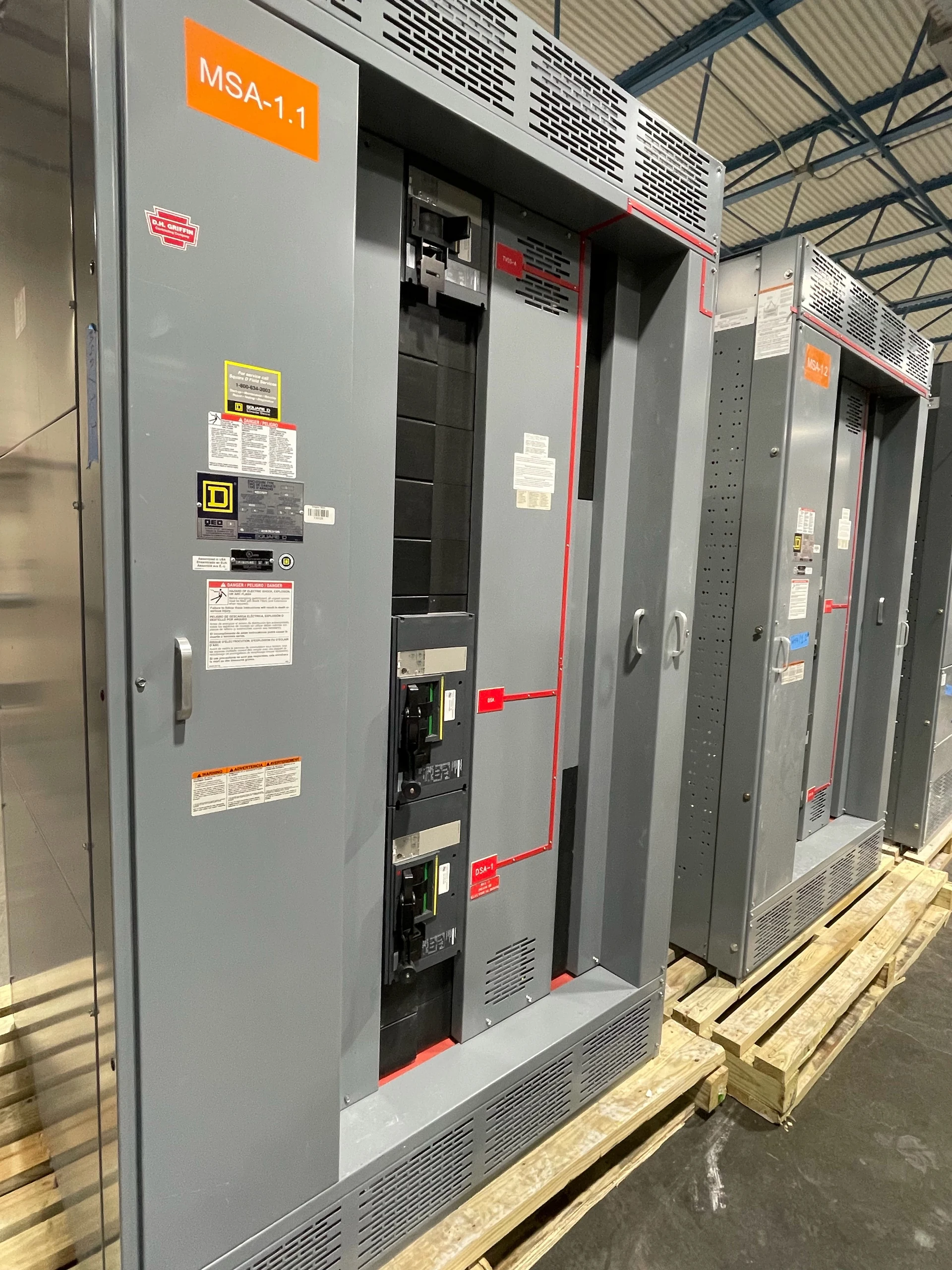
Wastewater facilities depend on distributed power for treatment equipment, instruments, lighting and support spaces. A panelboard should fit those loads and the conditions at its actual location, not merely provide enough breaker positions. For projects in San Antonio, South Texas and nationwide, a direct manufacturer of new power-distribution assemblies can work from the owner’s and engineer’s documented requirements to define a suitable equipment scope.
Place distribution where it can be maintained
A panelboard near a pump gallery may shorten branch circuits, but it also brings electrical equipment closer to washdown, spray and process chemicals. A cleaner electrical room can reduce exposure while increasing feeder and conduit runs. Compare those consequences early, including access during operations and the route by which equipment will enter the building.
Identify the specific area’s humidity, potential hydrogen sulfide or chemical exposure, flooding history and cleaning practices. The design team should determine whether a hazardous location classification applies; an ordinary enclosure selection is not a substitute for that assessment. Locate equipment outside classified or especially corrosive areas where practical, subject to the project design.
Choose enclosure protection as a system
Specify indoor or outdoor installation, exposure to water and contaminants, expected ambient conditions, and the required enclosure type. Review enclosure materials, coating, hinges and fasteners against the actual chemicals. An enclosure type describes particular environmental protection, but does not by itself establish resistance to every corrosive substance at the site.
Closing an enclosure more tightly can limit contamination while making heat and condensation harder to manage. Coordinate ventilation, space conditioning or other moisture-control provisions with the assembly manufacturer, maintaining the required enclosure characteristics. Provide mounting details and conduit entry locations so penetrations and field fittings can be designed for the intended environment.
Separate motor power from supporting loads
Provide a load schedule showing process motors, lighting, receptacles, instrumentation and HVAC, with operating duty, demand assumptions and anticipated changes. A panelboard may supply smaller motor branches or feeders to separate motor-control equipment; it does not automatically replace a motor control center or a drive. Identify where starters, disconnects and controls belong.
For pumps and blowers, provide motor nameplate data, starting method and any variable-frequency-drive requirements. Starting current and repeated starts can affect protective-device selection and voltage performance. The engineer should coordinate branch protection and conductors with the motor or drive manufacturer’s instructions, while evaluating harmonics and upstream distribution where applicable.
Specify protection and future capacity
Send the one-line diagram, system voltage and phase, conductor arrangement, grounding scheme, and available fault-current information at the intended panelboard location. The engineer and manufacturer can review bus, enclosure and protective devices as an assembly, including interrupting and short-circuit ratings. Device coordination requires a project-specific study; it should not be assumed from breaker sizes alone.
Distinguish a spare installed breaker from an empty breaker space, and both from a reserved feeder in upstream equipment. A spare position is useful only if the panelboard, its supply and physical connections can support the eventual load. Identify likely future process expansions and leave the engineering team to verify capacity, fault duty and compatible devices.
Coordinate continuity and field interfaces
Classify loads by operational importance: a process instrument, a critical pump control and a workshop receptacle may not need the same source arrangement. Show which panelboards receive normal or alternate power and how upstream transfer equipment is intended to serve them. Backup capacity and transfer behavior must be coordinated; an alternate source does not automatically prevent interruptions.
Drawings should identify feeder origin, cable entry, conductor sizes and quantities, grounding connections, mounting and required working clearances. If monitoring is specified, define meter functions, signals or communications, control power and the boundary to the plant’s supervisory system. Assign responsibility for field wiring, integration and commissioning checks rather than leaving interfaces implicit.
Buy against a documented scope
Ask for a proposal that identifies the panelboard configuration, enclosure, protective devices, spare provisions, applicable standards and any exceptions. Request dimensioned drawings, a circuit schedule, connection details, inspection or test records, and operating and maintenance information appropriate to the order. Confirm any required listing and its scope for the specific assembly with the manufacturer.
Agree on review milestones, component availability, shipping, installation and outage dependencies before establishing the project schedule. For work at an operating plant, the owner and contractor should coordinate affected process loads and any temporary supply. Installation, testing, isolation and energization belong to qualified personnel following site safety procedures and applicable requirements.
LET'S BUILD SOMETHING RELIABLE — 03
Ready to talk
switchgear?
Tell us about the new equipment your project needs. Include as much or as little detail as you have today.
(951) 403-5738CALL TO DISCUSS YOUR PROJECT