
BUILT IN THE USA. READY FOR YOUR PROJECT.
Replacement Switchgear Supplier
Replacing a distribution lineup is not simply a matter of ordering a cabinet with the same nameplate.
DIRECT FROM THE MANUFACTURER / NEW EQUIPMENT
THE MANUFACTURER’S PERSPECTIVE — 02
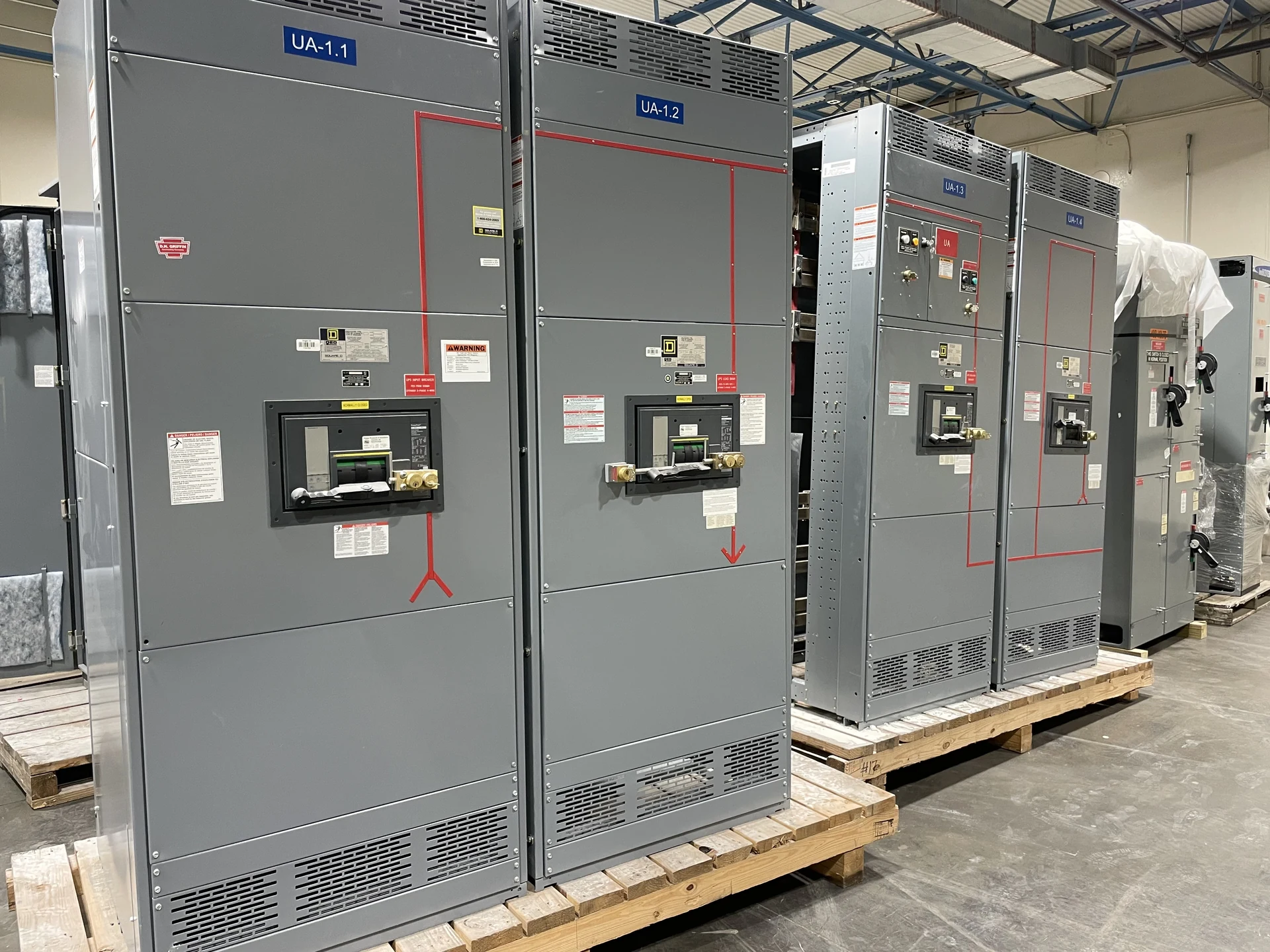
Replacing a distribution lineup is not simply a matter of ordering a cabinet with the same nameplate. Existing cables, upstream protection, building access and the owner's shutdown plan all constrain a new design. For owners, engineers and contractors in San Antonio, South Texas and nationwide, a direct American manufacturer can quote newly manufactured equipment against those interfaces rather than assuming a like-for-like swap will work.
Start with the actual installation
Provide the latest one-line diagram, equipment nameplate data, load schedule and any records of modifications. Ask the design team to identify conflicting or missing information before it becomes a manufacturing assumption. A site survey by qualified personnel can establish dimensions, access restrictions and visible connection arrangements without treating old drawings as a complete record.
The supplier needs to know where each source and feeder enters, conductor material and quantities, and the available space for terminations. Note neutral and grounding connections, control wiring and any utility metering. Photographs and marked-up drawings are useful, but inaccessible details may remain provisional until the owner authorizes a suitable inspection.
Reassess the electrical duties
The existing ampere marking alone does not establish the right replacement. Share present demand, anticipated additions, system voltage and configuration, and the design engineer's available fault-current information. The proposed assembly, its protective devices and connections must be evaluated together for continuous load and fault duty under the actual project conditions.
A new device may have different protective characteristics from the existing one. Request coordination information and assign a qualified engineer to evaluate upstream and downstream protection, including any required selective coordination or arc-flash study updates. Define who supplies settings and who verifies them; a manufacturer's equipment quotation should not silently substitute for those studies.
Fit the connections and the room
A lineup that fits the old footprint may still lack cable-bending space or access for installation and maintenance. Compare proposed elevations, working clearances and door swings with the room and delivery route. Review foundation and anchorage needs, ceiling obstructions, ventilation and the weight and dimensions of each proposed shipping section.
Existing conduit locations and cable lengths can limit where terminals are placed. If they do not reach, the contractor and engineer should evaluate an approved transition or other field solution and allocate its cost and space. Busway interfaces, phase arrangement, lugs and utility service connections also need coordinated drawings rather than assumed compatibility.
Plan the outage before committing
The owner controls the shutdown strategy and should identify affected loads, operational constraints, stakeholders and acceptable outage windows early. The engineer and contractor can compare a single changeover with phased work: phasing may protect some operations but introduce temporary interfaces, additional coordination and extra equipment or space requirements.
Where continuity requires temporary power, define its source, capacity, connection design and protection, and who provides it. The owner-led plan should address approvals, communication, contingencies and a return-to-service decision. Isolation, field connections, testing and energization belong to qualified personnel following site safety procedures, applicable requirements and equipment instructions.
Compare quotations on a common scope
Request a quotation for the defined new assembly, with the one-line, device schedule, enclosure requirements, drawings, test expectations and delivery destination. Ask each supplier to identify assumptions, exclusions and requested substitutions. Compare the same functions and fault-duty requirements, not merely the number of sections or the headline price.
Clarify whether the proposal includes shipping splits, field assembly materials, spares, witness testing and documentation, and who handles unloading and installation. If a low-voltage switchboard is specified, ask whether the proposed assembly's applicable UL 891 listing and configuration can be verified for the project. Confirm any component-origin requirements and availability rather than assuming all parts share one origin.
Tie the schedule to approvals and turnover
Build the purchase schedule around engineering questions, drawing review, component availability, fabrication, inspection and transit. Request milestones and identify when the owner must release decisions on feeder arrangements, interfaces and acceptable alternatives. Changes after approval can affect procurement and delivery, so track their technical, commercial and schedule consequences in writing.
Before shipment, agree on the factory checks and records appropriate to the specified assembly, including control functions where applicable. The handoff should include approved drawings, equipment instructions and agreed test reports. Coordinate field acceptance and final as-built updates with the installer and owner, so the operating team receives documentation that reflects the completed installation.
LET'S BUILD SOMETHING RELIABLE — 03
Ready to talk
switchgear?
Tell us about the new equipment your project needs. Include as much or as little detail as you have today.
(951) 403-5738CALL TO DISCUSS YOUR PROJECT