
BUILT IN THE USA. READY FOR YOUR PROJECT.
1,200-Amp Switchgear: Application and Load Planning
A 1,200-amp switchgear inquiry begins with a planning target, not proof that a particular lineup is suitable or available.
DIRECT FROM THE MANUFACTURER / NEW EQUIPMENT
THE MANUFACTURER’S PERSPECTIVE — 02
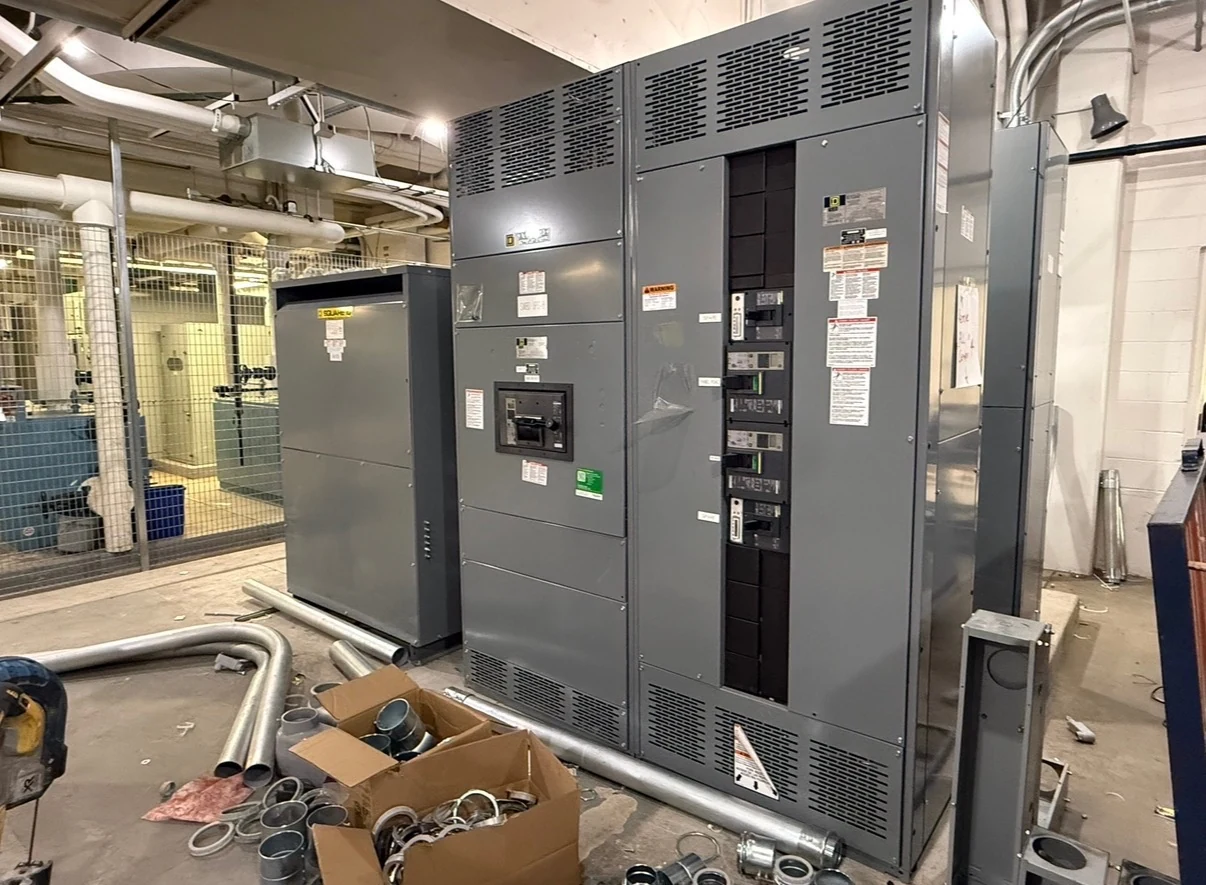
A 1,200-amp switchgear inquiry begins with a planning target, not proof that a particular lineup is suitable or available. Facility owners, contractors and engineers need to relate the proposed continuous-current class to actual demand, system voltage and each intended source. A direct American manufacturer can use those inputs to evaluate a new distribution assembly for a project in San Antonio, South Texas or elsewhere nationwide.
What the current label does and does not say
The current assigned to an assembly describes a capability under specified conditions; it is not a statement of the power every connected load will draw. The main bus, incoming device, individual feeders and terminations can have different ratings. A 1,200-amp planning target does not establish the rating of every component, the protective-device setting or the available fault duty.
System voltage matters independently. Document nominal line-to-line voltage, phase and wire configuration, frequency and grounding arrangement so engineering can select equipment with suitable voltage and insulation ratings. The same current at a different voltage represents a different amount of electrical power; current alone cannot describe the intended service.
Build a defensible load picture
Start with a feeder schedule showing running loads, motor starting requirements, heating or cooling equipment, nonlinear loads, operating hours and expected additions. Separate connected load from demand: equipment that cannot run together should not automatically be counted as simultaneous, but assumptions about diversity must reflect actual operations and be documented for the design engineer.
For illustration, a balanced three-phase load of 600 kVA at a nominal 480 volts draws approximately 722 amperes, calculated as kVA divided by the square root of three times voltage in kilovolts. This is only a comparison point, not a sizing approval. The engineer must assess continuous and noncontinuous loads, applicable requirements, unbalance, growth and equipment-specific conditions.
Map the normal and alternate sources
A single utility-fed service, a transformer secondary and a system with generator backup create different planning questions. Provide a one-line identifying each source, transformer capacity and impedance where applicable, transfer equipment, main devices, ties and grounding. Note whether sources can operate in parallel or whether interlocks prevent that operating state.
For alternate power, identify which loads must run together and the generator capacity and response characteristics provided by its supplier. A 1,200-amp bus does not make a smaller generator capable of carrying every connected load. Transfer logic, load shedding, neutral switching and grounding require coordinated project-specific design across the equipment interfaces.
Check conditions beyond steady-state current
Ask the utility and project engineer for available fault-current information, then evaluate each relevant source and operating configuration. The assembly short-circuit rating, interrupting ratings of devices and any time-dependent withstand requirements must suit the documented duty and protection scheme. A continuous-current figure alone answers none of those questions.
Ambient temperature, enclosure ventilation, altitude and equipment loading can affect the acceptable application; any adjustment should come from the equipment design and documented manufacturer guidance. Nonlinear loads may also create neutral current and heating concerns. Give the engineer the load characteristics and conductor information rather than assuming a phase-bus rating establishes neutral capacity.
Translate the study into an equipment scope
Submit the current one-line, load schedule, source and fault data, feeder quantities, cable sizes and entry direction, available space and indoor or outdoor conditions. Identify service metering, control power, communications, spare feeder provisions and future expansion plans. Extra capacity or empty sections may support growth, but they also affect footprint, cost and engineering.
Ask the manufacturer to identify the proposed assembly type, voltage and current ratings, protective devices, fault-duty basis and deviations from the specification. If a low-voltage switchboard is proposed, establish whether a project-specific UL 891 listing is required and verify the actual listing scope. State any component-origin requirements explicitly and confirm sourcing and availability.
Coordinate review, delivery and field responsibility
Request drawings showing the one-line, elevations, termination details, dimensions, shipping splits and installation interfaces, along with agreed inspection and test records. Assign responsibility for protection studies and settings, foundations, field wiring, utility approvals and commissioning. Review drawings against the latest load assumptions before releasing equipment for fabrication.
The schedule should allow for engineering questions, submittal review, component availability, manufacturing, testing and transportation, without assuming a fixed lead time. Coordinate outage windows and delivery access with the owner and contractor. Qualified electrical personnel must plan and perform installation, testing and energization under applicable codes, site procedures and manufacturer instructions.
LET'S BUILD SOMETHING RELIABLE — 03
Ready to talk
switchgear?
Tell us about the new equipment your project needs. Include as much or as little detail as you have today.
(951) 403-5738CALL TO DISCUSS YOUR PROJECT