
BUILT IN THE USA. READY FOR YOUR PROJECT.
800-Amp Switchgear: Application and Load Planning
An 800-ampere designation is a starting point for discussing a distribution assembly, not proof that it will carry a particular facility's loads.
DIRECT FROM THE MANUFACTURER / NEW EQUIPMENT
THE MANUFACTURER’S PERSPECTIVE — 02
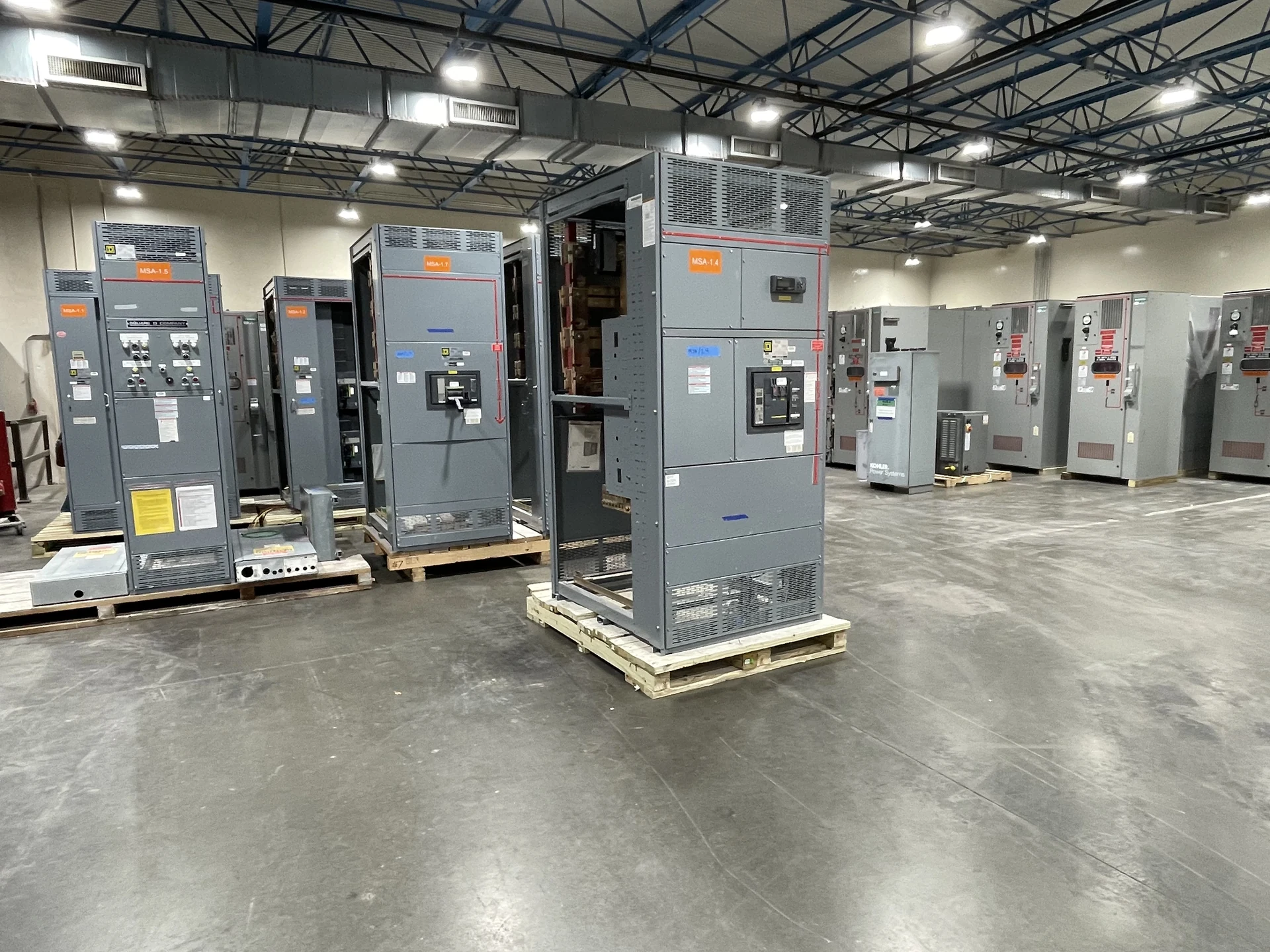
An 800-ampere designation is a starting point for discussing a distribution assembly, not proof that it will carry a particular facility's loads. Engineers, contractors and owners must match calculated demand, sources and site conditions to the ratings of the proposed new equipment. A useful load plan also reveals where growth, fault duty or installation constraints may change the selection.
What the current class does and does not say
The ampere designation refers to current capacity, not the amount of power a facility can use at every voltage. The main device, bus, feeder devices, neutral and connection points can have different ratings. An 800-ampere main does not by itself establish the rating of every section, and adding feeder handle ratings does not establish simultaneous demand.
Ask the manufacturer to identify the actual continuous-current ratings and applicable conditions for the proposed assembly and its components. Ambient temperature, enclosure ventilation and other installation conditions may affect suitability. Availability in this current class, as well as the final construction and ratings, must be confirmed during project-specific engineering rather than assumed from a catalog label.
Build demand from the load schedule
List the connected loads by feeder, including voltage, phase, operating current or apparent power, and whether each load runs continuously or intermittently. Separate normal demand from motor starting, charging peaks and other short-duration events. For an operating facility, measured demand history can help test assumptions, but it should be reconciled with seasonal conditions and documented expansion plans.
Voltage makes a substantial difference. As an illustration, a balanced three-phase demand of 500 kVA draws about 601 amperes at 480 volts, but about 1,388 amperes at 208 volts. Those are calculated line currents, not equipment offerings or design approvals. A qualified engineer must apply the relevant load-calculation and continuous-load requirements before judging any proposed 800-ampere assembly.
Plan for each source and operating state
A one-line diagram should show the normal source, transformer, main device, outgoing feeders and any alternate source or tie. Record system voltage, phase, wire configuration and grounding arrangement for each source. Source capacity is not the same as assembly capacity: the engineer must determine which loads can run together and whether source protection and conductors support that operating case.
If a generator supplies selected loads, provide its capacity and intended load sequence, plus transfer and neutral-switching requirements. For multiple sources, define whether parallel operation is permitted and identify the required interlocks and control interfaces. A transfer device, tie or feeder may constrain the arrangement even when the main bus appears adequate; confirm each operating state in the design review.
Keep fault duty separate from load current
An acceptable demand calculation does not prove that the equipment can interrupt or withstand a fault. Obtain available fault-current information and source assumptions from the utility and the project engineer, including the relevant alternate-source configurations. Compare those conditions with the proposed assembly's short-circuit rating and the individual devices' interrupting or withstand capabilities, as applicable.
Protective-device choices also affect coordination and continuity. Provide the upstream device information, feeder loads and any required selective-coordination objectives so the responsible engineer can study time-current behavior over the relevant fault range. Record who supplies the study, settings and final review; a proposal with an 800-ampere main alone cannot settle those questions.
Allow for neutral loading, heat and space
Identify single-phase and nonlinear loads, including electronic equipment, because their neutral current and harmonic heating may affect neutral sizing and component selection. Share conductor sizes, material, quantities and top or bottom entry preferences. The manufacturer can then review termination space and bus connections against the proposed design instead of assuming an 800-ampere label resolves those interfaces.
Provide the intended indoor or outdoor environment, ambient conditions, room dimensions, delivery path and required maintenance access. Coordinate heat rejection and ventilation with the building design, and leave room for the actual cable bends and working clearances determined under applicable rules. Reserved physical space for a future feeder is useful only if the bus, protection and load capacity are also reviewed.
Make the purchase package actionable
Send the direct manufacturer the one-line, demand schedule, source and fault data, feeder list, enclosure requirements and desired expansion allowance. Identify whether the equipment is service entrance, who owns utility coordination, and any metering, communications or control requirements. Specify applicable standards and listing expectations; if a switchboard is proposed, verify any required project-specific UL 891 listing for that assembly.
Compare quotations using the same assumptions and request drawings, rating details, device schedules, test scope and documented exceptions. Agree on the timing for engineering review, submittal approval, component confirmation, fabrication, shipping and site readiness; changes can affect the schedule. The owner's qualified personnel and contractors should plan installation, testing and energization under applicable codes, manufacturer instructions and site safety procedures.
LET'S BUILD SOMETHING RELIABLE — 03
Ready to talk
switchgear?
Tell us about the new equipment your project needs. Include as much or as little detail as you have today.
(951) 403-5738CALL TO DISCUSS YOUR PROJECT