
BUILT IN THE USA. READY FOR YOUR PROJECT.
4,000-Amp Switchgear: Procurement and Submittal Checklist
A request for a 4,000-amp switchgear quotation needs more than a current figure.
DIRECT FROM THE MANUFACTURER / NEW EQUIPMENT
THE MANUFACTURER’S PERSPECTIVE — 02
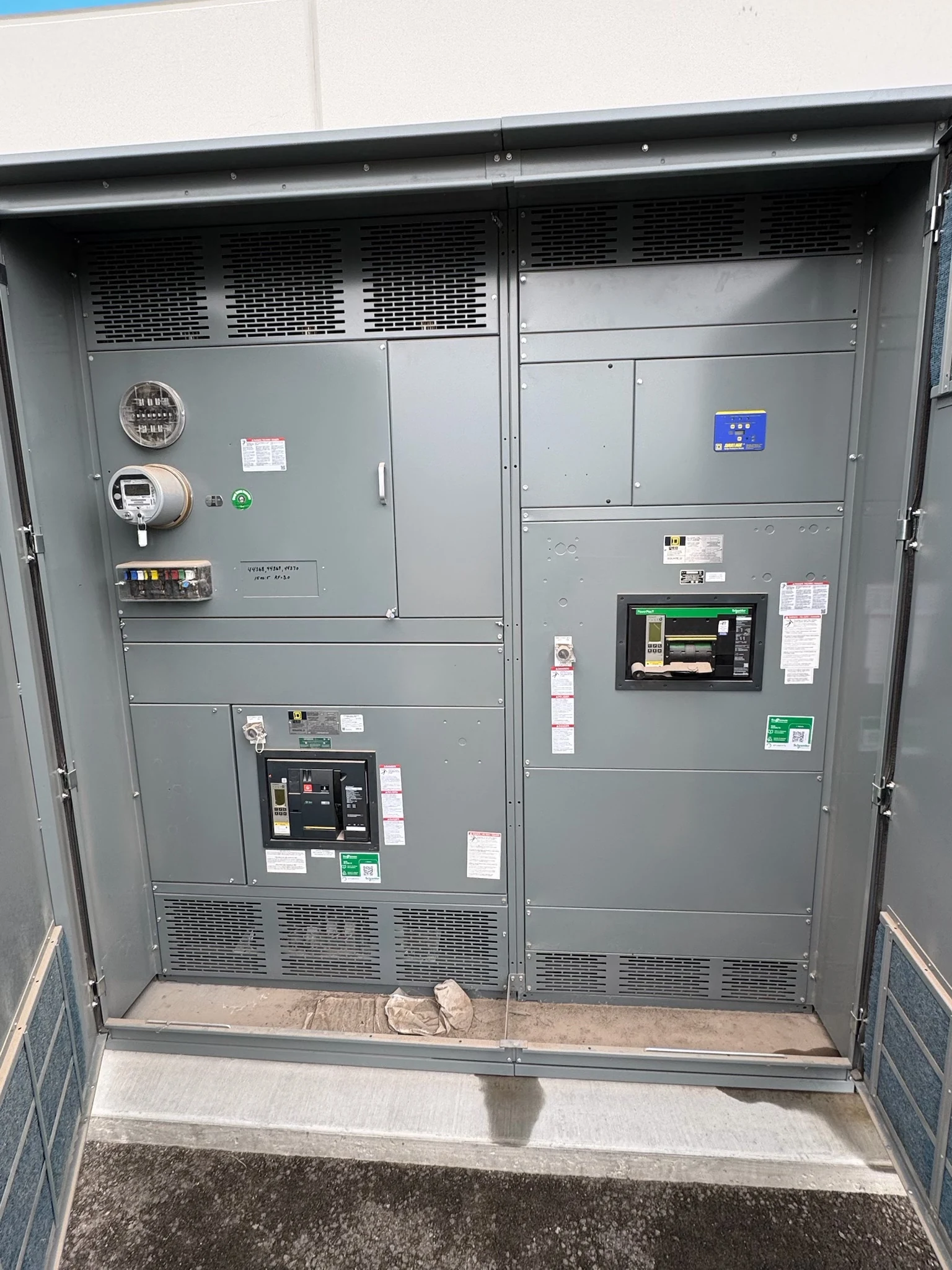
A request for a 4,000-amp switchgear quotation needs more than a current figure. The manufacturer must understand the electrical system, physical interfaces and documentation expected before it can assess a new assembly. Whether the project is in San Antonio, elsewhere in South Texas or nationwide, a coordinated request helps the owner compare proposals without assuming that a particular configuration or rating is available.
Start with the one-line and load basis
Provide a current one-line diagram showing sources, main and tie devices, feeders, transformers and anticipated operating configurations. Identify the system voltage, frequency, phase and wire arrangement, grounding scheme, and whether the equipment serves as service entrance or downstream distribution. Flag incomplete information rather than presenting assumptions as approved design requirements.
Supply a load schedule with calculated demand, major motor or nonlinear loads, and planned expansion. Specify the intended main device and bus continuous-current requirements separately; the phrase 4,000 amp alone does not establish either component’s actual rating. Ask engineering to confirm available configurations and ratings under the stated ambient and installation conditions.
Document fault duty and protective functions
Include the available short-circuit current at the equipment, source assumptions and study revision, plus any required withstand duration. Identify credible normal and alternate source configurations when their fault contributions differ. The assembly and its protective devices need appropriate ratings for the application; a continuous-current number does not establish interrupting or withstand capability.
Describe required trip functions, ground-fault protection, interlocks and the degree of selective coordination to be evaluated. State who provides the short-circuit, coordination and arc-flash studies and final settings. Provide the relevant study data or request a clear allowance for later coordination; an early quote should not be mistaken for a completed protection study.
Make the physical interfaces measurable
Send room or site plans with available footprint, access route, working-space constraints and indoor or outdoor exposure. Include ambient conditions, ventilation assumptions, structural criteria and the proposed cable entry direction. A compact lineup may reduce floor area but leave less room for terminations or maintenance; the approved layout needs to reconcile both.
For each incoming and outgoing connection, identify conductor material, size, number of parallel sets per phase and termination responsibilities, or provide the busway interface drawings. Specify neutral and ground connections and applicable neutral-loading concerns. Discuss shipping splits, largest permissible shipping section, lifting limitations and field reassembly so the quoted assembly can actually reach its final position.
Define drawings and approvals before ordering
Request a submittal package that includes a one-line, elevations and plan views, device schedule, enclosure details, connection locations, shipping sections and identified deviations. Depending on scope, include control schematics, terminal diagrams, metering information and heat-loss data for the room designer. Establish which parties review each document and which revision becomes the construction basis.
Name the applicable code, equipment standard and any required third-party listing, rather than assuming one label fits every assembly. UL 891 may be relevant to an appropriate switchboard; verify the proposed assembly’s specific listing and scope. Coordinate service metering, utility requirements and authority approvals where applicable, including responsibility for obtaining them.
Compare the complete quoted scope
Ask each proposal to identify main and feeder devices, metering, controls, enclosure features, spare provisions and approved alternatives. A lower initial quote can reflect fewer feeders, different protective functions or omitted documentation. Compare written exceptions against the specification and resolve discrepancies in ratings, construction and interfaces before selecting a proposal.
Define factory inspection and acceptance-test requirements, including any functional control checks, witness arrangements, acceptance criteria and test records. Separately assign freight, offloading, foundations, field connections, protection settings and commissioning. Request manuals, final drawings and any required spare parts as explicit deliverables rather than assuming they are included.
Control the schedule and design changes
Provide the requested delivery window, construction milestones and any utility or owner outage constraints. Ask for a schedule identifying submittal review, approval, component procurement, fabrication, testing and shipment dependencies. Availability and timing depend on the approved design and components, so clarify when commitments can be made and how late approvals affect them.
Maintain a revision log for the one-line, feeder schedule and site drawings, and obtain written agreement on changes to scope, cost and schedule before release. The installing contractor and qualified electrical personnel should plan field work and commissioning under site procedures; the engineer of record and owner retain their defined approval responsibilities.
LET'S BUILD SOMETHING RELIABLE — 03
Ready to talk
switchgear?
Tell us about the new equipment your project needs. Include as much or as little detail as you have today.
(951) 403-5738CALL TO DISCUSS YOUR PROJECT