
BUILT IN THE USA. READY FOR YOUR PROJECT.
Universities Switchgear
A university electrical system serves far more than classrooms: research facilities, residences, libraries and central utilities can have different tolerances for interruption.
DIRECT FROM THE MANUFACTURER / NEW EQUIPMENT
THE MANUFACTURER’S PERSPECTIVE — 02
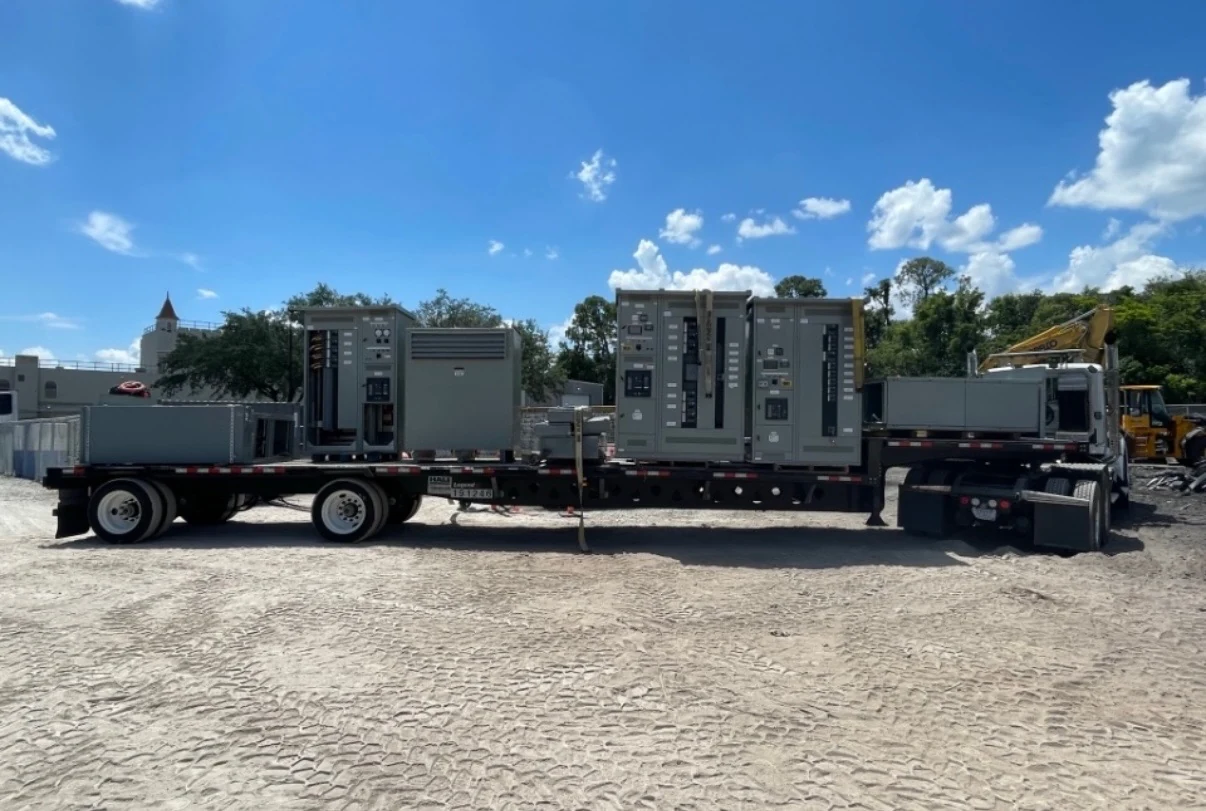
A university electrical system serves far more than classrooms: research facilities, residences, libraries and central utilities can have different tolerances for interruption. Newly manufactured switchgear should fit the campus distribution scheme, the academic calendar and the owner’s plans for growth. For project owners and electrical engineers, the purchasing decision begins with a clear map of the loads and the interfaces that will remain in service.
Start with the campus distribution map
Provide an up-to-date one-line diagram showing utility and campus sources, transformers, distribution buses, ties and the feeders serving each building. Identify which portions of the drawing have been verified and flag missing information for the project engineer. A feeder schedule should name its destination, present and expected load, protective device and conductor connection requirements.
The owner should distinguish facilities that can tolerate a planned interruption from those needing continuity plans, such as research spaces, residence halls or chilled-water plants. Record dependencies between buildings: one feeder outage may affect a shared mechanical plant as well as the building named on the drawing. Separately identify any legally required emergency or standby loads and their applicable design requirements.
Choose the arrangement around continuity
A single source and main device may suit a straightforward distribution point, while a multiple-source or main-tie-main arrangement can offer additional operating options. The latter also adds equipment, space, controls and protection complexity. Identify the desired normal and alternate operating states; a tie does not by itself guarantee uninterrupted service or adequate alternate-source capacity.
The electrical engineer should establish available fault current for relevant source configurations and review device interrupting ratings, assembly fault duty and protection coordination. Where a generator or transfer equipment connects to the lineup, document start signals, source priorities, interlocks and grounding interfaces. The project team should verify that the proposed sequence avoids unintended source paralleling.
Plan outages around an occupied campus
An equipment purchase is only one part of an occupied-campus project. Ask facilities staff to map affected rooms and services, including ventilation, laboratory processes, communications, access control and fire-related systems. Coordinate proposed windows with academic schedules, housing, research activities and campus events; a summer break alone does not mean the buildings are empty.
The owner and installing contractor should develop the outage and temporary-power plan, including stakeholder notification, approvals, contingency arrangements and a return-to-service decision. Temporary supply capacity, connection points and protection need engineering review. Switching, isolation, testing and energization must be planned and performed by qualified persons under site procedures and applicable requirements, not inferred from a procurement drawing.
Make expansion an engineered choice
Gather realistic growth scenarios rather than requesting a generic allowance: a new science wing, electrified heating or additional student housing can change peak demand and feeder needs in different ways. Compare measured demand with planned loads and their timing. The engineer can assess source, transformer, bus and protective-device capacity together instead of treating an empty cubicle as proof of future capacity.
Spare feeder spaces, installed spare devices and room for an additional section involve different upfront costs and future work. State which option is expected, the intended feeder characteristics and any reserved physical space. Confirm the proposed assembly’s expansion provisions, fault duty and listing implications before committing; future changes remain subject to engineering review and applicable approvals.
Resolve physical and data interfaces early
Share room dimensions, access routes, available working space, cable-entry direction and conductor quantities with the manufacturer. Campus basements, utility corridors and restricted delivery routes can make shipping splits or installation sequencing important. Coordinate foundations, lifting, ventilation and field connections with the responsible contractor and design disciplines, while checking access and clearances against project requirements.
If the university wants feeder-level energy data, specify meter functions, measurement locations, communications protocol and the campus system boundary. Assign ownership of network connections, cybersecurity review and point-to-point commissioning. A metering feature that is not matched to current transformers, wiring and the receiving platform may add cost without producing useful information.
Compare quotations and protect the schedule
As a direct American manufacturer of new power-distribution assemblies serving San Antonio, South Texas and projects nationwide, we work from the project’s defined requirements. Request an itemized scope identifying construction, devices, ratings, drawings, testing, shipping, exclusions and field responsibilities. For a specified switchboard, confirm whether a project-specific UL 891 listing is required and available; do not assume that standard applies to every switchgear assembly.
Build the procurement schedule backward from the planned outage, allowing for design review, submittal approval, component availability, fabrication, testing, delivery and site readiness. Ask which changes could affect that sequence and how revisions will be tracked. At turnover, specify final drawings, manuals, test records and device information so campus staff and their qualified service providers can maintain an accurate system record.
LET'S BUILD SOMETHING RELIABLE — 03
Ready to talk
switchgear?
Tell us about the new equipment your project needs. Include as much or as little detail as you have today.
(951) 403-5738CALL TO DISCUSS YOUR PROJECT