
BUILT IN THE USA. READY FOR YOUR PROJECT.
Military Bases Switchgear
Electrical distribution on a military installation can support everything from administrative buildings to facilities with strict continuity requirements.
DIRECT FROM THE MANUFACTURER / NEW EQUIPMENT
THE MANUFACTURER’S PERSPECTIVE — 02
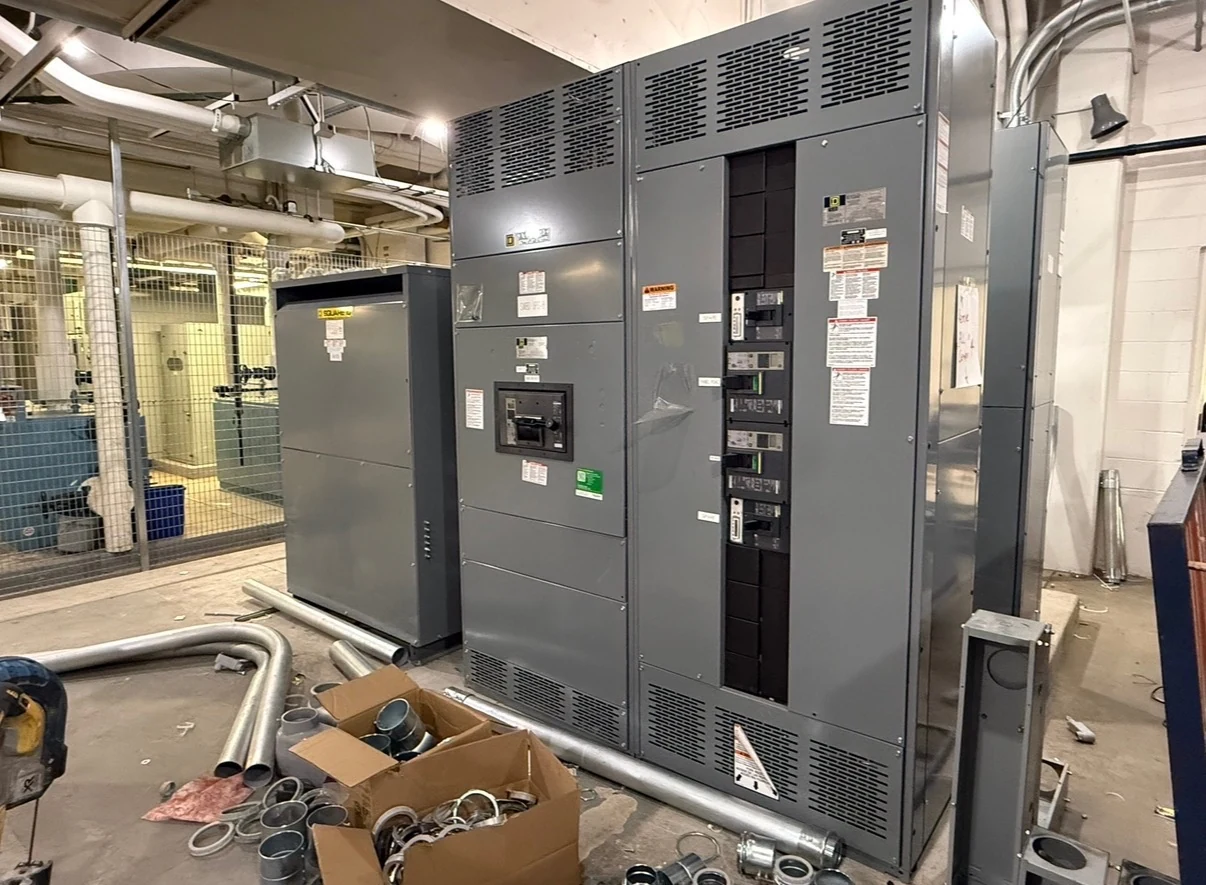
Electrical distribution on a military installation can support everything from administrative buildings to facilities with strict continuity requirements. A new switchgear lineup should be developed around the owner's operating priorities, installation-specific specifications, and the interfaces between utility, standby sources, and downstream facilities. For project owners and electrical engineers, the purchasing question is not simply capacity: it is what equipment, documentation, and verification are needed for the mission.
Map facilities and continuity priorities
Start with a current one-line diagram showing sources, distribution buses, feeder destinations, and the boundaries between serving utility and installation ownership. Pair it with a load schedule identifying critical functions, ordinary building loads, and expected expansion. The owner should determine which facilities can tolerate an outage and which require an approved continuity strategy.
A feeder serving several buildings may create a common point of interruption even when each building has its own backup equipment. The design team should identify shared dependencies and verify whether alternate paths or temporary power are needed. Extra capacity or duplicate paths can improve flexibility, but add equipment, space, and protection complexity.
Choose a source arrangement deliberately
A lineup with multiple sources or a bus tie may support a continuity plan, but only if the source capacities, normal operating states, and permitted transfer conditions are defined. Document whether the design allows sources to operate together or requires interlocking to prevent unintended paralleling. The engineer must verify the arrangement against owner and utility requirements.
For generator-supported facilities, describe the starting signals, source-available indications, transfer equipment, grounding approach, and loads expected on alternate power. An automatic transfer switch and distribution switchgear have different roles; a complete proposal should show their connection boundary and control responsibilities rather than assume one assembly supplies both functions.
Coordinate protection across the installation
Provide system voltage and configuration, available fault-current data at each source, transformer information, feeder lengths, and existing protection data to the engineer and manufacturer. Device interrupting capability and assembly fault withstand must be appropriate for the calculated duty and clearing time. Alternate-source operation can change fault levels and protection behavior.
The owner should define where selective coordination is required and commission a qualified study using the actual devices and operating scenarios. Better coordination may require different protective functions or design compromises; it should not be assumed from a product description. Record who supplies the study, approved settings, and final equipment labels.
Resolve physical and control interfaces
Share the electrical room or outdoor site plan, access route, environmental exposure, equipment clearances, and expected cable entry. Confirm conductor sizes, quantities, termination provisions, and any shipping splits with the installation contractor. A compact lineup may reduce footprint while leaving less room for field terminations, future feeders, or maintenance access.
If the installation uses central monitoring, specify the required indications, control authority, communications protocol, and network boundary. Distinguish monitoring from remote control, and document the response to lost communications or control power. The owner and integrator should approve cybersecurity and connectivity requirements before interfaces are incorporated into the design.
Translate procurement and security requirements
A request for quotation should include the owner's equipment specification, applicable drawings and standards, inspection expectations, and any required submittal format. Identify which federal or installation requirements apply to this contract rather than assuming the same rules govern every base. For an applicable switchboard, confirm the required UL 891 listing and its precise assembly scope.
Flag domestic sourcing or other contract clauses early and ask the manufacturer to document proposed component origins and availability where required. Define how drawings and facility details may be shared, who can receive them, and any access or personnel conditions for delivery and witnessing. Avoid including sensitive operational details in an unrestricted inquiry.
Plan approvals, acceptance, and handover
A direct American manufacturer of new distribution assemblies can serve projects in San Antonio, South Texas, and nationwide. Compare quotations by reviewing included devices, ratings, drawing deliverables, factory inspection and test scope, proposed exceptions, and responsibilities for shipping and field connections. Reserve time for owner review, revisions, component procurement, and any required witness testing.
Coordinate receiving restrictions, site access, phased outages, and alternate-power arrangements with installation stakeholders and the electrical contractor. Define acceptance criteria, corrective-action procedures, and turnover records, including approved drawings, test results, manuals, and equipment identification. Installation, testing, and energization require qualified personnel following site procedures, applicable codes, and manufacturer instructions; the owner controls operational approvals.
LET'S BUILD SOMETHING RELIABLE — 03
Ready to talk
switchgear?
Tell us about the new equipment your project needs. Include as much or as little detail as you have today.
(951) 403-5738CALL TO DISCUSS YOUR PROJECT