
BUILT IN THE USA. READY FOR YOUR PROJECT.
Preventive Maintenance Planning
A preventive maintenance plan connects the equipment design to the people who will inspect and maintain it over its working life.
DIRECT FROM THE MANUFACTURER / NEW EQUIPMENT
THE MANUFACTURER’S PERSPECTIVE — 02
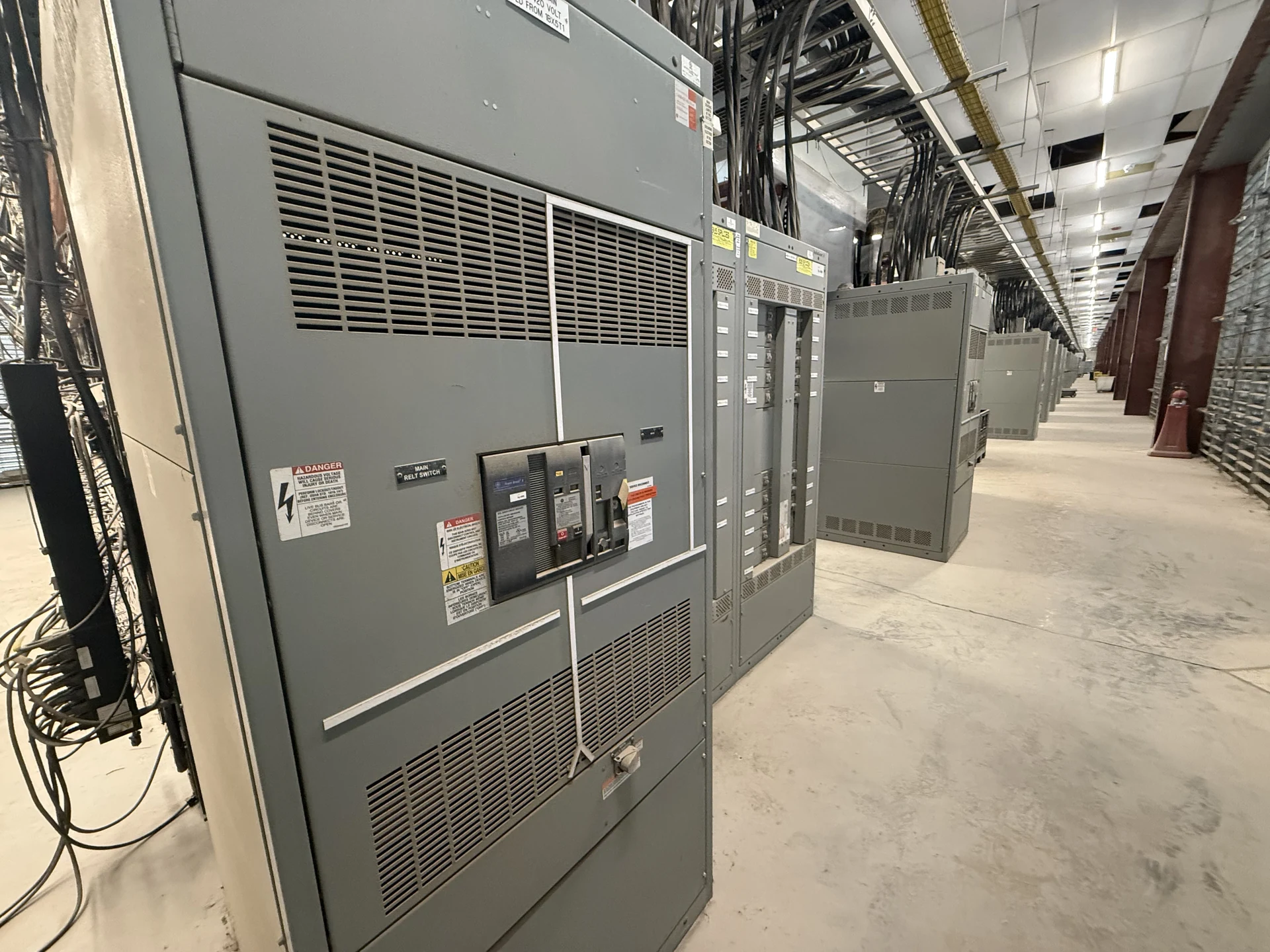
A preventive maintenance plan connects the equipment design to the people who will inspect and maintain it over its working life. For facility owners, contractors, and specifying engineers, the goal is not simply to put dates on a calendar: it is to define safe access, useful inspection criteria, outage responsibilities, and records that make the next decision more informed.
Start with an equipment and load register
Create an inventory by lineup and section, with equipment identifiers, protective devices, control power sources, connected loads, and equipment documentation. Associate each entry with the relevant one-line diagram and identify critical loads that cannot tolerate an unplanned interruption. Record environmental exposures such as dust, moisture, corrosive conditions, and restricted ventilation.
Owners should assign a person to keep the register current when circuits, settings, or operating arrangements change. Contractors can flag physical access restrictions, while engineers identify dependencies such as generator backfeed, tie connections, or remote controls. An accurate register gives the maintenance provider a starting point; it does not replace a site-specific assessment.
Set intervals by condition and consequence
Use the applicable equipment instructions, site safety program, and relevant maintenance standards as the basis for an inspection schedule. Determine whether NFPA 70B or other requirements apply to the facility and its equipment. The owner and qualified maintenance personnel should evaluate environmental severity, duty, equipment condition, and consequences of failure rather than assume a universal interval.
A clean, stable electrical room and an area exposed to condensation may justify different attention, even when equipment serves comparable loads. Review intervals after abnormal findings, changes in operating conditions, or updated manufacturer guidance. More frequent visits require staff time and may increase disruption, so document the reason for each change and review whether it produces useful information.
Coordinate isolation and qualified personnel
The owner should identify the authority responsible for the outage, the qualified electrical personnel, and the affected building or process teams. The work plan should account for normal and alternate sources, control circuits, stored energy, and any other potential sources identified during the job assessment. Notify the utility when its equipment or service is involved.
Deenergization, lockout and tagout, and verification of an electrically safe work condition belong to qualified persons following the site program, applicable requirements, and equipment instructions. Do not treat an open upstream device or a diagram alone as proof of safety. If an energized task is proposed, it requires its own justification and risk controls under the applicable safety program.
Define inspection and testing deliverables
Specify what the qualified maintenance provider will examine and what records it must return. Depending on the assembly and manufacturer instructions, the scope may include condition of barriers, enclosure integrity, signs of contamination, mechanical condition, protective device testing, and control or interlock checks. Define acceptance criteria, test methods, exclusions, and responsibilities before scheduling the outage.
Thermal imaging can help identify unusual temperature patterns under representative load, but loading, access, and viewing conditions affect what it reveals. It cannot establish the condition of every connection or replace other appropriate inspections. Record the load and conditions where practical, compare findings with suitable baselines, and have qualified personnel evaluate anomalies.
Purchase new equipment with serviceability in mind
When specifying a new assembly, show available working space, equipment access, cable routes, and any shutdown limitations in the inquiry. Ask the manufacturer to identify access needs for the proposed devices and document required maintenance and inspection provisions. Greater separation or additional isolation features may improve flexibility, but can affect footprint, complexity, and cost.
Request device schedules, applicable instructions, drawings, recommended spares, and agreed factory test records as part of the quotation. Confirm compatible spare components, storage requirements, and anticipated availability instead of assuming interchangeability. For an appropriate switchboard, verify any required UL 891 listing for the actual proposed assembly; it is not a blanket designation for all switchgear.
Build the calendar around outages and follow-up
Work backward from the desired outage window to arrange approvals, qualified labor, test equipment, spare parts, and any temporary power design. Coordinate operating restrictions with production, tenants, and life-safety stakeholders as applicable. Allow time for investigation and contingency decisions if inspection reveals an issue; a maintenance window is not a guarantee that every finding can be resolved immediately.
Close each work order with dated observations, results, equipment identification, deficiencies, and assigned follow-up owners. Preserve approved settings and revised drawings alongside the maintenance history, and route significant findings to the responsible engineer and facility decision maker. Before returning equipment to service, the owner’s authorized team should complete the required checks and approvals under site procedures.
LET'S BUILD SOMETHING RELIABLE — 03
Ready to talk
switchgear?
Tell us about the new equipment your project needs. Include as much or as little detail as you have today.
(951) 403-5738CALL TO DISCUSS YOUR PROJECT