
BUILT IN THE USA. READY FOR YOUR PROJECT.
Switchgear Spare Parts Planning
A spare parts plan for a new switchgear assembly is an uptime decision, not simply a shopping list.
DIRECT FROM THE MANUFACTURER / NEW EQUIPMENT
THE MANUFACTURER’S PERSPECTIVE — 02
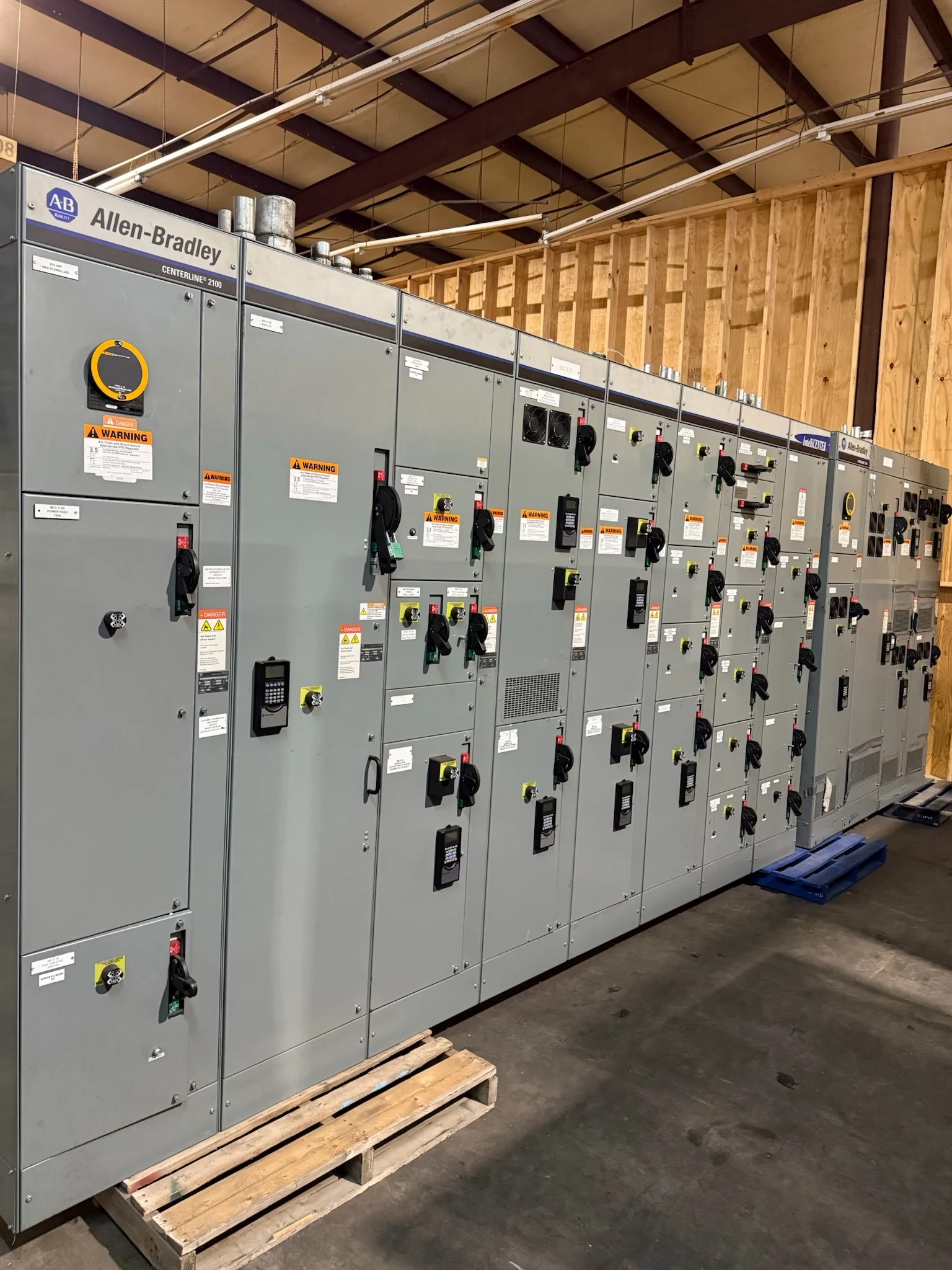
A spare parts plan for a new switchgear assembly is an uptime decision, not simply a shopping list. Engineers, contractors and owners need to identify which components can interrupt critical loads, which replacements are genuinely compatible, and how each item will be stored and documented. Agreeing on that plan during procurement helps align the equipment design, turnover package and maintenance budget.
Rank spares by the consequence of a failure
Begin with the approved one-line diagram and a load schedule. Identify components whose failure could disable an essential feeder, a source transfer function or several loads at once. An inexpensive control power component may deserve higher priority than a larger part if its loss stops the entire lineup and no alternative supply is available.
For each candidate, consider failure consequences, likely replacement availability, maintenance resources and the acceptable interruption for the affected load. Balance a spare device against other measures, such as a documented alternate supply or planned redundancy. The owner should decide how much inventory risk to carry; the engineer can evaluate whether the electrical design actually supports the proposed operating strategy.
Choose parts around the actual assembly
Potential spares include specified fuses, auxiliary contacts, trip coils, control power supplies, metering devices and protective relays. Depending on the design and continuity requirements, a complete breaker or a compatible drawout unit may also be considered. A spare section or empty mounting space is not the same thing as a stocked, interchangeable component.
Ask the manufacturer for an itemized recommended list tied to the final bill of materials, with part numbers, quantities and any ordering constraints. Compare the cost of stocking a complete device with the downtime and skilled labor needed to address a smaller component. Do not assume every item can be replaced independently within the approved assembly.
Verify compatibility before ordering
A matching description alone does not establish interchangeability. Record manufacturer, device family, part number and revision, together with applicable voltage, current and fault-duty characteristics. For a breaker, the interface, trip functions and accessories must suit the exact assembly; a relay may also require the correct inputs, firmware, configuration and communications interfaces.
Have the assembly manufacturer and project engineer review proposed alternatives against the approved drawings, device instructions and applicable listing or certification requirements. For an appropriate switchboard, confirm whether a substitution affects its project-specific UL 891 listing. A component that physically fits is not automatically acceptable for the equipment or the protection scheme.
Protect inventory while it waits
Assign a clean, secure storage location with environmental conditions consistent with each component manufacturer’s instructions. Packaging should protect against moisture, dust and physical damage; electronic devices may need electrostatic protection. Record any temperature, humidity, shelf-life or periodic inspection requirements instead of applying one assumed storage rule to every part.
Label each item with its intended assembly and location, and retain original identification and instructions. Track receipt date, condition, storage location and any shelf-life limits in the owner’s inventory system. Periodic checks can reveal damaged packaging or missing items before an outage makes them urgent; handle any deterioration according to the component manufacturer’s guidance.
Make spare parts part of project turnover
The purchasing package should distinguish the base assembly from separately priced recommended and mandatory spares, noting quantities, packaging, delivery destination and documentation. Coordinate the selection against the final approved submittal, not an early design revision. Clarify whether the contractor receives and inventories the parts or the owner takes direct custody.
Request final drawings, equipment and component schedules, manuals, test records and an indexed spare parts list showing each item’s intended use. Where relays or communications devices are included, define who holds authorized configuration files, settings records and access credentials under the site’s security rules. Document revisions whenever a design change affects the spare list.
Plan replenishment and qualified support
Agree on when spare selections must be approved relative to assembly design review, component purchasing, testing and delivery. Availability can change, so ask for current procurement information and identify any alternatives for engineering review rather than assuming a fixed lead time. If a critical item is deferred, record the exposure and who will revisit the decision.
After turnover, assign ownership for inventory audits, replenishment and periodic compatibility reviews as devices or configurations change. Electrical work, testing and any replacement must be planned and performed by qualified personnel under site safety procedures and applicable manufacturer instructions. Spares reduce uncertainty only when the documentation, approval path and maintenance responsibilities remain current.
LET'S BUILD SOMETHING RELIABLE — 03
Ready to talk
switchgear?
Tell us about the new equipment your project needs. Include as much or as little detail as you have today.
(951) 403-5738CALL TO DISCUSS YOUR PROJECT