
BUILT IN THE USA. READY FOR YOUR PROJECT.
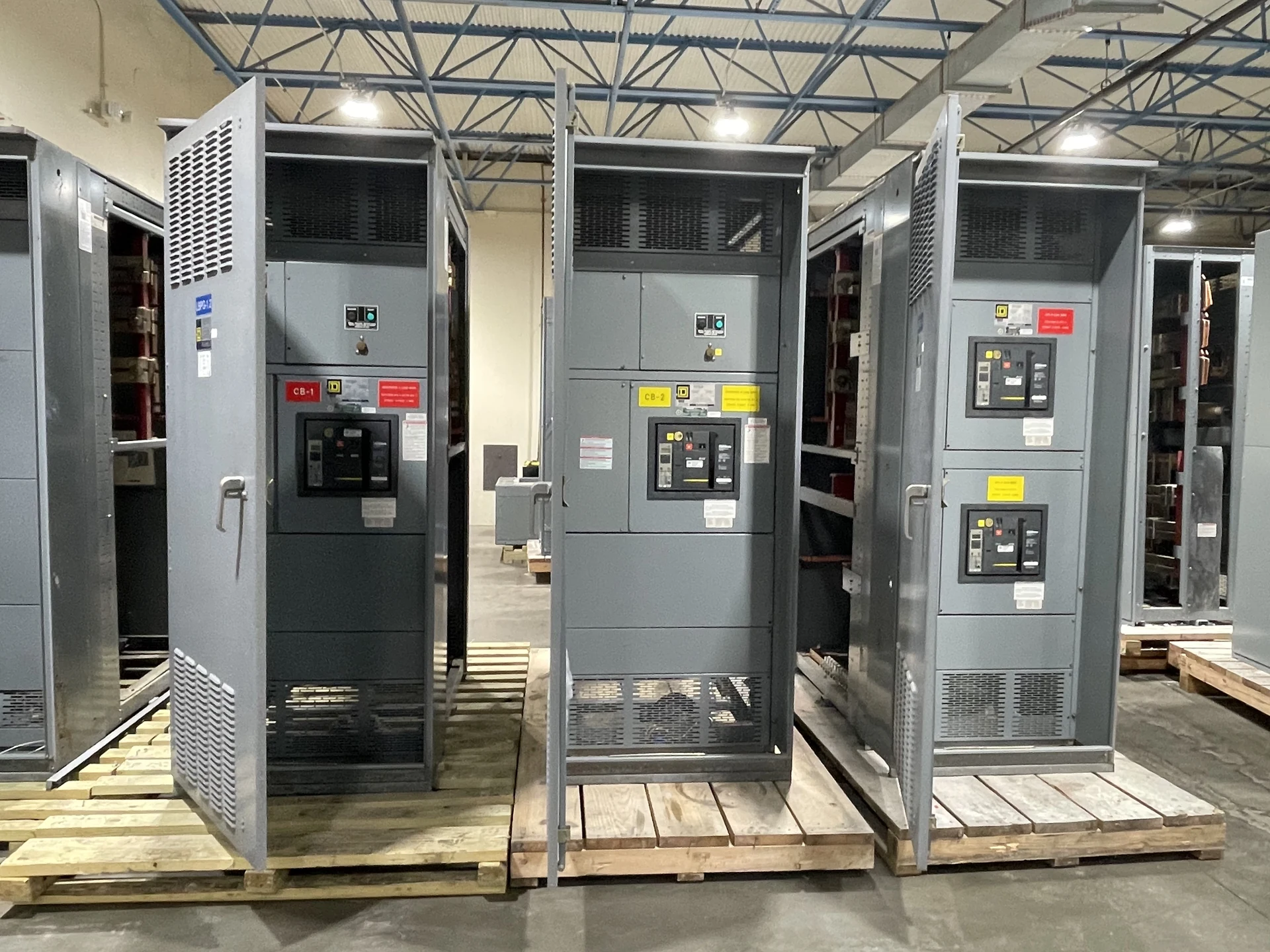
Switchgear Nameplates and Labels
A switchgear label is more than a finishing detail: it connects an assembly’s identity and electrical limits to the drawings, circuits, and people who depend on them.
DIRECT FROM THE MANUFACTURER / NEW EQUIPMENT
THE MANUFACTURER’S PERSPECTIVE — 02
A switchgear label is more than a finishing detail: it connects an assembly’s identity and electrical limits to the drawings, circuits, and people who depend on them. For a new distribution assembly, specifying engineers, contractors, and facility owners should agree on the information, format, and responsibility for each label before fabrication and installation decisions are locked in.
Separate assembly identity from project naming
The manufacturer’s nameplate identifies the assembly and its applicable electrical characteristics. A project identification plate serves a different purpose: it may call the lineup MSB-1 or identify the building and electrical room. Include both identifiers on approved drawings so a field team can match the physical equipment to the correct submittal and records.
Ask for a unique assembly or order identifier, as applicable, and specify where the identification plate should be visible after installation. If the owner has an existing asset-number convention, provide it with the purchase documents rather than adding a conflicting abbreviation late in the project. Maintain a cross-reference between the asset register and the manufacturer’s documentation.
Specify ratings without creating conflicting claims
Provide the design’s system voltage, phase and wire arrangement, frequency, continuous-current requirements, and available fault-current information for engineering review. The resulting assembly nameplate should reflect its verified ratings and the applicable product requirements. A breaker’s individual interrupting rating does not by itself establish the rating of the complete assembly.
Identify any required listing or certification in the specification and check its scope against the actual equipment and proposed construction. UL 891 may be relevant to an appropriate switchboard assembly; it is not a blanket designation for every kind of switchgear. Resolve discrepancies among the one-line, submittal, and proposed nameplate before approval.
Make circuit designations useful in the field
A feeder label should identify the load or destination in terms the owner will recognize, not merely repeat a breaker number. A designation such as “Panel LP-2, Level 2” is more useful than “Lighting” when several lighting panels exist. Coordinate names with the one-line, panel schedules, and final room identifiers.
For spare or future circuits, distinguish an installed device from an unequipped space and avoid implying that unverified capacity is available. Confirm which party assigns final circuit names when tenant layouts or loads are still changing. The drawings and physical labels should be reconciled before turnover so that later maintenance records begin with consistent references.
Coordinate safety and operating information
Safety markings and operating labels must be selected for the equipment, installation, and applicable requirements. Identify special conditions such as multiple power sources or remote control where relevant, and coordinate the wording with the approved operating documents. A warning plate supports an established procedure; it does not replace training or an assessment of site hazards.
Arc-flash labels require particular coordination because their contents can depend on the completed installation, protective settings, and a project-specific study. Assign the study, label preparation, placement, and future updates to the appropriate qualified parties. Do not treat a generic factory label as a substitute for the owner’s applicable site-specific assessment.
Choose materials and locations for the environment
Specify label material, legibility, contrast, attachment, and expected exposure. An outdoor lineup may require durable markings suited to sunlight, moisture, and cleaning, while an indoor electrical room may have different needs. Compare engraved plates and printed labels against the service environment and replacement requirements rather than choosing solely by appearance.
Review elevations for location and space before approving the design. Labels should remain readable when the equipment is in its intended configuration and should not conceal required markings, ventilation, indicators, or access features. Manufacturer-provided markings and field-applied labels should have distinct locations; any proposed alteration to an existing marking needs manufacturer and code review.
Build label review into procurement and turnover
Include a label schedule with the quotation package showing proposed text, location, language, material, and responsible party. Ask the manufacturer to identify included plates, required approvals, and exceptions in the proposal. Final circuit naming, custom artwork, and approval of proof sheets can affect fabrication sequencing, so agree on release dates alongside the drawing-review schedule.
At handoff, request final drawings, the approved label schedule, equipment manuals, and applicable inspection or test records. The contractor and owner should verify field-applied identifiers and record approved changes in the as-built package. Installation, inspection, commissioning, and any electrical work belong to qualified personnel working under the project’s safety procedures and applicable requirements.
LET'S BUILD SOMETHING RELIABLE — 03
Ready to talk
switchgear?
Tell us about the new equipment your project needs. Include as much or as little detail as you have today.
(951) 403-5738CALL TO DISCUSS YOUR PROJECT