
BUILT IN THE USA. READY FOR YOUR PROJECT.
Switchgear Shipping Splits
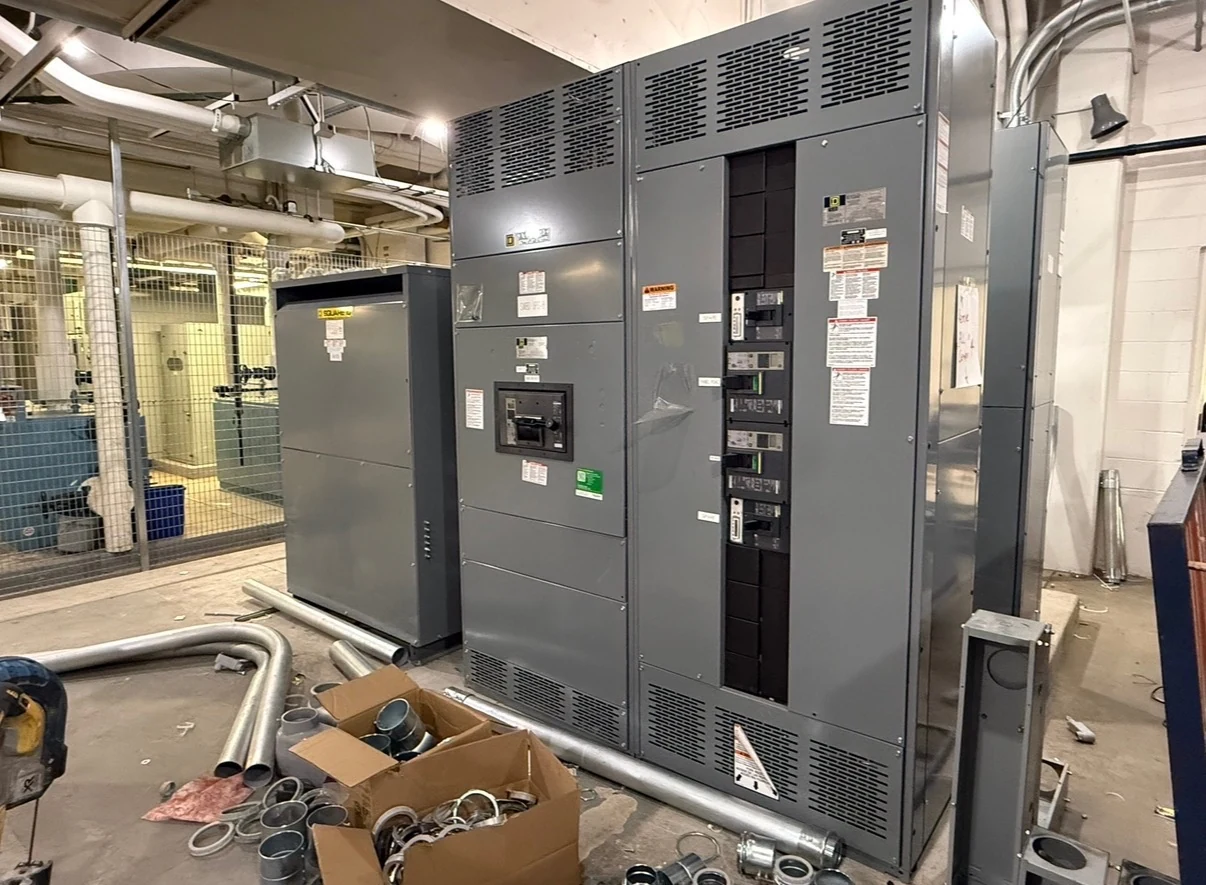
A switchgear lineup may be engineered as one electrical assembly but shipped in several sections so it can reach the installation room.
DIRECT FROM THE MANUFACTURER / NEW EQUIPMENT
THE MANUFACTURER’S PERSPECTIVE — 02
A switchgear lineup may be engineered as one electrical assembly but shipped in several sections so it can reach the installation room. Each shipping split creates mechanical and electrical interfaces that must be planned before fabrication. Specifying engineers, contractors and owners can reduce surprises by defining the split locations, receiving sequence and field responsibilities as part of the purchase.
Choose split points around the whole route
Start with the complete path from truck to final position, not just the truck bed. Provide the manufacturer with doorway dimensions, turns, floor loading, elevator or hatch limits, obstructions and available lifting access. Include the finished foundation elevation and any site restrictions that affect when sections can be moved.
A split can reduce the dimensions and handling weight of an individual shipment, but it adds field joints, alignment work and inspection points. Ask the manufacturer to identify proposed boundaries on the lineup elevation, along with each shipping unit’s dimensions, estimated weight and center of gravity or handling information when available.
Keep the electrical design intact across breaks
The main bus, neutral and equipment grounding connections may need to cross a shipping break; control, metering and communications wiring can cross it as well. The one-line diagram alone will not show every physical interface. Review section elevations and connection drawings together so the contractor can identify which links arrive separately and where they belong.
A convenient mechanical split is not automatically an acceptable electrical split. The manufacturer must design the connection and supports for the specified assembly and its applicable duty, including fault forces and enclosure requirements. Confirm that the proposed division, field connection method and any listing requirements are compatible with the specific equipment being supplied.
Coordinate alignment and adjoining equipment
Adjacent sections need a suitable foundation and sufficient alignment to mate as designed. Share the structural drawings, intended anchorage arrangement and floor conditions early; the equipment manufacturer and design team can then coordinate mounting details and acceptable tolerances. The installation contractor should verify site readiness against the approved drawings before equipment is positioned.
Do not isolate shipping splits from other interfaces. Incoming cables, outgoing feeders, busway flanges and wall openings may restrict the order in which sections can be set. Check door swing, access for connection work and required working space under applicable rules. An arrangement that fits on paper may still lack room for installation or future maintenance.
Define what arrives with each section
The purchase documents should identify shipping marks, section order, packing method and loose materials, such as joint hardware, bus links, barriers, covers and wiring accessories where required. Ask for a packing list and drawings that distinguish factory-installed parts from field-installed parts. This gives the receiving team a way to reconcile the shipment before crews are mobilized.
Clarify responsibility for unloading, rigging, protected storage and moving the sections indoors. Shipping protection is not necessarily suitable for prolonged outdoor storage; agree on storage conditions and how damage or missing items will be reported. When deliveries are staggered, identify the storage and handling plan for loose components until the entire lineup is ready.
Make field connections an explicit scope
A quotation should state who provides the field labor, consumables, special tools and connection instructions for each split. The contractor’s qualified electrical personnel should perform the work under the approved drawings, manufacturer instructions, site safety procedures and applicable requirements. Assign responsibility for restoring barriers and enclosure integrity, not just making the bus and wiring connections.
Request a clear handoff package with section identification, joint and terminal details, hardware identification, applicable torque requirements and control wiring schedules. If the manufacturer offers field support, define its scope separately from installation and commissioning. Changes to a split after approval can affect fabricated parts, documentation, logistics and the project schedule.
Plan inspection and schedule milestones
Factory testing can establish a baseline, but shipping and site reassembly introduce separate checks. Agree on receiving inspection, documentation of damage, verification of field joints and wiring, and any project-specific electrical tests. Define acceptance criteria and the party recording results; inspection and testing should be performed by qualified personnel using the approved procedures.
Work backward from the required installation window to drawing review, split approval, fabrication, shipment, receiving and commissioning. Reserve time for corrections and owner or engineer review rather than assuming every activity can occur immediately. A direct manufacturer serving San Antonio, South Texas and nationwide can quote the new assembly more accurately when these interfaces and responsibilities are defined up front.
LET'S BUILD SOMETHING RELIABLE — 03
Ready to talk
switchgear?
Tell us about the new equipment your project needs. Include as much or as little detail as you have today.
(951) 403-5738CALL TO DISCUSS YOUR PROJECT