
BUILT IN THE USA. READY FOR YOUR PROJECT.
Switchgear Shipping and Rigging
A new switchgear lineup can be electrically correct and still be difficult to deliver.
DIRECT FROM THE MANUFACTURER / NEW EQUIPMENT
THE MANUFACTURER’S PERSPECTIVE — 02
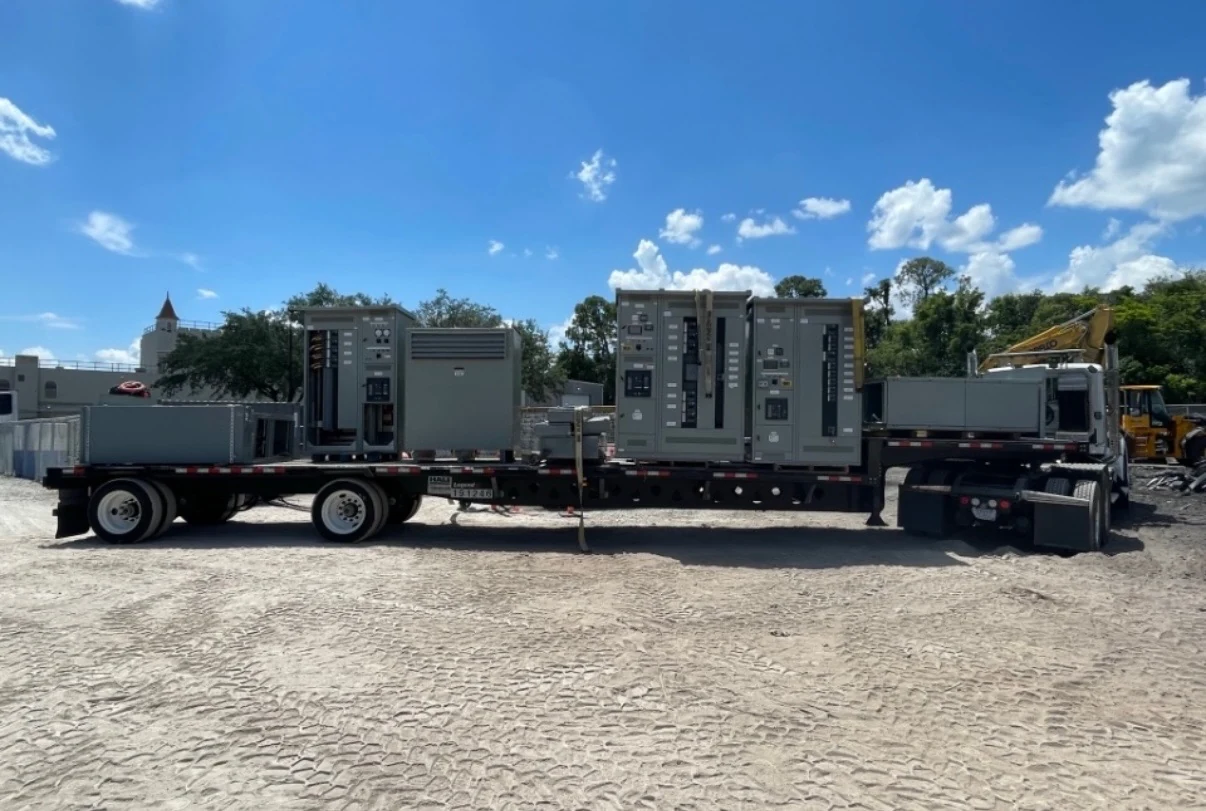
A new switchgear lineup can be electrically correct and still be difficult to deliver. Shipping divisions, unloading equipment, building access and field connections all affect its final arrangement. Specifying engineers, contractors and facility owners should address these interfaces with the manufacturer before approving drawings, rather than discovering at the loading dock that a section cannot reach its intended room.
Build the route into the equipment layout
Start with the destination, receiving hours and the entire path from the truck to the foundation. Record gate and door openings, turns, ramps, overhead obstructions, elevator dimensions and usable staging space. The narrowest doorway is not necessarily the controlling constraint: a turn may require more room than the section width alone suggests.
Provide the manufacturer with site drawings and any carrier or access restrictions, including allowable floor and pavement loading. Ask the contractor and structural engineer to evaluate temporary concentrated loads along the route. Crating, lifting hardware and handling equipment add to the envelope, so compare passage dimensions with the actual shipping configuration, not only the finished lineup.
Choose practical shipping divisions
A long lineup may be shipped in several sections to suit truck capacity, equipment access or unloading arrangements. Smaller pieces can ease a constrained route, but create additional field interfaces and may lengthen installation. Larger pieces reduce the number of joins while demanding greater handling capacity and more clearance at the site.
During submittal review, identify every proposed split on the elevation and one-line and confirm which buses, control circuits and mechanical connections cross it. Ask how the divisions affect the engineered assembly and any required listing or approvals. A convenient cut location is not automatically acceptable if it changes bracing, access or the intended equipment construction.
Request handling information for each section
The rigging contractor needs section-by-section shipping weights, overall dimensions, designated lifting provisions and center-of-gravity information, including any separately shipped components. Distinguish equipment weight from packaged gross weight and flag sections with unusually uneven loading. Confirm final values and revisions before the lift plan is completed; preliminary estimates are not a substitute for shipment documentation.
Have a qualified rigging contractor select handling equipment and prepare a site-specific plan based on the manufacturer’s instructions, available lifting clearances and ground conditions. Manufacturer-designated lifting points and orientation limits matter; do not assume that a structural member or enclosure roof is suitable for lifting. Resolve proposed handling exceptions with the manufacturer before delivery.
Make transport and receiving responsibilities explicit
The purchase documents should identify who arranges freight, permits if needed, unloading, rigging, insurance and temporary storage. Confirm the delivery location and vehicle access with the carrier and site team. Specialized transport or a constrained receiving window can affect cost and sequencing, so request these assumptions as part of the quotation rather than treating them as incidental.
Agree on packaging and weather protection appropriate to the route and storage conditions. On arrival, the receiving party should document visible condition and discrepancies on the delivery record and promptly notify the carrier and manufacturer under the applicable terms. Identify who will inspect concealed damage and protect the shipment while any issue is resolved.
Define the field reassembly package
For each split, request a section arrangement, match marks, connection drawings, a parts inventory and manufacturer instructions for field joining and inspection. Clarify which connection materials are included and which party supplies labor and site consumables. Separately packed devices and accessories should be identifiable against the packing list so they can be tracked to their intended sections.
The installer must coordinate alignment with the foundation, cable entry and adjacent equipment before completing field interfaces. Qualified electrical personnel should perform the electrical work in accordance with the applicable instructions and site safety procedures. The scope should also identify who checks field connections, performs required tests, records results and resolves discrepancies before energization authorization.
Connect delivery to the project schedule
Set milestones for approval of shipping drawings, release of final weights and dimensions, carrier booking, site readiness and the planned receipt date. Coordinate crane or other handling reservations with civil work, route access and installer availability. If a drawing revision changes a shipping section, circulate the updated information to the carrier and rigging contractor before plans are finalized.
Allow for inspection, placement, field reassembly and testing between delivery and the owner’s planned energization window. Ask the manufacturer to identify dependencies and exclusions in its proposal, then compare them with contractor and owner scopes. This makes responsibility gaps visible and provides a basis for revising the schedule without assuming a guaranteed transit or production duration.
LET'S BUILD SOMETHING RELIABLE — 03
Ready to talk
switchgear?
Tell us about the new equipment your project needs. Include as much or as little detail as you have today.
(951) 403-5738CALL TO DISCUSS YOUR PROJECT