
BUILT IN THE USA. READY FOR YOUR PROJECT.
Condensation Control in Switchgear
Condensation can form inside switchgear when a surface cools below the dew point of the surrounding air.
DIRECT FROM THE MANUFACTURER / NEW EQUIPMENT
THE MANUFACTURER’S PERSPECTIVE — 02
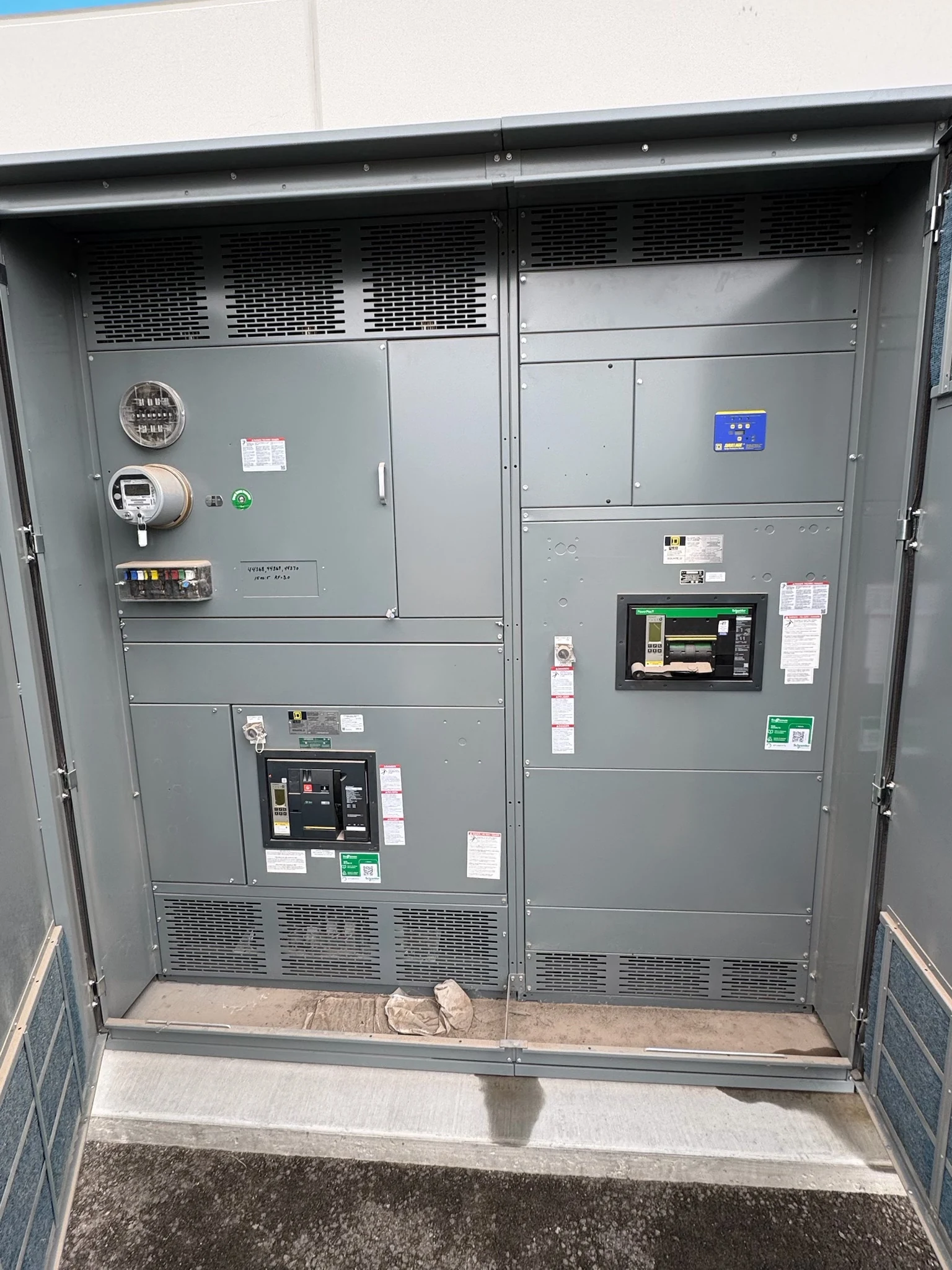
Condensation can form inside switchgear when a surface cools below the dew point of the surrounding air. Moisture combined with dust or contaminants can compromise insulation and promote corrosion. For a new distribution assembly, the owner, engineer, contractor, and manufacturer should address the site environment, auxiliary power, enclosure details, and inspection access together rather than treating a heater as a complete solution.
Start with the actual moisture exposure
Describe whether the lineup will be indoors, outdoors, under a canopy, or in an intermittently conditioned room. Provide expected ambient temperature and humidity ranges, periods of shutdown, exposure to rain or washdown, and any known flooding concerns. Coastal salt, industrial contaminants, or damp underground cable routes can make the consequences of moisture more severe.
The engineer should consider cold surfaces and changing conditions, not just average room temperature. A lineup that spends nights idle and is exposed to warm, humid morning air may experience condensation even when the room normally feels dry. Share anticipated operating and outage conditions so the manufacturer can evaluate the enclosure and environmental controls against the application.
Select heaters and controls as a system
Space heaters raise the temperature within an enclosure to reduce the chance that internal surfaces fall below the local dew point. Their capacity, placement, clearances, and control method need engineering review for the actual compartments. A thermostat, humidity control, or another approved arrangement may suit the application; the choice depends on exposure and equipment design.
Heaters add auxiliary load and can create unwanted heat when the assembly is already warm. Coordinate their operation with the permitted ambient and thermal limits of the equipment, and ask what happens if a control or heater fails. Do not assume that a heater eliminates the need to address water entry or room humidity.
Plan reliable auxiliary power and monitoring
Identify the heater supply source, voltage, available capacity, circuit protection, and who provides the field connection. If condensation is most likely when the main assembly is out of service, discuss whether an independent auxiliary supply is appropriate. A separate source can remain energized during a main outage, so clear identification and site isolation planning are essential.
Consider whether a heater failure, loss of supply, or abnormal humidity should generate a local indication or a signal to a building monitoring system. Agree on sensor locations, alarm contacts, point descriptions, and the installing contractor's wiring boundary. An alarm should prompt an investigation, not be mistaken for proof that every internal surface is dry.
Keep water out and provide a drainage path
Coordinate roof exposure, door seals, cable entries, conduit interfaces, foundation elevation, and site grading before the enclosure is released for fabrication. Water can travel along or collect in raceways, so the civil and electrical designs should address drainage and entry protection together. Specify the required enclosure protection for the actual environment rather than assuming a weatherproof label solves every pathway.
Where drainage or breathers are appropriate, their location and construction must be compatible with the assembly design and specified enclosure protection. Ask the manufacturer how openings, fittings, and any collected moisture are addressed. Field changes such as drilling openings can compromise the enclosure and any applicable listing; have proposed modifications reviewed and approved before installation.
Coordinate the room, delivery, and inspection
For indoor equipment, the building engineer should coordinate ventilation or dehumidification with switchgear heat rejection and the room's expected operating range. A tighter enclosure can limit contaminants and moisture entry, but it can also constrain heat dissipation. Outdoor enclosures present different rain, sun, and access challenges; select an engineered arrangement rather than transferring an indoor assumption to the pad.
Agree on protected shipment, dry storage, and the period between delivery and permanent auxiliary power. The owner should establish inspection intervals using the manufacturer's instructions and site conditions, including checks after water exposure or extended outages. Inspection and any electrical work belong to qualified personnel following site safety procedures; wet equipment should be assessed before energization.
Make moisture control visible in the purchase scope
Send the direct manufacturer the one-line, equipment location, environmental criteria, enclosure requirements, intended heater supply, and monitoring expectations. For projects in San Antonio, South Texas, or elsewhere, include site-specific conditions instead of relying on a regional climate description. Ask the proposal to distinguish included heaters and controls from field wiring, building systems, and foundation work.
Request drawings showing heater and sensor locations, auxiliary circuits, terminals, required power, and relevant enclosure details, along with inspection and maintenance information. Define any factory checks and records in the order, including responsibility for verifying control and alarm interfaces. Schedule design review before fabrication, then coordinate delivery, temporary protection, installation, and commissioning with the contractor and owner.
LET'S BUILD SOMETHING RELIABLE — 03
Ready to talk
switchgear?
Tell us about the new equipment your project needs. Include as much or as little detail as you have today.
(951) 403-5738CALL TO DISCUSS YOUR PROJECT