
BUILT IN THE USA. READY FOR YOUR PROJECT.
Switchgear Enclosure Selection
An enclosure is more than a metal shell: it establishes how a new distribution assembly meets its surroundings and how people will reach the equipment inside.
DIRECT FROM THE MANUFACTURER / NEW EQUIPMENT
THE MANUFACTURER’S PERSPECTIVE — 02
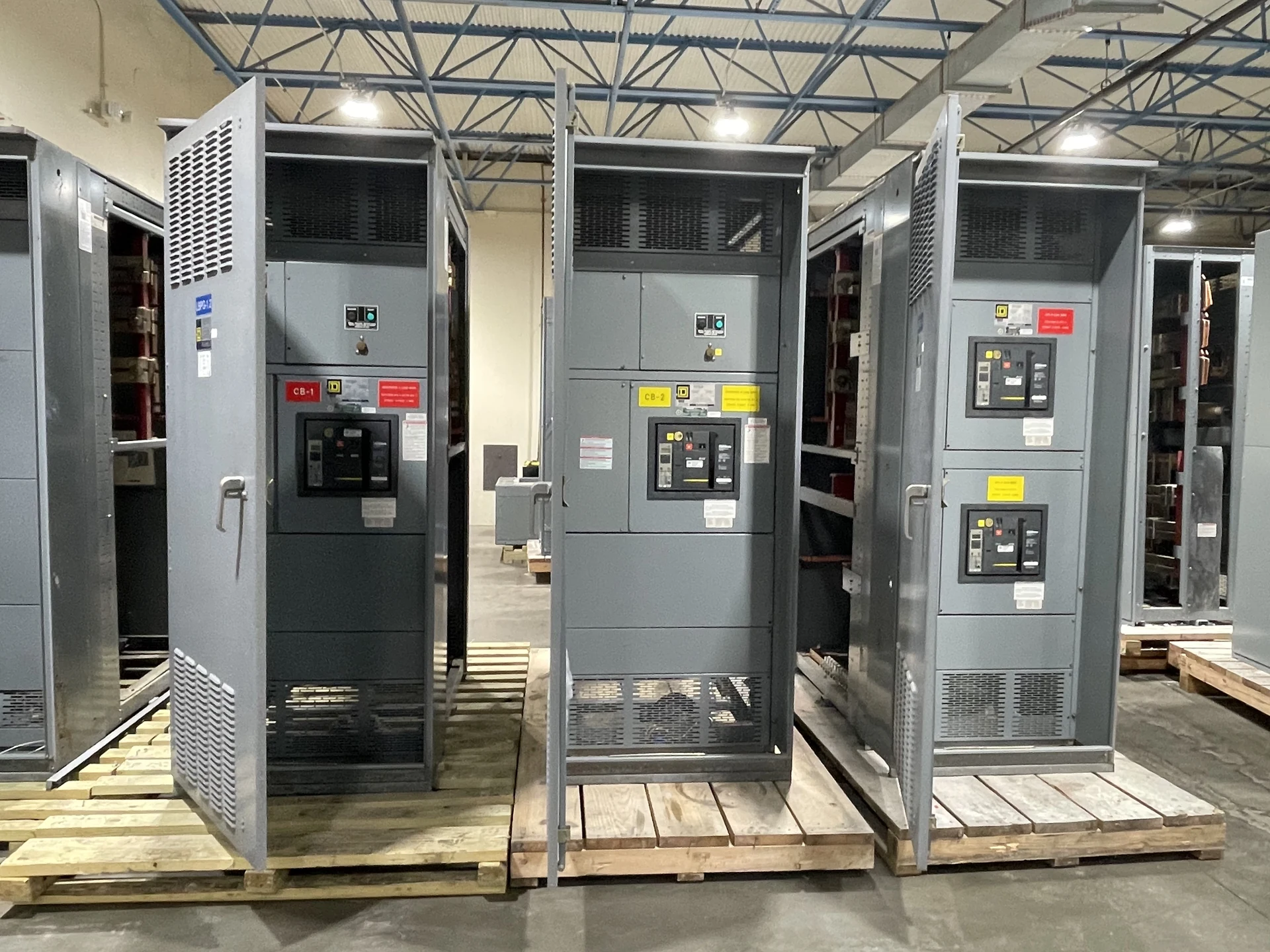
An enclosure is more than a metal shell: it establishes how a new distribution assembly meets its surroundings and how people will reach the equipment inside. Specifying engineers, contractors and facility owners should settle exposure, heat and access requirements together. A weather-resistant enclosure that cannot dissipate its internal heat, or fit through the delivery route, is not a complete solution.
Describe the actual exposure
Begin with the installation location and a description of normal and abnormal conditions. For an indoor electrical room, identify dust, humidity, washdown nearby, ventilation failures and any process chemicals. For an outdoor pad, document rainfall, sunlight, windblown debris, drainage patterns and potential contact with irrigation or cleaning equipment.
A covered location is not automatically equivalent to a controlled indoor room. Rain can be driven under a canopy, while doors or louvers can admit airborne particles. Share photographs, site plans and expected ambient temperature ranges with the manufacturer so the quotation addresses the exposure rather than simply saying indoor or outdoor.
Match ingress protection to the assembly
Enclosure type designations communicate different degrees of environmental protection; they are not interchangeable quality grades. A Type 3R designation, for example, is commonly considered for outdoor rain exposure, whereas an application subject to hose-directed water or corrosion may call for a different, suitably verified design. Establish the applicable standard and performance criteria with the project engineer.
Ask the manufacturer to identify the proposed enclosure type and its basis for the complete assembly, including doors, vents, cable entries and field-installed accessories. A rating for a separate component does not automatically establish the same rating for the assembled equipment. Specify who supplies entry fittings and who verifies the finished installation.
Treat corrosion and condensation separately
Corrosion depends on contaminants, moisture, materials and maintenance, not just whether the enclosure is outdoors. Coastal air, treatment chemicals or industrial fumes may justify a more resistant material or finish. Provide the expected agents and cleaning practices, then compare coatings, hardware, hinges and fasteners as a complete system.
Condensation can form inside even a rain-protected enclosure when temperature and humidity change. Discuss space heaters, humidity controls and drainage provisions where engineering finds them appropriate. Identify the control-power source, alarm requirements and inspection responsibilities; a protective finish alone does not resolve internal moisture or contaminated deposits.
Coordinate heat with the electrical design
Breakers, bus connections and other components produce heat under load. A tightly protected enclosure may restrict natural ventilation, while added vents or cooling equipment can affect the intended ingress protection. Give the manufacturer the load schedule, expected operating pattern, maximum site ambient and any room ventilation constraints.
The manufacturer and specifying engineer should review the completed design for temperature rise and equipment rating at the stated conditions. Compare the footprint, maintenance and power requirements of proposed cooling arrangements rather than assuming a fan solves every thermal problem. If filtered openings are proposed, include filter access and cleaning in the owner’s plan.
Design the site and access interfaces
Show cable entry direction, conduit locations, foundation elevation and any nearby walls or structures on the layout. The enclosure, pad and conduit openings must be coordinated so water is not directed toward the equipment. Confirm anchor locations and structural responsibilities with the civil and electrical designers before fabrication.
Allow for the applicable working clearances and for doors, removable panels and devices to be accessed as intended. Also check delivery-route dimensions, shipping splits and rigging space. Qualified personnel must plan installation, inspection and electrical work under applicable codes, site safety procedures and the manufacturer’s instructions.
Make the specification purchasable
A useful request to a direct manufacturer combines the one-line diagram and electrical duty with an exposure summary, enclosure type or performance criteria, temperature range, material preferences and access drawings. Identify required listings for the specific assembly and ask that any proposed deviations be clearly listed, rather than relying on a generic catalog description.
Request submittal elevations, entry and mounting details, heat information, environmental protection documentation and maintenance instructions as appropriate. Assign review and approval dates, field-sealing responsibilities and acceptance checks to the responsible parties. Component availability, drawing revisions and approval cycles can affect scheduling, so resolve enclosure exceptions before releasing the design for manufacture.
LET'S BUILD SOMETHING RELIABLE — 03
Ready to talk
switchgear?
Tell us about the new equipment your project needs. Include as much or as little detail as you have today.
(951) 403-5738CALL TO DISCUSS YOUR PROJECT