
BUILT IN THE USA. READY FOR YOUR PROJECT.
Temporary Power During Switchgear Replacement
Replacing a switchgear lineup can interrupt more than the circuits directly connected to it.
DIRECT FROM THE MANUFACTURER / NEW EQUIPMENT
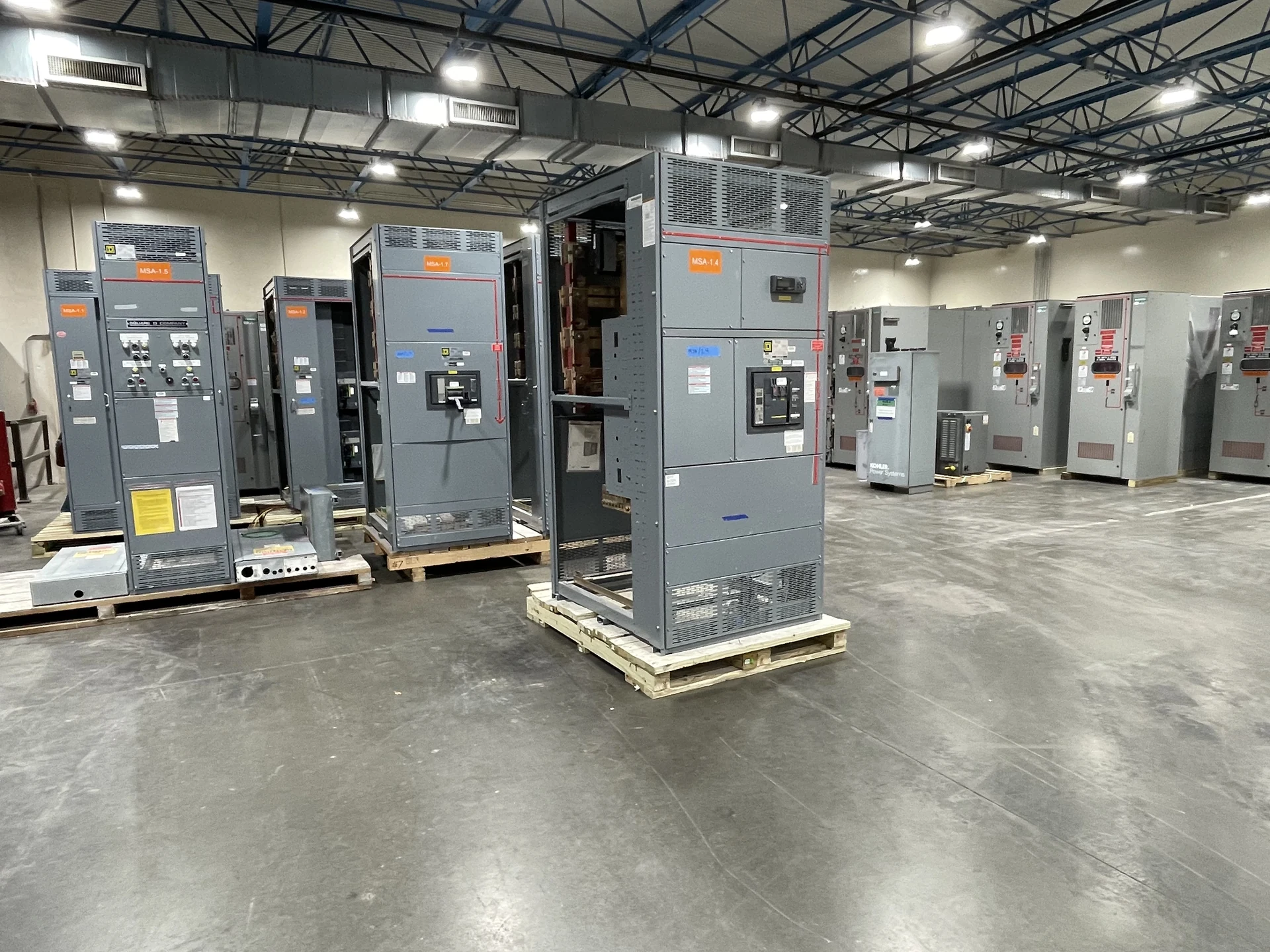
THE MANUFACTURER’S PERSPECTIVE — 02
Replacing a switchgear lineup can interrupt more than the circuits directly connected to it. Temporary power is a separate, engineered system that keeps selected loads operating while the permanent equipment is unavailable. Owners, specifying engineers and contractors should establish its limits early, then coordinate its interfaces with the manufacturer of the new assembly and the site outage plan.
Identify the loads that must stay on
Start with an annotated one-line and a load schedule identifying each affected feeder, operating hours and the consequence of an interruption. Separate loads that must run throughout construction from those that can stop briefly or be deferred. Include controls, ventilation and other supporting loads; an apparently independent process may rely on them.
For the selected loads, collect demand measurements where available, nameplate data, voltage and phase, power factor, and simultaneous operating assumptions. Motors may require significantly more capacity while starting than while running, and electronic loads may introduce harmonics. A qualified engineer can evaluate source capacity and voltage performance rather than sizing from a simple sum of breaker handles.
Compare sources against site constraints
A generator, an alternate utility arrangement or an available facility source may be considered if the project permits it. Each has different dependencies: fuel and emissions considerations for generation, utility approval for a service arrangement, and remaining capacity and outage exposure for an internal source. Confirm availability and feasibility before the shutdown schedule relies on any option.
The source must support the planned duration and the actual load sequence, not just steady-state demand. Evaluate starting duty, frequency and voltage tolerance, fuel replenishment where relevant, and the possibility that critical loads grow during the work. A reduced operating plan may lower temporary capacity needs, but the owner must accept the resulting production or occupancy limits.
Define connection points and protection
The engineer and contractor should identify each temporary connection on the one-line and confirm that the associated equipment, conductors, terminals and access can accommodate it. Cable routes, physical protection, environmental exposure, working space and removal access affect the design. A proposed connection at the new lineup should be reviewed with the manufacturer before drawings are released.
Source fault contribution and temporary protective devices can differ from normal conditions. The engineer should evaluate interrupting and assembly duties, coordination and ground-fault protection for each intended configuration. Grounding and neutral bonding depend on the source and transfer arrangement; those interfaces need an explicit design, not an assumption copied from the permanent system.
Plan transfers without unintended source overlap
Document the operating states for normal supply, temporary supply and the new permanent lineup, including the loads affected by each transition. Define the expected interruption, transfer equipment, interlocks and control indications. The design should address backfeed and unintended source paralleling; any intended paralleling requires a separately engineered and approved arrangement.
The outage plan should also describe what happens if the temporary source fails or permanent equipment is not ready. Establish a feasible recovery approach, decision authority and communications before the outage; a return to the previous state may not always be possible after demolition begins. Qualified personnel develop and execute the detailed switching and isolation procedures under site safety rules.
Separate supply, field work and approvals
The direct manufacturer supplies newly manufactured distribution assemblies to project teams in San Antonio, South Texas and nationwide. The purchase scope should identify whether any temporary connection provisions are included in the new equipment, and what remains the responsibility of others. A provision shown on a drawing is not a substitute for a complete temporary-power design.
Assign the engineer the system studies and connection design; assign the contractor installation, field coordination and removal as agreed in the contract. Identify who arranges the source, fuel or utility interface, permits, inspections, testing and operating personnel. The owner should approve load priorities, outage windows and the authority to proceed or pause.
Tie the temporary plan to procurement milestones
Include the latest one-line, load schedule, fault-current information, proposed connection locations and site constraints with the request for the new lineup. Ask for drawings showing terminal arrangements, access and any specified temporary interface, together with testing and documentation scope. Confirm project-specific equipment ratings, applicable listing requirements, component availability and any proposal exceptions.
Build the schedule around engineering review, approvals, equipment procurement, source availability, installation, inspection and commissioning rather than a promised delivery interval. Track changes in feeder locations or outage assumptions across both the permanent and temporary drawings. Close out with test records, updated diagrams and a documented handoff before the temporary system is removed by qualified personnel.
LET'S BUILD SOMETHING RELIABLE — 03
Ready to talk
switchgear?
Tell us about the new equipment your project needs. Include as much or as little detail as you have today.
(951) 403-5738CALL TO DISCUSS YOUR PROJECT