
BUILT IN THE USA. READY FOR YOUR PROJECT.
Phased Switchgear Replacement
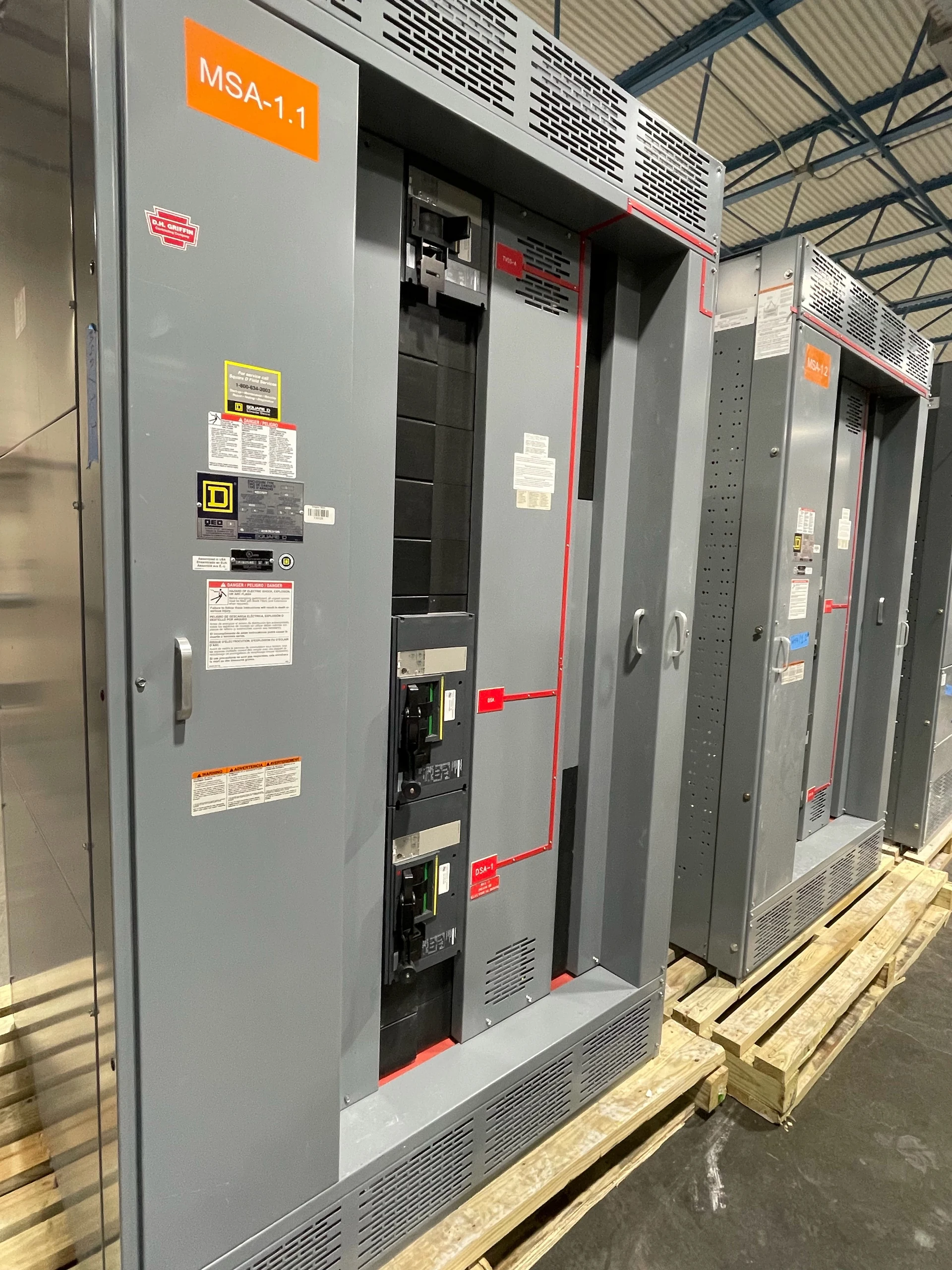
A phased switchgear replacement divides a single major change into manageable construction and outage intervals while portions of a facility continue to operate.
DIRECT FROM THE MANUFACTURER / NEW EQUIPMENT
THE MANUFACTURER’S PERSPECTIVE — 02
A phased switchgear replacement divides a single major change into manageable construction and outage intervals while portions of a facility continue to operate. The approach can reduce the disruption of one long shutdown, but it also creates interim electrical and physical interfaces. Engineers, contractors, and owners should define those interfaces before purchasing a new assembly or committing to a sequence.
Map loads before drawing phase lines
Start with the latest one-line diagram, feeder schedules, equipment elevations, and site plans. Identify each source and destination, normal operating arrangement, peak and expected load, and connections to transfer equipment or controls. Compare records with a qualified site assessment; undocumented changes can turn an apparently isolated feeder into a much larger outage.
Ask the owner to identify loads that cannot stop, loads that tolerate a short interruption, and processes that require an orderly shutdown and restart. Include less obvious dependencies such as ventilation, communications, fire protection, and control power. A phase matrix linking each load to its source, affected users, and acceptable outage window gives the design team a practical starting point.
Separate construction space from operating equipment
Plot the existing lineup, new sections, cable routes, delivery path, and staging area on a scaled plan. The space needed to install one phase may conflict with the access needed to operate or maintain another. Electrical working space, fire and egress requirements, equipment door swing, and lifting routes must be checked against applicable rules and the actual layout.
Define who controls each work boundary and how the contractor will protect occupied areas and equipment that remains in service. Temporary partitions, dust control, and restricted access may be needed, subject to the site safety plan. A shipping split that helps a lineup enter a room can add field assembly and inspection work; request the split locations and responsibilities early.
Engineer every intermediate system state
The final one-line alone is not enough. Prepare a diagram for each meaningful intermediate configuration, showing which sources, ties, feeders, and temporary connections are intended to be in service. For example, transferring one production feeder first may leave other loads on the existing distribution system while new equipment supplies only the migrated portion.
Have the engineer review available fault current, equipment duties, grounding, protective coordination, and control logic for each state. Interim source arrangements can change fault contributions and protection behavior even when the final design is acceptable. Identify settings, interlocks, and study updates that require approval; do not assume that a temporary configuration is electrically equivalent to the final one.
Define temporary power and connection ownership
Where continuity requires a temporary source, document the loads it must support, starting characteristics, connection location, expected duration, and allowable transfer interruption. The engineer should evaluate source capacity, protection, grounding, cable routing, and any utility or permitting requirements. A temporary source can reduce downtime for selected loads, but adds equipment, testing, space, and coordination costs.
Draw a clear boundary between the new assembly, temporary distribution, field conductors, and retained site equipment. Specify termination details, conductor quantities and entry direction, control and communication signals, and who supplies each interface. Review interlocking and source-transfer arrangements to prevent unintended backfeed or paralleling; the operating authority and acceptance of any temporary scheme remain site-specific.
Build outage windows around decision gates
Work backward from each proposed outage to the approvals and materials needed before it starts: design review, utility coordination where applicable, permits, equipment production, delivery access, and inspection arrangements. Component availability, drawing revisions, and test requirements can alter the schedule, so confirm milestones with the manufacturer and contractor rather than treating a quotation as a delivery guarantee.
For each window, name the affected loads, responsible parties, prerequisite checks, communications plan, and authorization to proceed. Include a realistic contingency for a failed inspection, unexpected field condition, or delayed return to service, with a preapproved rollback or alternate plan where feasible. Qualified personnel perform all switching, isolation, verification, and electrical work under the site's procedures.
Purchase for the sequence, not just the final lineup
A direct manufacturer of new power-distribution assemblies can quote more effectively when the request includes phase diagrams, physical constraints, required ratings, interface schedules, testing expectations, and the planned shipment sequence. Ask for a clear scope and exceptions covering section splits, temporary provisions, documentation, and any field support. Compare proposals on those boundaries as well as the assembly itself.
Before release, reconcile shop drawings with the phase matrix and obtain project-specific confirmation of applicable standards, ratings, and any required listing. Define factory and field test responsibilities, acceptance criteria, and records for each handoff. At turnover, collect revised one-lines, as-built connection drawings, test reports, settings records, and manuals so the owner can manage the final configuration.
LET'S BUILD SOMETHING RELIABLE — 03
Ready to talk
switchgear?
Tell us about the new equipment your project needs. Include as much or as little detail as you have today.
(951) 403-5738CALL TO DISCUSS YOUR PROJECT