
BUILT IN THE USA. READY FOR YOUR PROJECT.
Floresville Switchgear Manufacturing
Projects in Floresville, Texas can call for new distribution equipment that serves motors and remote feeders while fitting a demanding installation environment.
DIRECT FROM THE MANUFACTURER / NEW EQUIPMENT
THE MANUFACTURER’S PERSPECTIVE — 02
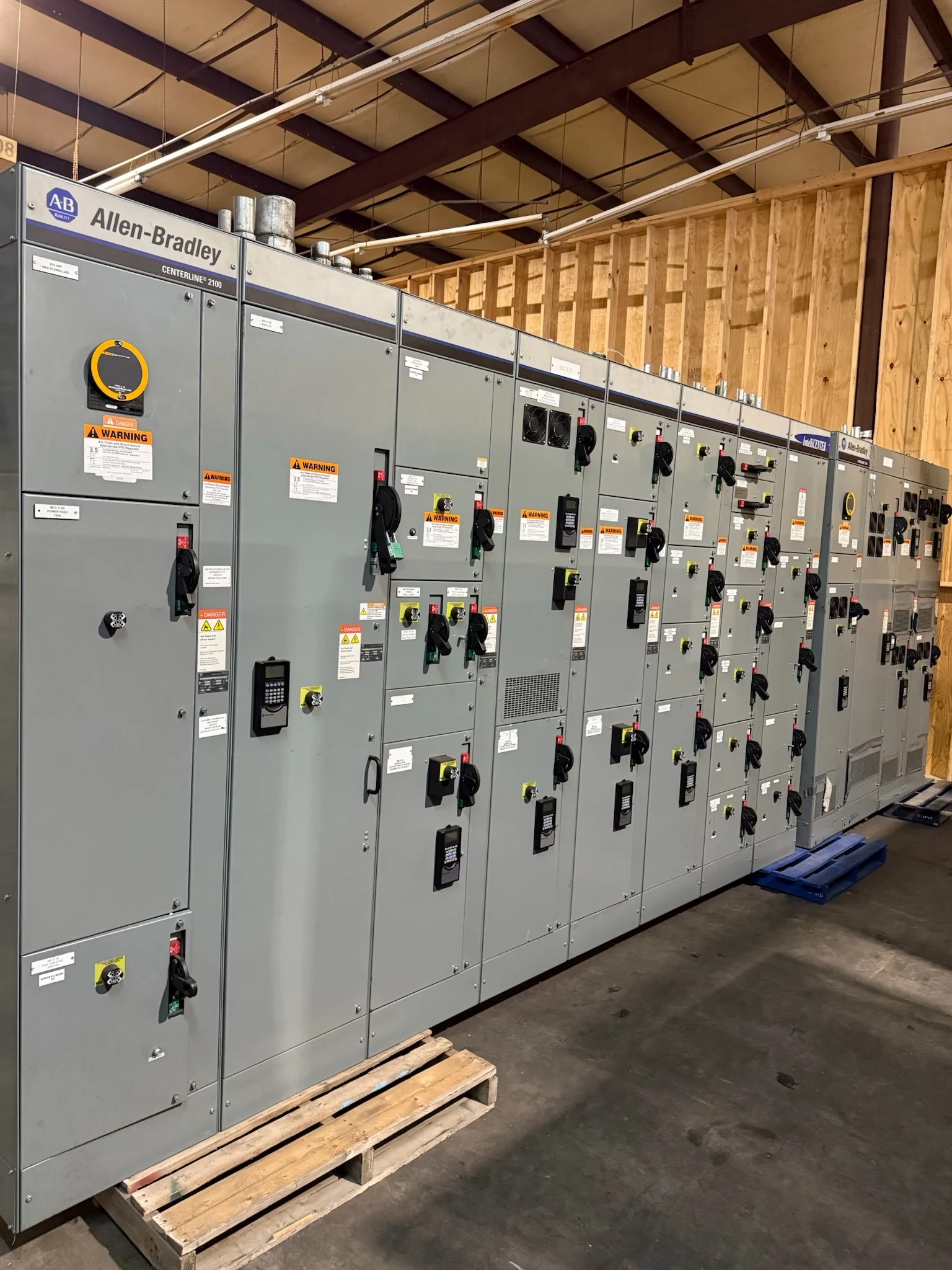
Projects in Floresville, Texas can call for new distribution equipment that serves motors and remote feeders while fitting a demanding installation environment. A useful manufacturing request describes more than a desired main breaker: it connects the power source, the loads, the enclosure and the delivery plan. As a direct American manufacturer, we work from the project’s stated requirements; the final assembly type, ratings and availability need engineering confirmation.
Start with the source and feeder map
Provide a current one-line diagram identifying the service, transformer, grounding arrangement and every proposed feeder destination. Include system voltage, phase and wire configuration, estimated demand and available fault current at the assembly. The project engineer should obtain utility information where needed and account for other sources, such as a generator, that may affect fault duty.
A remote pump or outbuilding can make feeder length as important as connected load. Share approximate route lengths, conductor information and starting conditions so the engineer can evaluate voltage drop as well as ampacity. A closer distribution point may reduce some cable length but introduce another enclosure and installation interface; compare the complete design rather than equipment cost alone.
Describe how each motor will operate
For each pump or process motor, list nameplate data, starting method, operating duty and whether it can start alongside other motors. Identifying which loads run together helps the design team assess demand and starting effects without assuming that every connected motor operates simultaneously. Note any future motor whose addition could change the feeder schedule.
Clarify whether starters, drives and local disconnects belong in the new assembly or in separate equipment. A variable-frequency drive can change the control and power-quality questions, including heat and harmonic effects. Document run commands, status signals and alarm interfaces with the control supplier; the engineer must coordinate motor protection with the selected devices and the complete system.
Balance protection with room to grow
Ask for a review of continuous current, interrupting duty and the assembly’s applicable short-circuit rating against the project data. Breaker or fuse selection also affects coordination with upstream and downstream protection. The design should express the desired coordination objectives, while recognizing that the results depend on device characteristics, settings and the range of available fault currents.
A spare feeder position can make an expansion easier, but an empty space alone does not establish spare electrical capacity. State the expected additional load and whether a future breaker or only physical space is wanted. Bus capability, available fault duty and the eventual feeder connection must be checked before any later addition is approved.
Match the enclosure to its actual setting
Specify indoor or outdoor installation and describe actual exposure: airborne dust, direct sun, humidity, irrigation spray or corrosive chemicals, as applicable. Identify the required enclosure type and finish instead of relying on the word weatherproof. The chosen protection must be compatible with the equipment, access needs and the environmental conditions supplied to the manufacturer.
Tighter protection against contaminants can complicate heat removal. Provide anticipated ambient conditions and identify whether the installation can accommodate ventilation or other temperature-control measures suitable for the design. Coordinate the pad or room, cable entry and equipment access with the contractor, and review proposed field openings so they do not compromise the enclosure or its applicable listing.
Make connection details part of the purchase
A quote request should include conductor material, sizes and quantities, preferred entry direction, termination requirements and space available for routing. If utility metering is involved, obtain the relevant utility requirements early. Review equipment elevations, one-line drawings, feeder schedules and connection details together; a sound electrical design still needs a workable path through the site.
Identify applicable codes, project standards, required documentation and any component-origin preferences in the specification; sourcing and availability require confirmation. For an appropriate switchboard, state whether UL 891 listing is required and verify the listing for the proposed assembly. Ask the manufacturer to identify exceptions and unresolved interfaces before the order is finalized.
Plan reviews, delivery and field responsibility
Build the schedule around design information, quotation review, approved submittals, component availability, manufacturing, any specified factory tests and shipping. Changes after approval can affect both scope and timing. Give the receiving team the site’s road, gate and unloading constraints, and coordinate shipment dimensions, lifting information and any shipping splits with the manufacturer.
Assign responsibility for foundations, field wiring, protection studies and settings, inspections and commissioning in the project documents. Agree on required test records, manuals and final drawings for turnover. Installation, testing and energization belong to qualified personnel following applicable codes, site safety procedures and manufacturer instructions; utility and authority approvals should be incorporated into the project plan.
LET'S BUILD SOMETHING RELIABLE — 03
Ready to talk
switchgear?
Tell us about the new equipment your project needs. Include as much or as little detail as you have today.
(951) 403-5738CALL TO DISCUSS YOUR PROJECT