
BUILT IN THE USA. READY FOR YOUR PROJECT.
Del Rio Switchgear Manufacturing
For a Del Rio project, an outdoor switchgear purchase starts with the conditions at the proposed equipment location, not simply with a weatherproof label.
DIRECT FROM THE MANUFACTURER / NEW EQUIPMENT
THE MANUFACTURER’S PERSPECTIVE — 02
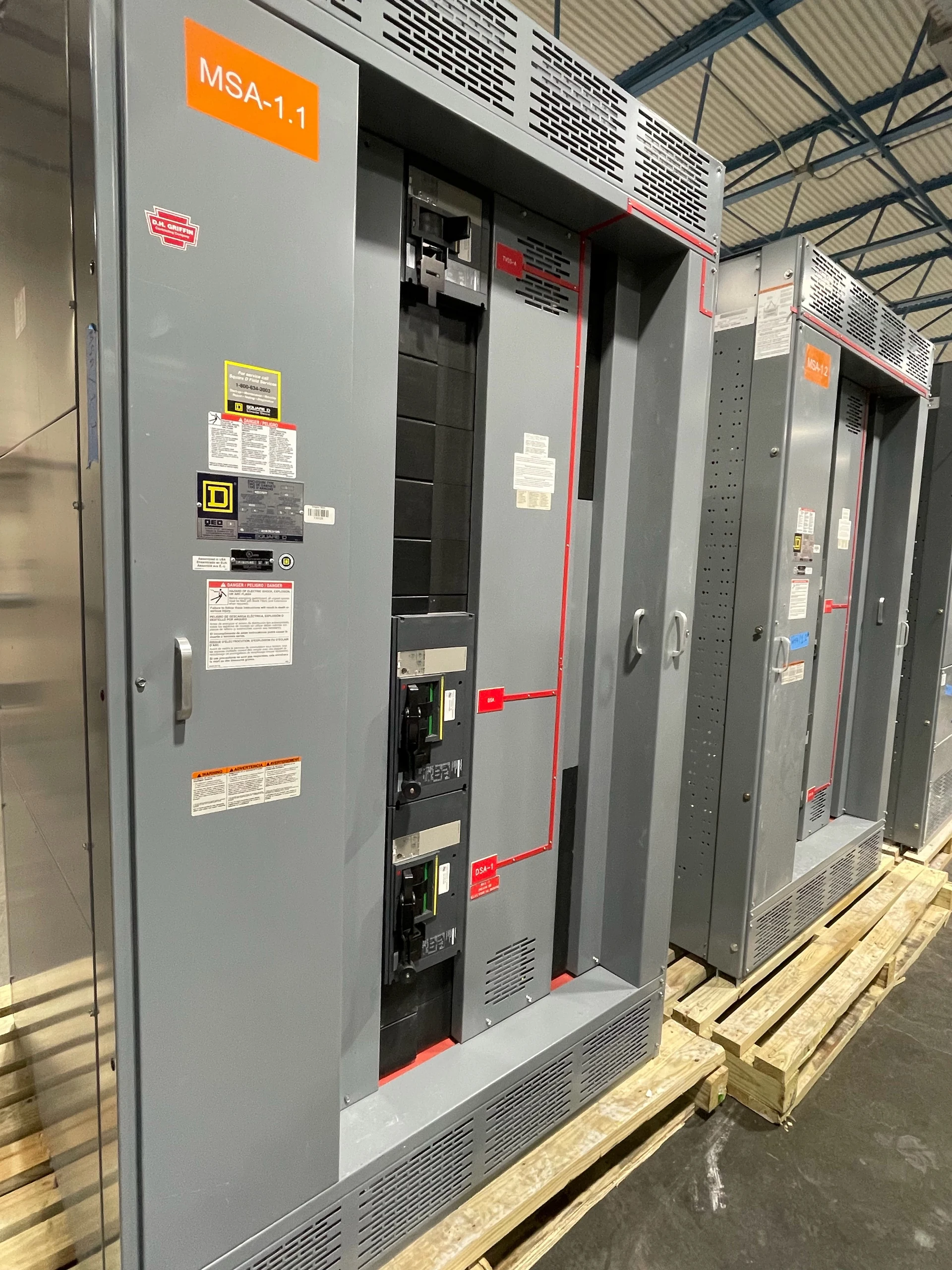
For a Del Rio project, an outdoor switchgear purchase starts with the conditions at the proposed equipment location, not simply with a weatherproof label. Owners, engineers and contractors can work directly with a manufacturer of new power-distribution assemblies to define the electrical duty, exposure and physical interfaces together. A well-prepared request helps identify design questions before enclosure choices or delivery dates become assumptions.
Describe the actual exposure
Provide a site plan and identify whether the lineup will stand in the open, under a canopy or near a building. Note likely paths for wind-driven rain and dust, irrigation spray, direct sun and any nearby washdown. If chemicals or other corrosive substances are present, identify their source and concentration when known rather than relying on a generic description of a harsh environment.
Ask the design team to establish project ambient temperature, solar exposure, humidity and elevation criteria. Day-to-night temperature changes can produce condensation even when the enclosure is not directly wetted. For a classified hazardous location, document the classification and boundaries separately; an outdoor enclosure designation alone does not establish suitability for that location.
Select protection without trapping heat
The specified enclosure type should reflect the project’s expected ingress and access conditions. Compare the proposed assembly’s documented enclosure rating and construction with the specification, including doors, seams, cable openings and ventilation provisions. A more restrictive enclosure may reduce pathways for contaminants, but it can also make heat management, inspection or routine access more difficult.
Discuss enclosure materials, coating systems, fasteners and gasket details in relation to the actual exposure and intended maintenance plan. Request confirmation that any vents, filters or other accessories are compatible with the completed enclosure’s required protection. A designation is not, by itself, proof of corrosion resistance, thermal performance or suitability for every outdoor hazard.
Account for temperature and moisture
The engineer should provide anticipated loads, operating profiles and ambient conditions so the assembly can be evaluated for heat buildup. Bus, protective devices and electronics must be assessed as part of the proposed design; adding a shade or changing ventilation may affect the layout. Confirm any applicable derating or temperature limitations with the manufacturer rather than assuming the nameplate current applies in every environment.
Where condensation is a concern, ask whether a space heater, humidity controls or other measures are appropriate, and identify the control-power source and monitoring responsibilities. These features add wiring and maintenance considerations. Review drainage and moisture management as part of the enclosure design, without compromising its required ingress protection.
Coordinate pad, access and delivery
The civil and electrical teams should coordinate foundation elevation, anchorage, conduit locations, cable entry and finished grade with the manufacturer’s drawings. Consider site drainage and project flood criteria before fixing the pad elevation. Door swing, equipment working space and a stable approach for qualified personnel must be reviewed against the applicable codes and actual layout.
For delivery to Del Rio, share the site access route, unloading restrictions and lifting arrangements early. Ask for shipping dimensions, weights, lifting points and any shipping splits when available. The contractor should coordinate receiving, storage and field assembly responsibilities; the enclosure must remain protected from damage and water intrusion while awaiting installation.
Build a comparable quote package
Supply a current one-line diagram, system voltage and configuration, load and feeder schedule, available fault-current information, protection requirements and planned expansion. Indicate the utility service and metering interface where applicable, along with top or bottom cable entry and conductor details. Engineering must confirm the assembly and device ratings against the completed project data.
Include the enclosure exposure criteria, requested materials and finishes, site dimensions and required documentation in the same package. Ask each proposal to identify equipment included, assumptions, exclusions and unconfirmed items. Specify any applicable equipment standard and required listing; for a switchboard where UL 891 is relevant, verify the listing and its scope for the proposed assembly.
Close the review and handoff gaps
Agree on milestones for design inputs, drawing review, component procurement, fabrication, inspection and shipment. Final enclosure details or late changes to the pad and cable routing can affect more than the equipment drawing. Track approvals and revisions with the contractor, engineer and utility as applicable; a quoted schedule should identify its dependencies rather than be treated as an unconditional promise.
Request submittals covering elevations, mounting and connection details, ratings, enclosure features and agreed factory test records. At turnover, coordinate manuals and final drawings with the owner’s maintenance plan. Installation, field testing and energization are the responsibility of appropriately qualified personnel under site procedures, applicable codes and manufacturer instructions.
LET'S BUILD SOMETHING RELIABLE — 03
Ready to talk
switchgear?
Tell us about the new equipment your project needs. Include as much or as little detail as you have today.
(951) 403-5738CALL TO DISCUSS YOUR PROJECT