
BUILT IN THE USA. READY FOR YOUR PROJECT.
Boerne Switchgear Manufacturing
For a Boerne project, a useful switchgear purchase starts with more than a proposed amperage.
DIRECT FROM THE MANUFACTURER / NEW EQUIPMENT
THE MANUFACTURER’S PERSPECTIVE — 02
For a Boerne project, a useful switchgear purchase starts with more than a proposed amperage. Owners and contractors need to show how the new distribution assembly will be exposed, reached and connected. A direct manufacturer can use that information to develop an equipment scope, while the project engineer and installing contractor resolve the site-specific electrical and construction interfaces.
Describe the actual outdoor exposure
An outdoor location should be documented as a set of conditions, not simply marked outdoors on a request. Provide the proposed pad location and note sun exposure, prevailing rain paths, possible standing water, dust sources and any chemicals or washdown activities nearby. Photos and a site plan help distinguish a protected position from equipment exposed on every side.
Ask the design team to evaluate expected ambient temperatures, solar heating and condensation as well as moisture entry. An enclosure selected for weather exposure still needs a compatible ventilation strategy and properly detailed field penetrations. The engineer should coordinate drainage and elevation with the civil design rather than assume the enclosure alone addresses water risk.
Balance enclosure protection and heat
The appropriate enclosure construction depends on the documented environment and the equipment inside it. Discuss the specified enclosure type, finish, corrosion concerns, ventilation and access provisions with the manufacturer. A more protective arrangement may alter heat dissipation, service access or overall dimensions, so its suitability must be evaluated as part of the complete assembly.
Where temperature swings or humidity make condensation a concern, ask whether environmental controls are appropriate and what auxiliary power they require. Describe any canopy or building overhang, but do not substitute that description for an agreed enclosure specification. Confirm the applicable listing and installation conditions for the proposed assembly before approving the submittal.
Turn the load plan into a distribution scope
Provide a current one-line diagram identifying sources, service equipment, main devices and feeder destinations. Add a load schedule with existing demand assumptions, proposed loads and planned expansion. Phase and wire configuration, nominal system voltage, grounding arrangement and available fault-current information give the manufacturer and project engineer a starting point for selecting and verifying the assembly.
A future feeder can be planned as spare space or as an installed device, but those choices differ in initial cost, physical layout and future work. Identify large motors or other significant loads, metering needs and continuity priorities. The engineer should coordinate protection and system studies with the final equipment and utility information, not infer adequacy from a nominal current alone.
Make access part of the layout
Give the manufacturer a dimensioned site plan showing the pad, nearby walls, fences, grade changes and likely cable routes. Equipment doors, removable components and maintenance areas may require more room than the enclosure footprint suggests. The design team must verify working space and access against applicable requirements and the specific equipment arrangement.
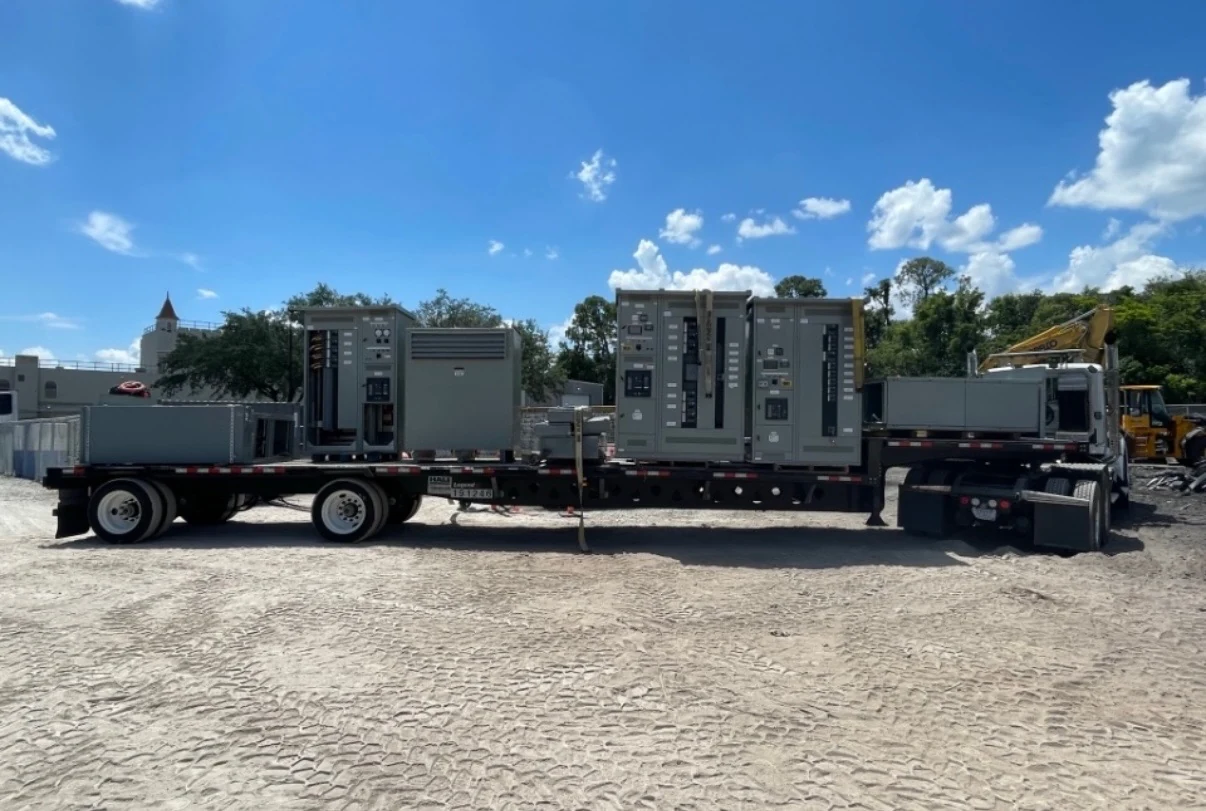
For delivery, check the route from the unloading point to the pad, including gates, turning room, overhead obstructions and ground conditions. Request shipping dimensions, weights and lifting information once available. If a lineup must ship in sections, define where it will be assembled and which qualified contractor is responsible for field connections and inspection.
Review interfaces before releasing the order
Use the quotation to compare the actual scope: incoming and outgoing cable entry, termination quantities, protective devices, metering, enclosure features and any spare positions. Identify assumptions and exceptions, including utility requirements that remain open. A lower initial equipment cost may not represent the same project value if site modifications or required documentation are excluded.
Request drawings that show the one-line, elevations, dimensions, terminal locations, foundation and anchorage information, along with component schedules and applicable test documentation. The electrical, civil and structural designers can use these deliverables to resolve conduit routing, pad details and access. Confirm who approves revisions and which changes affect manufacturing or delivery planning.
Coordinate delivery, installation and turnover
Build the schedule around design inputs, utility coordination where applicable, submittal review, component availability, fabrication, inspection and transport. Set a required delivery window, but ask the manufacturer to identify dependencies and confirm its project-specific schedule rather than rely on a blanket lead-time promise. Track open decisions so a late change to cable entry or enclosure features does not surprise the installation team.
The owner and contractor should also assign receiving, storage, installation, field testing and commissioning responsibilities. For a new assembly serving an operating facility, coordinate affected loads and any outage with stakeholders. Qualified electrical personnel must plan and perform electrical work under site safety procedures, applicable codes and manufacturer instructions; turnover should include final drawings, test records and maintenance information.
LET'S BUILD SOMETHING RELIABLE — 03
Ready to talk
switchgear?
Tell us about the new equipment your project needs. Include as much or as little detail as you have today.
(951) 403-5738CALL TO DISCUSS YOUR PROJECT