
BUILT IN THE USA. READY FOR YOUR PROJECT.
Converse Switchgear Manufacturing
A service upgrade in Converse can affect more than the main electrical room: tenants, production schedules, utility metering and downstream feeders may all shape the job.
DIRECT FROM THE MANUFACTURER / NEW EQUIPMENT
THE MANUFACTURER’S PERSPECTIVE — 02
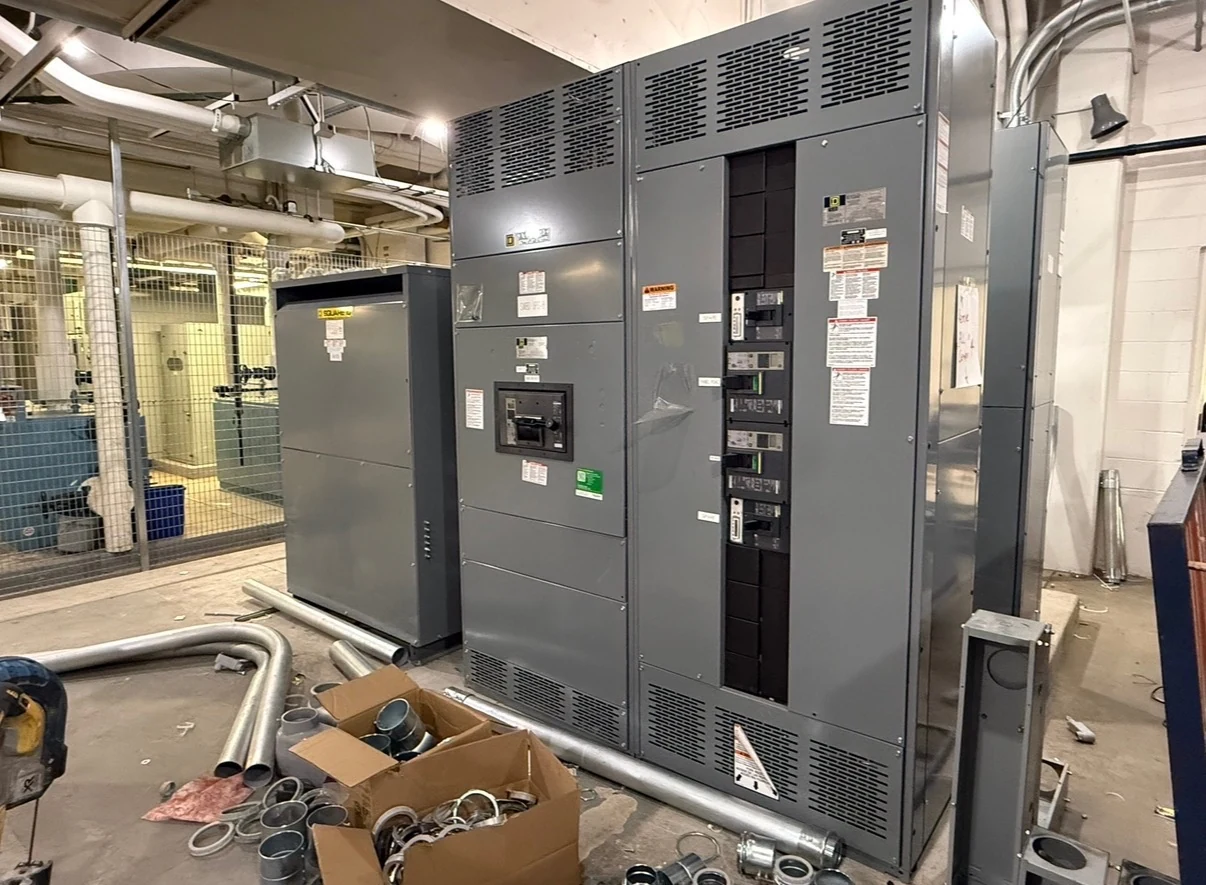
A service upgrade in Converse can affect more than the main electrical room: tenants, production schedules, utility metering and downstream feeders may all shape the job. A direct American manufacturer of new switchgear and distribution assemblies can work with the owner, engineer and electrical contractor to define equipment around those interfaces before a phased installation is scheduled.
Start with the service that must support the load
Give the design team a current one-line diagram, existing service information and a load schedule that separates present demand from planned additions. Include major motors, expected operating patterns and any alternate sources. Metered demand history can be useful, but it does not by itself establish the capacity or protection needed for an altered distribution system.
Where records are incomplete, the contractor and engineer should identify what needs qualified field verification before dimensions and ratings are fixed. Nameplate data, feeder destinations and documented modifications help distinguish a genuine capacity limitation from a request for more circuits. This early effort gives the manufacturer a clearer basis for a quote and reduces later changes.
Bring utility and metering decisions forward
The engineer and contractor should coordinate with the serving utility on the proposed service arrangement, available fault-current information, metering provisions and the division of responsibilities. The utility's requirements can affect incoming termination space, service access and equipment layout. Confirm who obtains the utility's approval and what information must accompany the request.
A customer-owned power meter is not automatically a substitute for utility revenue metering. If both are required, identify each meter's function, instrument transformer provisions and connection boundaries. Flag unresolved utility information on the equipment submittal rather than treating an assumed service configuration as a final design.
Build the outage plan around real dependencies
For an occupied facility, list which loads must remain available, which can be interrupted and who can authorize each outage. The contractor can use that list to develop a proposed sequence for installing the new assembly and transferring feeders. The design team should check that the proposed construction stages are electrically and physically feasible.
Temporary power may protect critical operations, but it introduces its own source capacity, protection, grounding and connection questions. The responsible engineer and contractor must design and review those interfaces, including any restrictions on connecting sources together. Agree on an outage window and contingency plan with the owner and utility; equipment delivery alone does not establish readiness.
Resolve the fit before fabrication
Provide measured room dimensions, access routes and photographs along with the proposed equipment location. Mark structural obstructions, door openings, overhead services and the intended incoming and outgoing cable paths. The manufacturer can then develop a layout for the team to review against applicable working space, ventilation and maintenance access requirements.
Feeder conductor sizes, quantities, entry direction and termination arrangements affect internal space as well as the building route. A sectional shipment may make access possible where a single lineup cannot pass through a doorway, but it also creates field assembly and inspection responsibilities. Put those boundaries in the quotation and installation plan.
Match protection and documentation to the design
Specify system configuration, continuous load requirements, available fault duty and the protective functions needed at each feeder. The engineer should evaluate the assembly and devices together and coordinate their characteristics with the broader distribution system. A larger main device alone does not prove that downstream feeders, equipment or the utility connection can support added load.
Ask for a proposed one-line, elevations, device schedule and a clear list of exceptions for review. If an appropriate switchboard assembly is specified to UL 891, verify the applicable listing and its project-specific scope rather than assuming the same standard applies to every type of switchgear. Final suitability depends on the design and approval process.
Align procurement milestones with field work
A useful purchase package defines the equipment scope, installation interfaces, submittal review, requested inspection or factory tests and required turnover records. Compare proposals on those details as well as on device selection and commercial terms. Identify who supplies foundations, field conductors, protection settings, temporary power and commissioning services so that gaps do not emerge at handoff.
Build the schedule around design information, review cycles, component availability, fabrication, shipping and the agreed outage sequence; confirm dates with the parties responsible rather than assuming a fixed lead time. Qualified electrical personnel should perform installation, testing and energization under approved site procedures, applicable requirements and manufacturer instructions. Retain final drawings, test records and manuals for the owner.
LET'S BUILD SOMETHING RELIABLE — 03
Ready to talk
switchgear?
Tell us about the new equipment your project needs. Include as much or as little detail as you have today.
(951) 403-5738CALL TO DISCUSS YOUR PROJECT