
BUILT IN THE USA. READY FOR YOUR PROJECT.
Eagle Pass Switchgear Manufacturing
A new electrical service in Eagle Pass depends on more than a correctly sized distribution lineup.
DIRECT FROM THE MANUFACTURER / NEW EQUIPMENT
THE MANUFACTURER’S PERSPECTIVE — 02
A new electrical service in Eagle Pass depends on more than a correctly sized distribution lineup. The owner, design engineer, electrical contractor, serving utility and inspecting authority need compatible information at the right stages. Buying a newly manufactured assembly directly from the manufacturer can simplify technical questions, but the project team still needs to coordinate approvals, installation and energization responsibilities.
Establish the service boundary before requesting a quote
Start with a current one-line diagram showing the utility supply, service disconnect, distribution feeders and any alternate sources. Include system voltage, phase and wire configuration, calculated demand, anticipated expansion and the available fault-current information provided for the actual service. Identify which values remain assumptions so the manufacturer can explain their effect on the proposed assembly.
A service switchboard may be appropriate for one project, while another specification calls for a different assembly. Have the engineer establish the equipment type, applicable standards and service-entrance requirements. The choice affects construction, protection, space and documentation; a label on a quotation is not proof that the proposed lineup meets the complete design.
Translate utility requirements into drawing details
Ask the serving utility for its current service and metering requirements rather than assuming a standard arrangement. Provide its written requirements to the design team and manufacturer, including the service delivery point, incoming conductor arrangement, metering equipment, access provisions and any required utility review. Identify who supplies and installs each metering component.
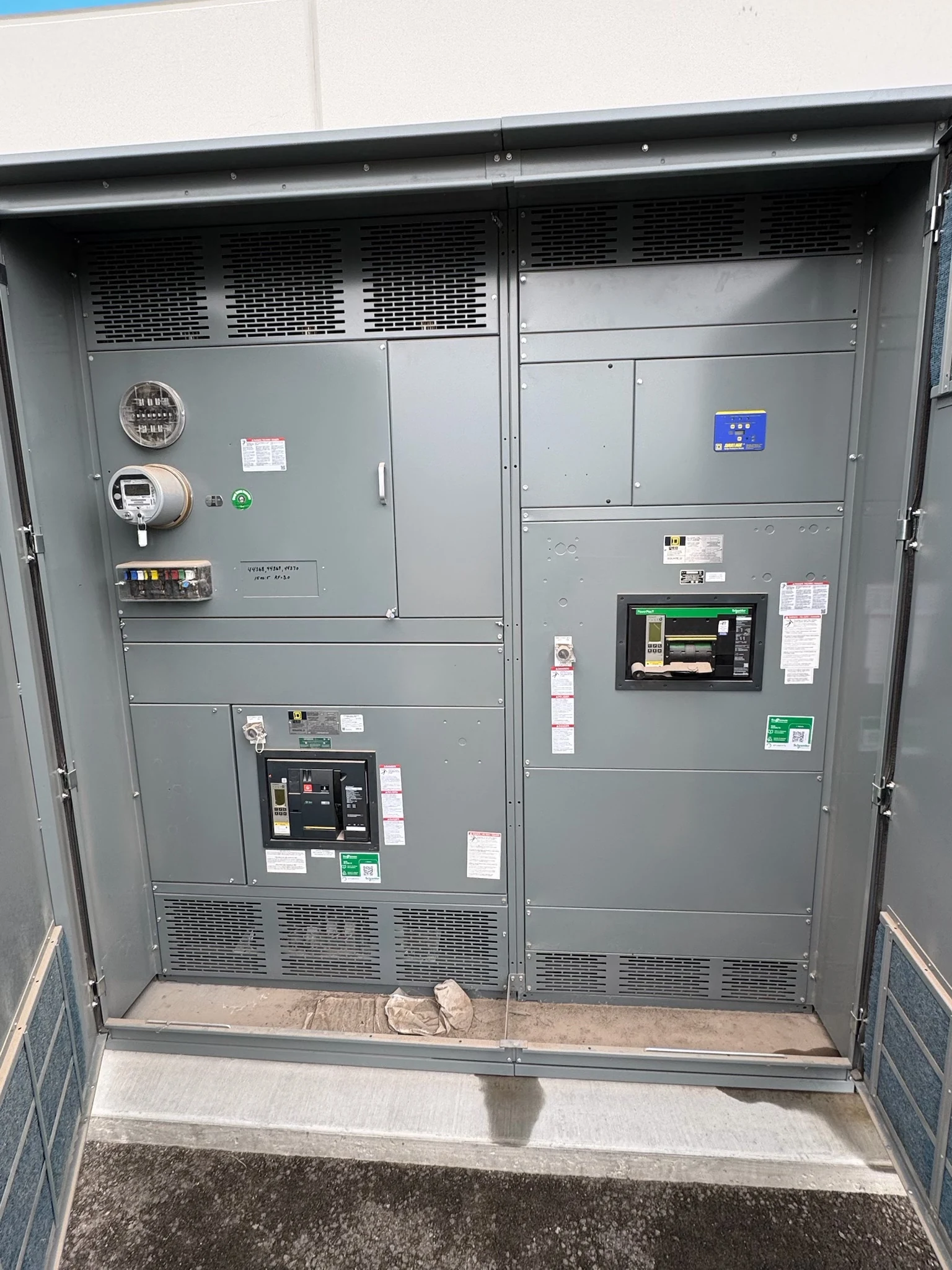
Utility metering and owner monitoring may have different purposes and equipment. A project may need separate spaces or interfaces for revenue metering and a facility power meter. Show compartment access, instrument transformer provisions and ownership boundaries on the drawings; confirm the utility will accept the arrangement before releasing a design that is difficult to change.
Make the submittal useful to reviewers
Request an equipment package with a one-line, front elevations, dimensions, equipment and device schedules, terminal information, nameplate data and identified exceptions. Review incoming and outgoing cable locations against the room or outdoor pad design. The engineer should verify the proposed continuous-current and short-circuit ratings against the project data, not merely the main device size.
For an applicable low-voltage switchboard, the specification may require a UL 891 listing. Confirm the actual assembly, configuration and listing scope for the project; other equipment types may be governed by different standards. Route questions to the authority having jurisdiction and utility as applicable, and record their responses alongside the approved drawing revision.
Define what inspection and testing will cover
Separate factory inspection from field acceptance in the purchase documents. Specify requested visual and wiring checks, any functional tests, witness requirements, acceptance criteria and the records to be supplied. A witnessed factory test can expose interface problems before shipment, but it adds coordination and does not replace the inspections required after installation.
The contractor and qualified test personnel should plan site checks using the approved documents, applicable requirements and manufacturer instructions. Agree who records discrepancies, resolves them and signs off. Permit or service inspections, utility acceptance and authorization to energize are distinct milestones; a factory report alone should not be treated as approval for all three.
Close physical and electrical interface gaps
Provide the manufacturer with access drawings, cable entry direction, conductor quantities and sizes, grounding and bonding design, and any foundation or anchorage criteria. The contractor must coordinate field connections and required working space with the approved equipment layout. If shipping sections are necessary, identify the field assembly work and documentation needed at those joints.
Also identify external control power, remote indications and connections to transfer or generator equipment where applicable. Assign protection studies and device settings explicitly rather than assuming they are included with the assembly. The engineer, contractor and manufacturer should resolve mismatched terminal details or missing signals through documented revisions before installation begins.
Schedule reviews through turnover
Build the procurement schedule around design inputs, quotation, drawing review, utility coordination, fabrication, testing and delivery. Ask for a project-specific schedule and update it when requirements or component availability change. Early decisions on metering and incoming connections can reduce redesign, while a late change may affect both manufacturing and inspection dates.
Before delivery, assign receiving, storage, rigging and damage-reporting responsibilities. At turnover, collect final drawings, manuals, applicable listing information, test reports and outstanding issue records. The owner and contractor should arrange inspection and any outage or energization window with the responsible parties; qualified personnel perform electrical work under the site safety plan and applicable rules.
LET'S BUILD SOMETHING RELIABLE — 03
Ready to talk
switchgear?
Tell us about the new equipment your project needs. Include as much or as little detail as you have today.
(951) 403-5738CALL TO DISCUSS YOUR PROJECT