
BUILT IN THE USA. READY FOR YOUR PROJECT.
Kerrville Switchgear Manufacturing
A new switchgear lineup is only useful when it can reach the electrical room and enter service in the right sequence.
DIRECT FROM THE MANUFACTURER / NEW EQUIPMENT
THE MANUFACTURER’S PERSPECTIVE — 02
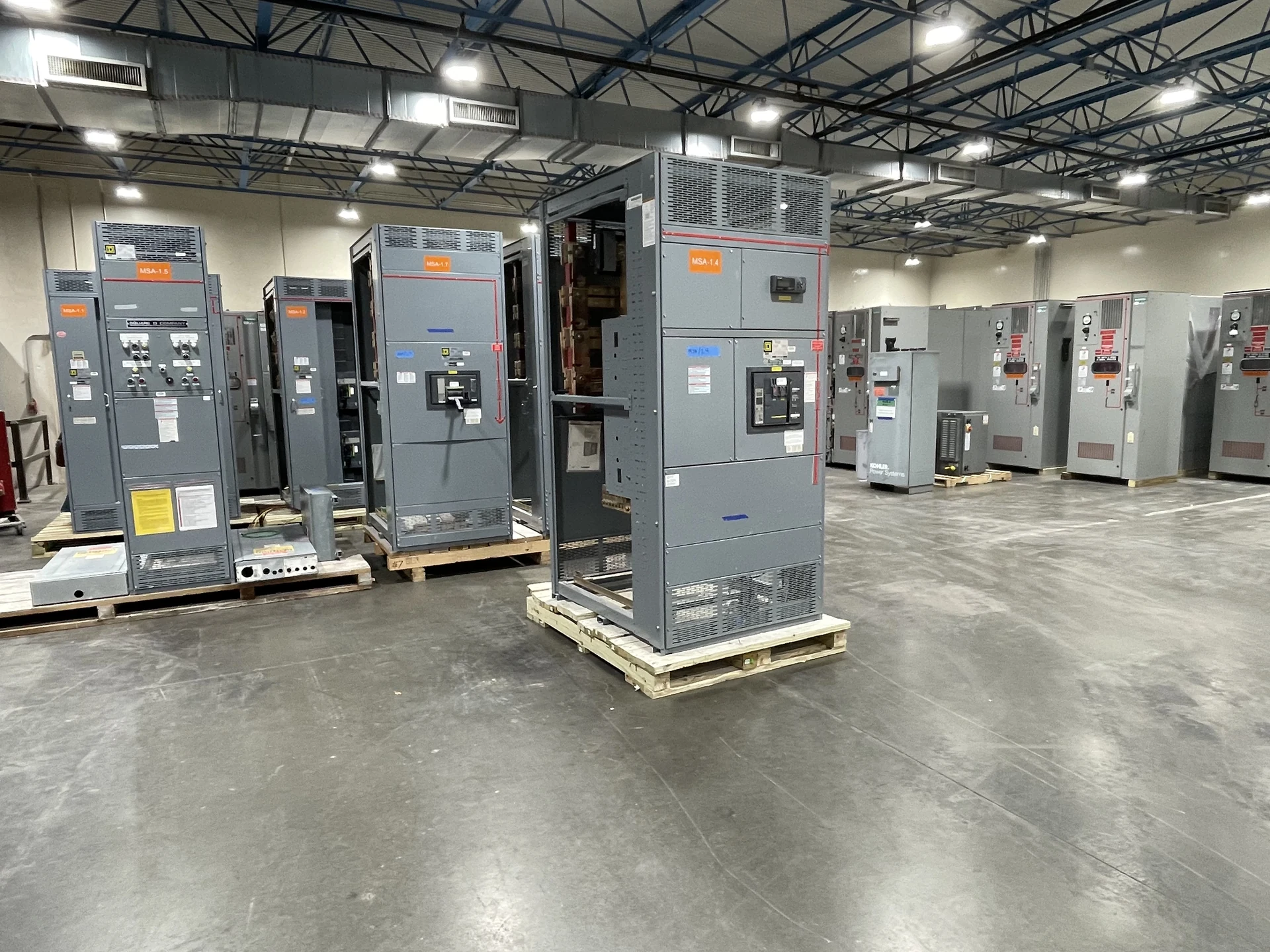
A new switchgear lineup is only useful when it can reach the electrical room and enter service in the right sequence. For owners and contractors planning work in Kerrville, Texas, our direct American manufacturing approach starts with the electrical requirements and the practical path from transport to staged commissioning. Delivery and field responsibilities should be established before the equipment layout is finalized.
Start with the electrical and site boundaries
Provide the latest one-line diagram, load and feeder schedule, source configuration, and the intended service arrangement. Identify system voltage, phase and wire configuration, available fault current, protective functions, metering needs, and any utility requirements. The project engineer and manufacturer can then review appropriate equipment construction and ratings rather than treating a nominal label as proof of suitability.
Include the electrical room or outdoor site plan with proposed equipment location, cable routes, entry direction, elevation changes, and access restrictions. For a facility remaining in operation, identify loads that cannot be interrupted together. This information links lineup layout to the construction sequence and helps the contractor flag conflicts before drawings are approved.
Choose transport sections that fit the route
Share the route from the receiving point to the final position, including gates, door openings, corridors, turns, floor load limits, and any overhead obstructions. The equipment dimensions and shipping weights need to be checked against both the carrier's constraints and the site's handling capabilities; a clear truck approach alone does not establish that a lineup will fit inside.
A large lineup may be divided into shipping sections when the design permits. Smaller sections can simplify handling through constrained openings, but they introduce alignment, field connections, inspection, and documentation at the split. Agree on proposed split locations early, and confirm who supplies the crew, handling equipment, and field assembly work under the manufacturer's instructions.
Plan receipt, lifting, and protected storage
The receiving contractor should coordinate the delivery appointment, unloading area, crane or forklift access as appropriate, and a rigging plan based on the approved shipping drawings. Request section weights, center-of-gravity information where applicable, lifting provisions, and packaging details. Check ground conditions and the complete travel path with the rigging team, not just the lifting capacity of one machine.
If installation will follow later, assign a protected storage location and agree on inspection at receipt. Packaging is not automatically suitable for prolonged outdoor storage. Record visible shipping damage and discrepancies promptly, and follow the equipment-specific storage instructions for moisture protection and environmental limits. The purchase documents should say who bears responsibility until acceptance.
Resolve the installation interfaces
Before fabrication release, review dimensioned elevations, foundation and anchor requirements, cable termination space, and the location of field connections. The installer and design team should verify working space and access under applicable requirements, including room for doors and equipment servicing. A compact footprint can reduce room demand but leave less flexibility for cable routing and future maintenance.
Coordinate incoming utility or transformer connections, outgoing feeders, grounding, control power, and communications at their respective scope boundaries. Confirm conduit entry zones and conductor sizes and quantities against the approved drawings. If monitoring or transfer controls are included, define terminal interfaces and who will integrate external signals; those details can affect both the equipment layout and the site schedule.
Commission in stages without losing accountability
Develop a commissioning plan with the owner, electrical contractor, engineer, utility where involved, and test provider. It should identify each section or group of loads, prerequisites, required test records, responsible parties, and approval points. Factory inspection and agreed functional checks can uncover assembly issues, but they do not replace field verification after transport and installation.
For an occupied site, map dependencies among source equipment, temporary arrangements if needed, and feeder cutovers before setting outage windows. Qualified personnel should perform installation, testing, and any energization using approved procedures and applicable safety rules. The owner should authorize each transition after required checks, protection settings, and operating communications are complete, with a contingency plan for a missed milestone.
Make the purchase schedule and handoff visible
Ask for a quotation that separates equipment scope, shipping provisions, proposed tests, drawings, and exclusions. Compare the submittal schedule with utility review, civil work, delivery access, and commissioning dates. Component availability, drawing revisions, and approval cycles can change the schedule, so identify decision deadlines and a process for reviewing substitutions instead of assuming a fixed delivery promise.
At turnover, request the approved one-line and elevations, final equipment drawings, applicable test records, installation and operating information, and a list of unresolved items. Confirm that any required listing applies to the particular assembly and project. A complete handoff lets the owner's qualified team reconcile the equipment with field records and plan future maintenance.
LET'S BUILD SOMETHING RELIABLE — 03
Ready to talk
switchgear?
Tell us about the new equipment your project needs. Include as much or as little detail as you have today.
(951) 403-5738CALL TO DISCUSS YOUR PROJECT