
BUILT IN THE USA. READY FOR YOUR PROJECT.
Hondo Switchgear Manufacturing
A switchgear replacement in Hondo, Texas, is as much a continuity project as an equipment purchase.
DIRECT FROM THE MANUFACTURER / NEW EQUIPMENT
THE MANUFACTURER’S PERSPECTIVE — 02
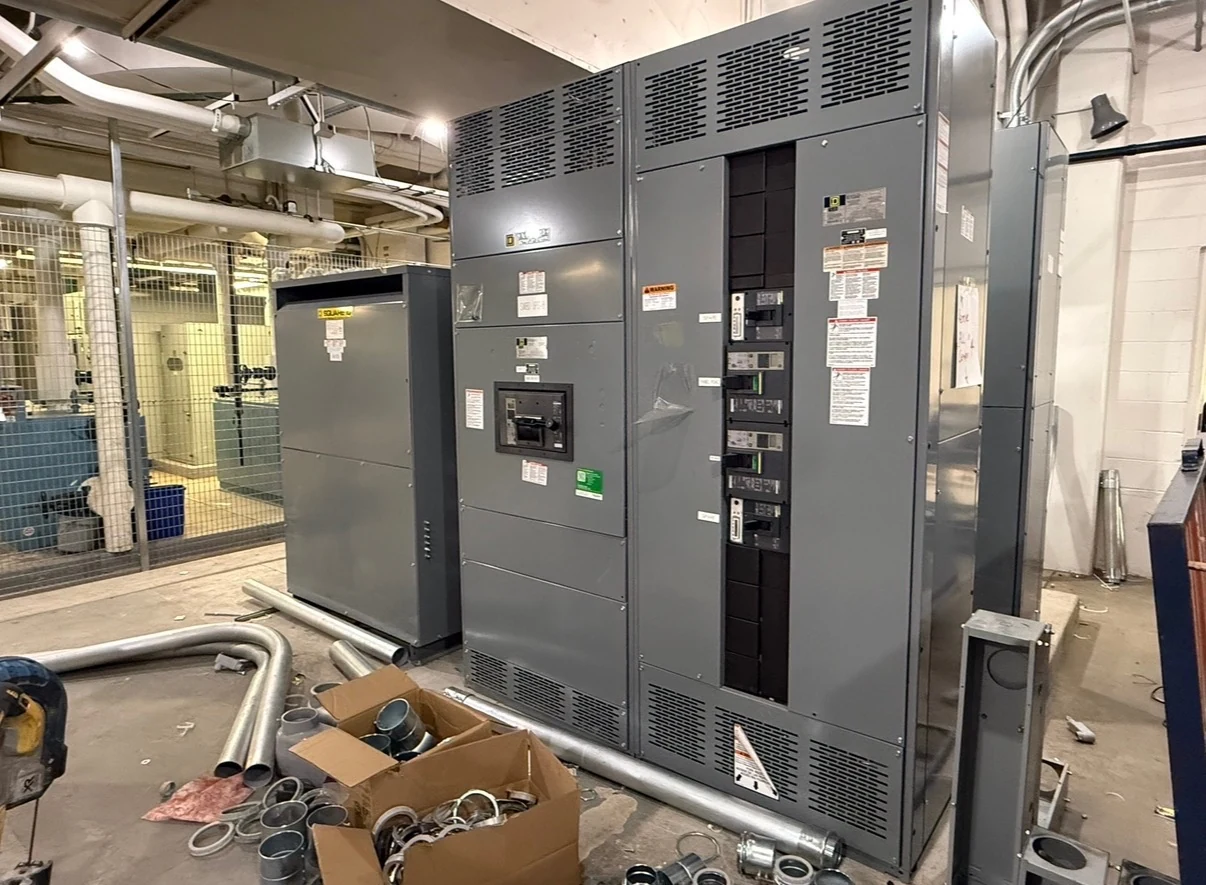
A switchgear replacement in Hondo, Texas, is as much a continuity project as an equipment purchase. Owners and electrical contractors need a new distribution assembly that fits the power system, the building and a realistic shutdown window. Working directly with an American manufacturer, the project team can develop the equipment scope alongside the field plan rather than discovering interface problems when the facility is ready for the changeover.
Start with the facility and its loads
Gather the latest one-line diagram, equipment nameplates, panel and feeder schedules, available fault-current information, and any records of field changes. Identify each source, including generators or other alternate supplies, and establish which loads cannot tolerate a long interruption. A qualified engineer should reconcile these records with the actual installation before the new lineup is finalized.
Operations staff can help distinguish a feeder that serves a process from one that supports lighting or administrative space. Record normal operating hours, seasonal demand and restart dependencies. This inventory lets the owner decide which loads require temporary service and which can be shut down together, without assuming every circuit has the same consequence.
Translate existing interfaces into a new design
Give the manufacturer verified system voltage and configuration, continuous current requirements, available fault duty, protective-device preferences and anticipated load growth. The engineer should evaluate protective coordination with upstream and downstream devices. A new assembly must suit the application and specified duty; matching the footprint of the existing lineup alone does not establish electrical compatibility.
Measure the available equipment room and delivery path, including doors, turns and access to connection spaces. Document feeder entry direction, conductor quantities and sizes, grounding interfaces, utility metering provisions and any control or alarm connections. A compact lineup may simplify placement but leave less termination or maintenance space, so review the physical layout with the installer.
Choose a credible outage strategy
Compare a single planned shutdown with a phased replacement. One outage can reduce temporary interfaces, but it may require the entire facility to stop at once. Phasing can keep selected operations available, yet may need additional space, engineered transition connections and more coordination between trades. The team should test each option against the site constraints.
For each phase, list affected loads, expected work boundaries, responsible parties, approvals and the conditions for proceeding. Identify a decision point for postponement or recovery if an inspection, test or connection is not ready. The owner and contractor should develop the detailed switching and safety plan with qualified personnel and the utility where its system is involved.
Plan temporary power before fixing the schedule
If critical loads need an alternate source, have the design team evaluate actual demand, starting characteristics, connection points, protection and grounding. The temporary arrangement must be engineered for the specific installation, including any transfer equipment and constraints on source interaction. A portable source is not automatically suitable simply because its nameplate seems large enough.
Assign responsibility for temporary equipment, permitting, fuel or other support, monitoring and removal. Coordinate the outage window with facility users, the electrical contractor, utility representatives and the authority having jurisdiction as applicable. Allow for their review and for necessary site preparation; equipment delivery alone does not mean that the replacement is ready to enter service.
Compare quotations on complete scope
Ask for a quotation for a newly manufactured assembly, with the proposed configuration, ratings, enclosure, device schedule and identified exceptions. Compare included drawings, testing, shipping splits and documentation as well as commercial terms. For an appropriate switchboard, verify whether a project-specific UL 891 listing is required and whether the proposed assembly qualifies; other equipment may follow different standards.
Clarify which party provides foundations, cables, field connections, protection studies, settings and commissioning. Request a submittal review schedule and a process for approving substitutions or design changes. Component availability, drawing revisions and inspection requirements can all affect timing, so the project schedule should include these dependencies rather than rely on an unverified delivery promise.
Close the loop at delivery and turnover
Before the outage, review approved elevations, shipping weights, lifting provisions, connection details and required working clearances with the rigging and installation teams. Confirm that site dimensions and conductor routes still match the drawings. Define factory inspection or acceptance testing, witness requirements, pass criteria and the records expected before the equipment leaves manufacturing.
The contractor and qualified testing personnel should complete the agreed field checks and resolve discrepancies before the owner authorizes energization under site procedures. Turnover should include final drawings, equipment manuals, test records, device information and approved settings. Capture any differences from the design so future maintenance and subsequent projects start with an accurate record.
LET'S BUILD SOMETHING RELIABLE — 03
Ready to talk
switchgear?
Tell us about the new equipment your project needs. Include as much or as little detail as you have today.
(951) 403-5738CALL TO DISCUSS YOUR PROJECT