
BUILT IN THE USA. READY FOR YOUR PROJECT.
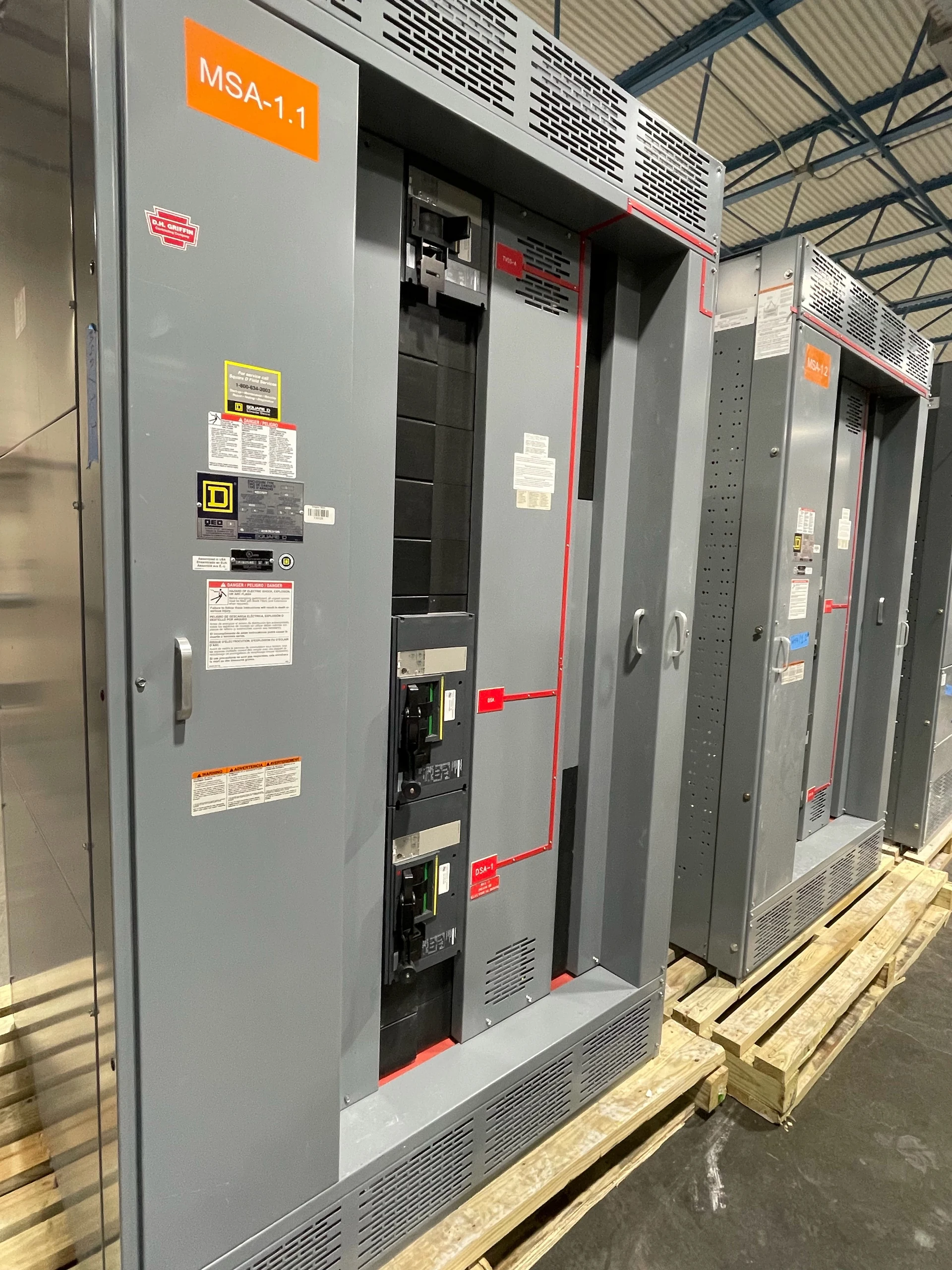
120/208V Switchgear
A 120/208V distribution system can supply both ordinary building loads and three-phase equipment from the same source, but its voltage label is only the beginning of a switchgear specification.
DIRECT FROM THE MANUFACTURER / NEW EQUIPMENT
THE MANUFACTURER’S PERSPECTIVE — 02
A 120/208V distribution system can supply both ordinary building loads and three-phase equipment from the same source, but its voltage label is only the beginning of a switchgear specification. Owners, contractors and engineers need to establish the actual source arrangement, fault duty, load profile and physical interfaces before a new assembly can be selected and quoted.
Start with the source and connected loads
In a common three-phase, four-wire wye arrangement, nominal voltage is 120V from phase to neutral and 208V between phases. A one-line should identify the transformer secondary, the grounded conductor and every intended source; the label alone does not establish phase count, grounding method or the wiring available to each feeder.
Distinguish 120V receptacle and lighting circuits from 208V phase-to-phase or three-phase loads in the load schedule. Check equipment nameplates and manufacturer instructions, especially for motors and electric heating equipment: a load intended for 240V may behave differently on 208V and is not automatically suitable just because it can be connected.
Choose the assembly and voltage class together
The design engineer should select a switchboard or switchgear construction based on the required protective devices, serviceability and applicable project standards. Confirm that the complete assembly, insulation system, bus, breakers and accessories are suitable for the system voltage and grounding configuration. The nominal 120/208V supply is not itself an equipment rating.
Device pole configuration and voltage marking matter, including any conditions on slash-rated devices. Metering and control components also need compatible voltage inputs and supplies. If a listed switchboard is specified, identify the required listing, such as UL 891 where applicable, and verify the proposed assembly and its configuration; do not assume every type of switchgear carries that listing.
Establish fault duty and neutral requirements
Provide the available fault current at the proposed equipment location, together with the source data and study assumptions behind it. The engineer must review breaker interrupting ratings and the assembly short-circuit rating or withstand duty against the actual installation. A breaker rating by itself does not establish the rating of the entire lineup.
A coordination study can compare protective-device characteristics so a feeder fault is less likely to interrupt unrelated loads. For a four-wire system, include the expected mix of single-phase and nonlinear loads: phase imbalance and harmonics can affect neutral current. Neutral bus and termination sizing require engineering review rather than an assumed percentage.
Define utility, metering and alternate-source interfaces
For service equipment, obtain the utility service requirements and identify who supplies metering components, where they mount and which drawings require approval. Revenue metering and an owner’s energy-monitoring meter may have different locations and responsibilities. Mark the proposed service disconnect and grounding interfaces on the project documents for review.
If a generator or another source will feed the distribution system, provide its electrical characteristics, transfer arrangement and intended operating states. Source switching, neutral treatment and protective coordination depend on the complete grounding and transfer design. Specify any required interlocks, control signals and metering communications rather than assuming the assembly includes them.
Fit conductors and access into the layout
A compact voltage class does not guarantee a compact lineup. Give the manufacturer the room or outdoor site constraints, cable entry direction, conductor material, sizes and quantities, and required termination details. The layout must accommodate the phase conductors, neutral and equipment grounding connections as well as usable bending and working space.
Compare available front and rear access, ventilation, delivery paths, shipping splits and future feeder space before approving an elevation. If spare capacity is important, specify both physical provisions and the electrical capacity to support the planned addition. Enclosure exposure, heat and environmental conditions also influence the construction selected for the project.
Make the quote and handoff actionable
Send the direct manufacturer a current one-line, load and feeder schedules, fault-duty information, utility requirements, environmental criteria and a drawing of available space. Identify required standards, listing evidence, metering, protective functions and any approved component preferences. Ask the proposal to show exclusions and deviations so competing scopes can be compared fairly.
Agree on submittal drawings, review dates, factory inspection or test records, manuals and final documentation before releasing fabrication. Component availability, approval cycles and revisions can change the schedule, so confirm milestones rather than relying on a generic lead time. Qualified electrical personnel should handle installation, field testing and energization under applicable site procedures and manufacturer instructions.
LET'S BUILD SOMETHING RELIABLE — 03
Ready to talk
switchgear?
Tell us about the new equipment your project needs. Include as much or as little detail as you have today.
(951) 403-5738CALL TO DISCUSS YOUR PROJECT