
BUILT IN THE USA. READY FOR YOUR PROJECT.
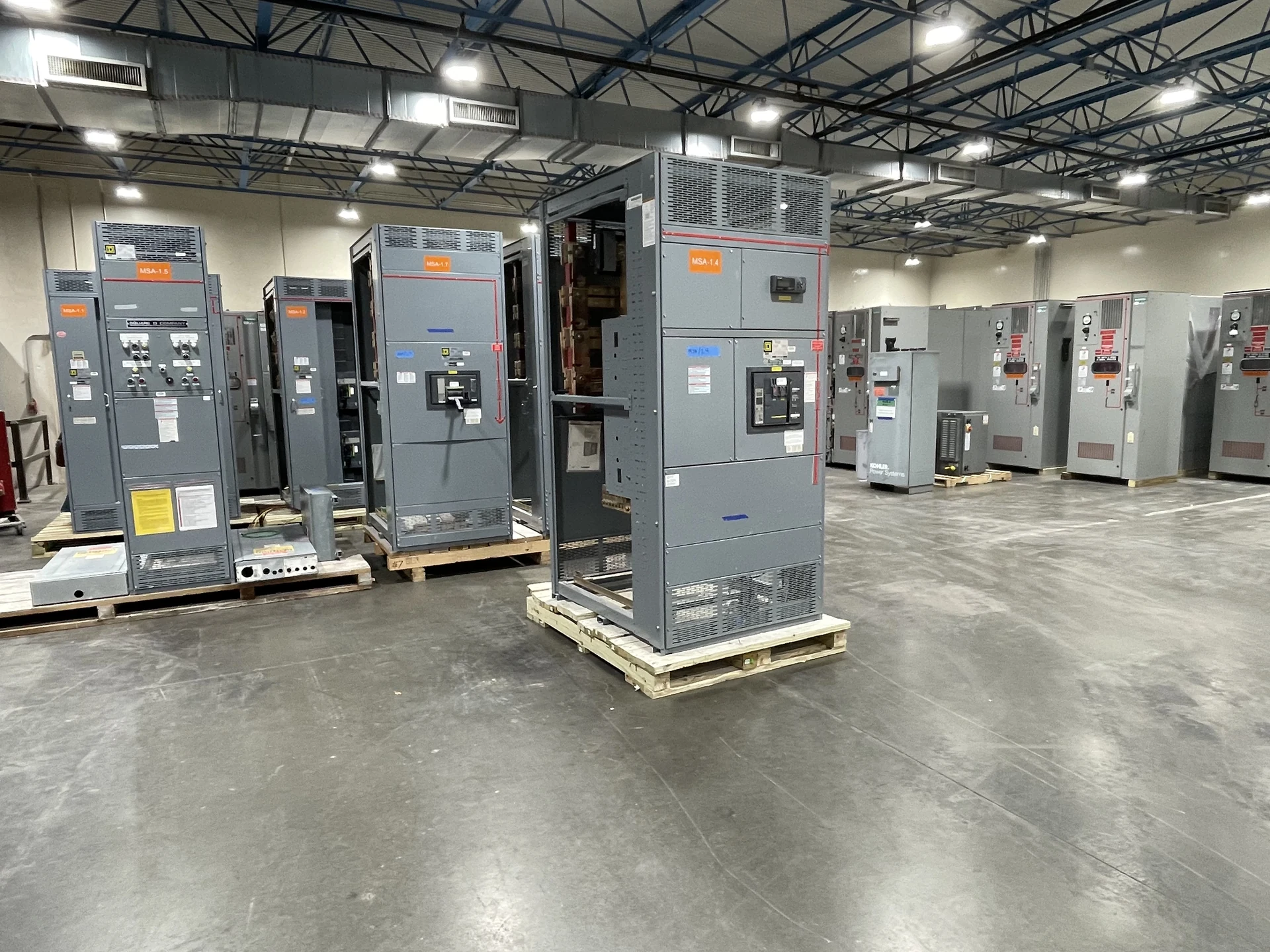
4,000-Amp Switchgear
A 4,000-ampere designation identifies a nominal continuous-current class for a proposed distribution assembly; it does not establish the rating of every bus, device or connection.
DIRECT FROM THE MANUFACTURER / NEW EQUIPMENT
THE MANUFACTURER’S PERSPECTIVE — 02
A 4,000-ampere designation identifies a nominal continuous-current class for a proposed distribution assembly; it does not establish the rating of every bus, device or connection. Owners, electrical engineers and contractors should confirm the actual assembly and component ratings against the project’s load, fault duty, environment and operating plan before purchasing. Availability requires engineering review.
Build the load case before choosing the main
Start with a one-line diagram and a load schedule that separates existing demand, expected new equipment and future capacity. Give the design engineer the source configuration, system voltage, phase and wire arrangement, largest motors and operating patterns. A 4,000-ampere main does not mean every feeder operates at its full rating simultaneously, or that capacity is automatically available for expansion.
The assembly bus, main device, feeder devices and terminations can have different continuous-current ratings. Specify the required values individually, including any adjustable breaker trip range and proposed settings. Nonlinear loads may change neutral current and heating considerations; provide the engineer with the load characteristics needed to evaluate the neutral and applicable code requirements.
Separate current capacity from fault duty
Continuous current is only one part of the design. Supply available fault-current information at the intended connection point, including utility and on-site generation contributions where applicable. The engineer must compare the prospective duty with the assembly’s applicable short-circuit or withstand ratings and each protective device’s interrupting rating; a 4,000-ampere label says nothing about those fault values.
Ask the project engineer to coordinate the main and feeder protective devices using current study data and the required operating objectives. Selectivity across the necessary fault range is not automatic. If ground-fault protection, metering or remote tripping is specified, identify the sensors, control power and external signal interfaces in the proposal and drawings.
Make room for the conductors and equipment
High-current connections can require substantial termination space. Provide the proposed cable size, material, number of parallel conductors per phase and preferred top or bottom entry. The manufacturer and installer should review landing arrangements, bending space, neutral and grounding connections, and which party supplies the lugs. A compact lineup may shift congestion into the cable space.
For a busway or transformer interface, exchange connection elevations, phase arrangement, flange details and support responsibilities early. Check the shipping route, door openings, lifting limits, foundation, equipment weight and possible shipping splits against the site plan. The design team must establish working and access clearances under applicable rules rather than assume one dimension suits every installation.
Account for heat and site exposure
Share the expected ambient temperature, altitude, indoor or outdoor location and ventilation constraints. Current capability depends on the complete assembly and the conditions under which its ratings are established; enclosure changes or elevated temperatures may require further evaluation. Give the building engineer equipment heat-rejection information when available so the room design and lineup selection can be coordinated.
Describe moisture, dust, corrosion exposure and any site-specific seismic or anchorage criteria. An outdoor enclosure may need different weather protection and access provisions than equipment in a conditioned room. Confirm the proposed enclosure construction, environmental suitability and any required documentation rather than treating an enclosure label as a substitute for an installation review.
Specify construction and review the listing
Choose the equipment type and protective-device construction around the intended maintenance and distribution strategy. For example, drawout construction may support a different maintenance approach than fixed devices, but its footprint, cost and available configurations must be evaluated for the project. Confirm the devices and construction offered are suitable for the actual assembly, not just the stated current class.
Identify the applicable equipment standard, code, utility requirements and authority review in the purchase specification. UL 891 is relevant to appropriate switchboard assemblies; it is not a blanket designation for all switchgear. If a listing is required, verify the proposed assembly’s specific listing, rating and scope with the manufacturer before approving the submittal.
Purchase on documented scope and interfaces
For projects in San Antonio, South Texas or elsewhere nationwide, a request to the direct manufacturer should include the one-line, load schedule, fault data, site constraints, required delivery location and target milestones. Compare proposals for main and feeder devices, bus and neutral ratings, metering, enclosure, testing, drawings and stated exceptions. Confirm availability and final ratings through engineering.
Set review dates for drawings and utility approvals, identify long-lead components, and agree on factory inspection or witness-test criteria and turnover records. Clarify who handles freight, unloading, field connections, protective settings and commissioning. Qualified electrical personnel must perform installation, testing and energization under the project’s safety procedures, with the owner coordinating any required outage.
LET'S BUILD SOMETHING RELIABLE — 03
Ready to talk
switchgear?
Tell us about the new equipment your project needs. Include as much or as little detail as you have today.
(951) 403-5738CALL TO DISCUSS YOUR PROJECT