
BUILT IN THE USA. READY FOR YOUR PROJECT.
Motor Control Centers for Hospitals
A hospital motor control center (MCC) groups motor starters, protection and controls for equipment such as ventilation fans and pumps.
DIRECT FROM THE MANUFACTURER / NEW EQUIPMENT
THE MANUFACTURER’S PERSPECTIVE — 02
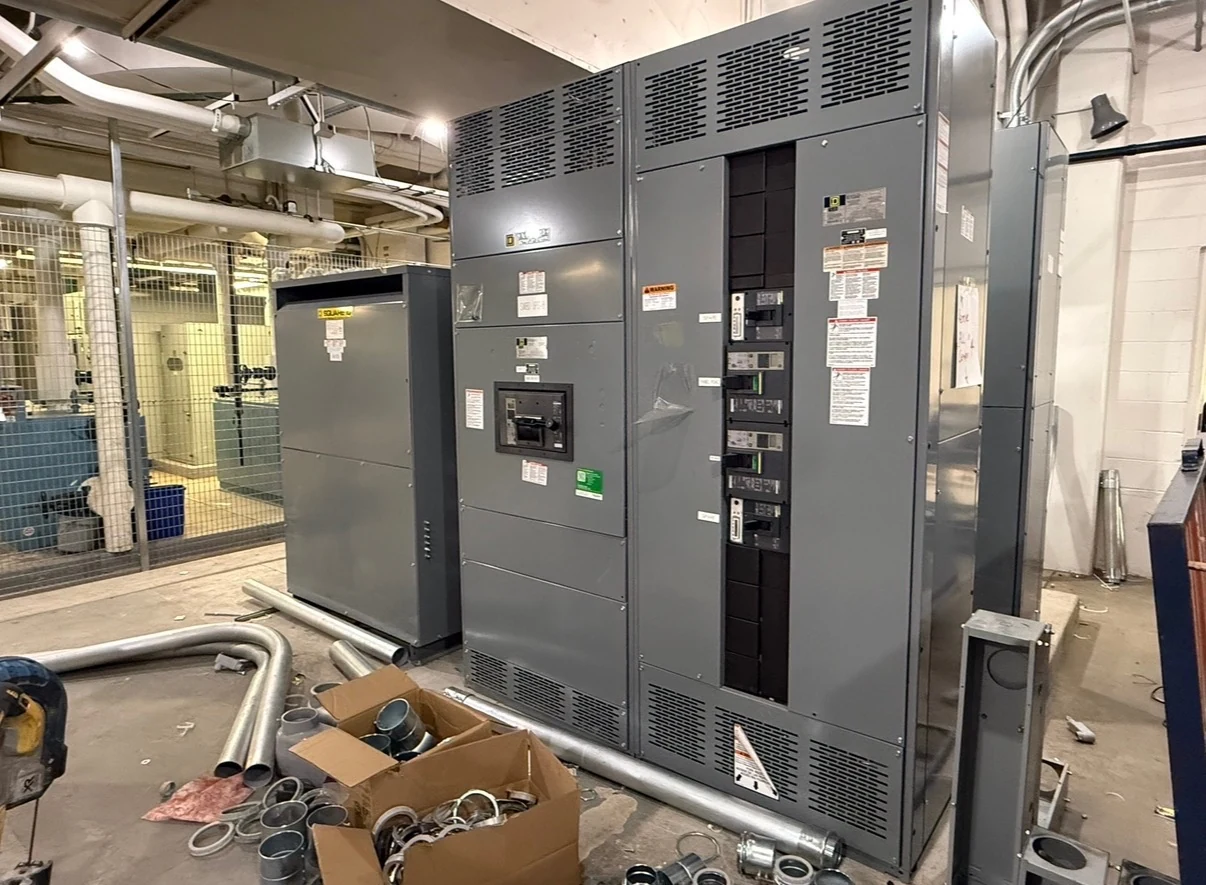
A hospital motor control center (MCC) groups motor starters, protection and controls for equipment such as ventilation fans and pumps. The purchasing decision is not simply how many motors fit in one lineup: each motor’s role in patient care, source of power and allowable interruption can shape the arrangement. A clear load inventory helps the owner and engineer specify a new assembly without treating every mechanical load as equally critical.
Sort motor loads by continuity requirement
Start with a schedule identifying each motor, its driven equipment, location and operating purpose. A supply fan serving a procedure area may have a different continuity requirement from a general-purpose exhaust fan. Ask clinical and facilities stakeholders which services must remain available during normal-source loss, planned maintenance and recovery; document dependencies rather than relying on motor names alone.
The engineer should identify applicable essential electrical system branches and determine where separation and transfer requirements apply under the codes adopted for the project. An MCC on an essential source does not automatically make every connected load appropriate for that source. Separate lineups or sections may help align feeder boundaries and outages, but add space, interfaces and cost.
Match starting equipment to the load
For each motor, provide nameplate data when available, running current, starting method, duty cycle and any expected simultaneous starting. A direct starter, soft starter or variable-frequency drive can each affect starting current, control functions, heat and footprint differently. The design team should evaluate the driven equipment and generator response rather than choose a starter solely by motor size.
The MCC manufacturer needs the system voltage and configuration, available fault current at the proposed connection, feeder arrangement and required protective devices. The engineer must coordinate device interrupting capability, assembly short-circuit rating and protective settings with the distribution study. Review normal and alternate-source fault conditions; protection that coordinates on one source cannot simply be assumed to coordinate on another.
Define transfer and control interfaces
Show on the one-line where transfer equipment sits relative to the MCC, which motor loads it serves and whether any loads need staged restart. The transfer switch and MCC have different jobs: one selects an available source while the other distributes power and controls motors. Source capacity, starting sequence and permissible interruption need review by the electrical and mechanical engineers.
Identify who supplies control power, start commands, status contacts, alarms and the interface to building automation or other supervisory systems. Agree on local versus remote control authority and the expected response to a lost signal or source change. Document fire alarm and equipment interlocks where required, and have the responsible design professionals review their interaction with hospital operating procedures.
Fit the lineup to the equipment room
Provide room dimensions, installation drawings, cable-entry direction, conductor quantities and sizes, and the proposed delivery path. Check working space, door swing, ventilation and access to motor-control units against the applicable requirements and the proposed assembly. Drives and densely packed starters can increase heat, so the mechanical designer needs the manufacturer’s project-specific heat information before finalizing room conditions.
Decide whether spare unit spaces, complete spare starters or room for a future section best match expansion plans. Empty space alone does not establish future electrical capacity: bus rating, fault duty, feeder protection and physical connections also need review. More separation and accessible controls can improve maintainability, but may increase the lineup’s width and installation demands.
Plan installation around occupied care areas
For a new MCC serving an operating hospital, the owner, contractor and clinical representatives should map affected loads and agree on outage windows before procurement milestones are fixed. Identify temporary power needs, source capacity, infection-control and access restrictions, and dependencies on transfer equipment. A qualified engineer and site team must develop and approve the detailed transition and contingency plans.
Schedule drawing review, component procurement, fabrication, factory checks, delivery and field commissioning as connected activities, not independent dates. Late changes to the motor schedule or transfer sequence can affect both the lineup and site work. Assign responsibility for receiving, rigging, field wiring, protection settings and commissioning, and allow time for inspections and owner approval.
Request comparable proposals and turnover records
When seeking a quote from a direct American manufacturer serving San Antonio, South Texas and nationwide, provide the one-line, load schedule, room constraints, specifications and required delivery sequence. Ask for an itemized scope, construction and component descriptions, exceptions, applicable standards and any requested listing. Verify the specific assembly’s listing and scope for the project rather than assuming a general switchboard listing applies to an MCC.
Specify the submittals and acceptance evidence needed: layout and wiring drawings, motor-unit schedule, interface points, inspection and agreed functional-test records, and operating and maintenance information. If the project requires witnessed tests, define the participants and acceptance criteria in advance. Qualified electrical personnel should perform installation, testing and energization under the approved site safety and commissioning procedures.
LET'S BUILD SOMETHING RELIABLE — 03
Ready to talk
switchgear?
Tell us about the new equipment your project needs. Include as much or as little detail as you have today.
(951) 403-5738CALL TO DISCUSS YOUR PROJECT