
BUILT IN THE USA. READY FOR YOUR PROJECT.
Medium-Voltage Switchgear for Universities
Universities depend on campus feeders to serve classrooms, research buildings, residences and central plants that do not all tolerate interruption in the same way.
DIRECT FROM THE MANUFACTURER / NEW EQUIPMENT
THE MANUFACTURER’S PERSPECTIVE — 02
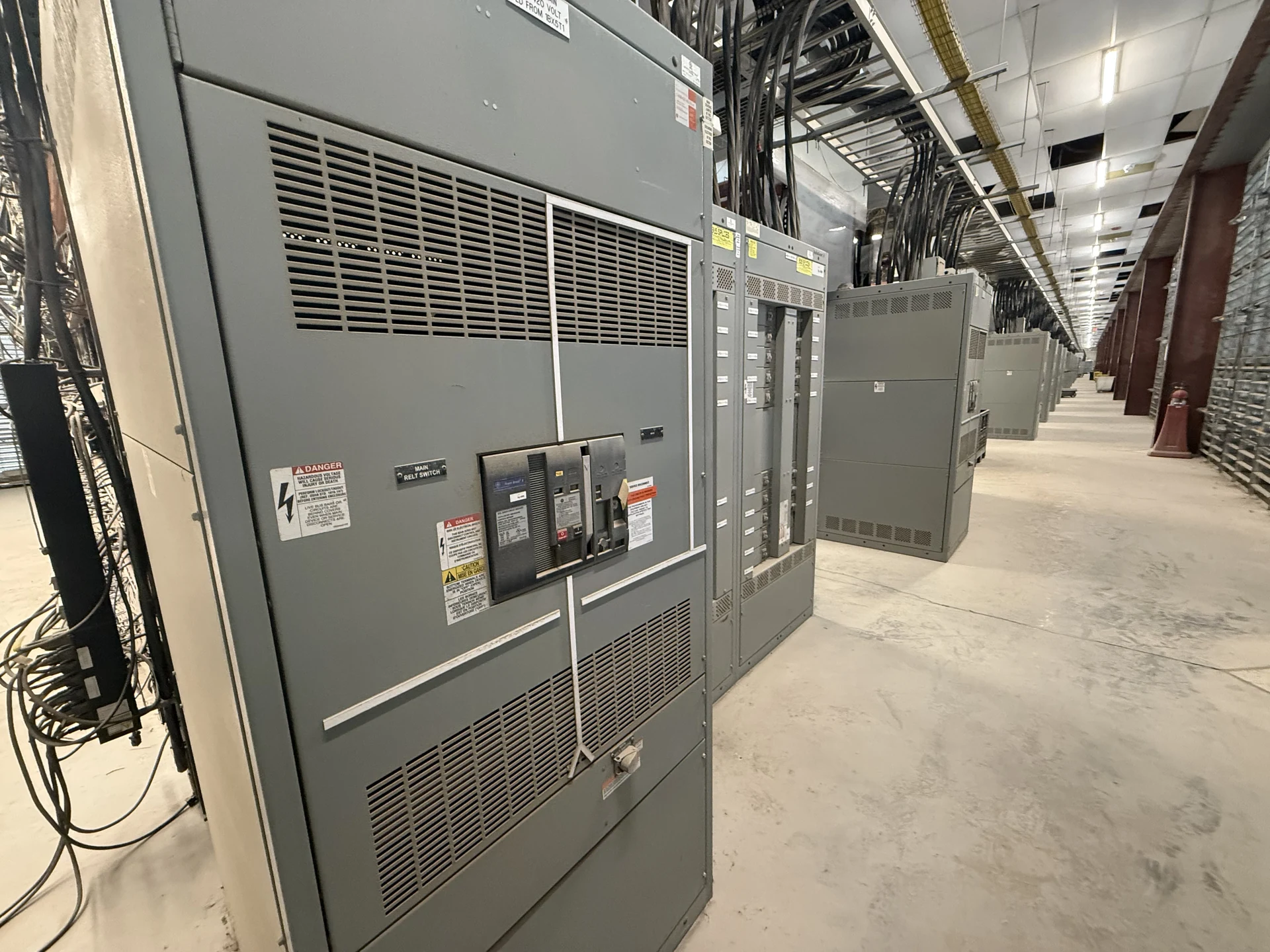
Universities depend on campus feeders to serve classrooms, research buildings, residences and central plants that do not all tolerate interruption in the same way. A new medium-voltage switchgear assembly should reflect those differences, the campus distribution topology and the practical limits of a busy academic calendar. Owners and specifiers can obtain a more useful proposal by resolving operating priorities and interface responsibilities before selecting a lineup.
Map the campus before choosing a lineup
Start with a current one-line diagram showing utility sources, campus switching points, transformers and the buildings served by each feeder. Add peak demand, known load changes and the locations of essential or sensitive functions. Verify uncertain records in the field through qualified personnel; an outdated drawing can hide shared circuits or an alternate source.
A radial arrangement can simplify operation and reduce initial complexity, but a feeder fault may interrupt every building downstream. A loop or alternate-feed arrangement can provide options for restoration if the cables, switching devices and protection support the intended operating states. Extra equipment and control coordination add cost and space, and redundancy does not eliminate every outage.
Plan interruptions around people and research
Identify which feeder outages affect occupied housing, scheduled instruction, laboratories, animal care or central heating and cooling. Ask facility staff and building users about critical experiments, notification periods and acceptable interruption windows. A summer or holiday window may be useful, but maintenance, conferences and research can continue when classes are not in session.
The owner and electrical contractor should develop the outage and commissioning plan with the utility and affected departments. Consider whether temporary power is needed, its actual capacity and connection points, and how a delayed cutover would be handled. Switching, isolation, verification and energization belong to qualified personnel following the site’s approved safety procedures.
Match protection to the whole network
Provide system voltage, grounding method, maximum and minimum available fault current, source configurations and transformer and feeder data for engineering review. The selected assembly and devices must suit the voltage, continuous current, interrupting and withstand duties established for the project. Different utility or campus operating states can change fault levels and protective-device performance.
Campus protection should limit the extent of an interruption where practical, not merely clear a fault somewhere in the system. The engineer’s coordination study should account for upstream utility protection, downstream transformer and feeder devices, relay functions and applicable settings. Specify who supplies instrument-transformer data, trip power and settings, and who tests the complete protection interface.
Coordinate physical and control interfaces
Equipment selection depends on the electrical room or outdoor site as well as the one-line. Share available dimensions, access routes, cable entry direction, conductor details, termination needs, ambient conditions and working-space constraints. For an outdoor installation, define weather exposure, foundation and drainage requirements; enclosure selection remains subject to the engineered design.
Decide whether operators need local indications, remote monitoring or remote control through the campus management system. Document required points, communication protocol, control-power source, alarms and authority boundaries. Network access and loss-of-communication behavior need owner review. Remote capability is an interface choice, not a substitute for approved operating procedures or a protection study.
Buy expansion capability deliberately
A planned science building or residence may justify an installed spare feeder, a provisioned future section or room beside the lineup. Each choice commits a different amount of capital and installation effort now. An installed device can simplify a later connection, while reserved floor space may preserve flexibility but require a more disruptive future project.
Space alone does not establish electrical capacity. The design team should review projected loads, bus and source capability, cable paths, short-circuit duty and protection for each credible expansion. Ask the manufacturer to identify what is included now, what future work would require a shutdown, and which future additions remain subject to engineering and equipment availability.
Define the purchase and turnover package
For a quote, send the one-line, load and fault data, device preferences, enclosure conditions, site constraints and desired delivery and outage milestones. Specify applicable switchgear standards and any project-specific listing or certification requirements for verification. A direct American manufacturer of new distribution assemblies serving San Antonio, South Texas and nationwide can evaluate the requested scope for feasibility.
Compare proposals on equipment ratings, drawings, controls, testing, exceptions and responsibilities—not just the total price. Agree on review dates, component availability checks and a change process because each can affect the schedule. Request approved drawings, factory test records and operating information, and assign the contractor and owner responsibility for field connections, settings, site acceptance and final authorization.
LET'S BUILD SOMETHING RELIABLE — 03
Ready to talk
switchgear?
Tell us about the new equipment your project needs. Include as much or as little detail as you have today.
(951) 403-5738CALL TO DISCUSS YOUR PROJECT