
BUILT IN THE USA. READY FOR YOUR PROJECT.
Pad-Mounted Switchgear for Universities
A university’s outdoor distribution network must serve buildings that rarely share the same outage calendar.
DIRECT FROM THE MANUFACTURER / NEW EQUIPMENT
THE MANUFACTURER’S PERSPECTIVE — 02
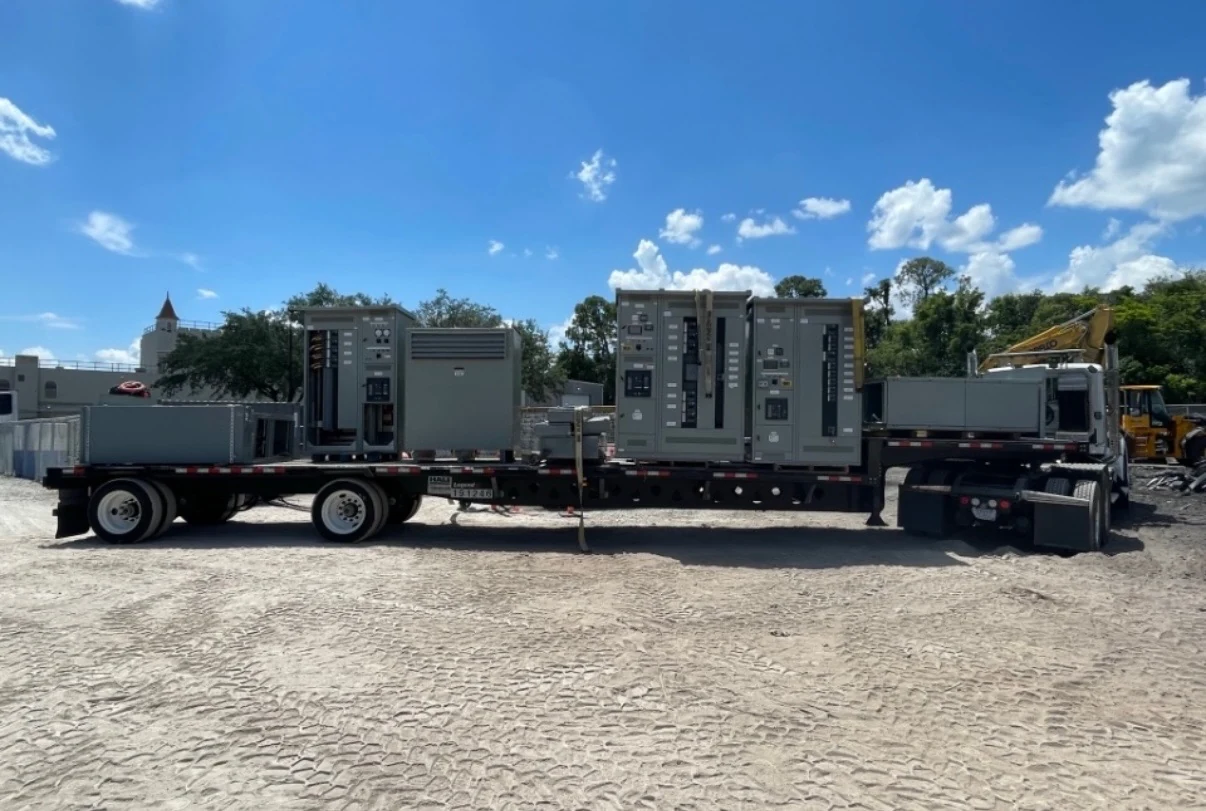
A university’s outdoor distribution network must serve buildings that rarely share the same outage calendar. Newly manufactured pad-mounted switchgear can help organize underground campus feeders, but its value depends on how it fits the power system, the site, and the people who operate it. Owners and specifying engineers should define feeder duties and construction constraints before requesting an equipment proposal.
Map the campus network before choosing a lineup
Start with an up-to-date one-line diagram showing the utility supply, transformers, feeder destinations, switching points, and ownership boundaries. Identify which circuits serve residence halls, research facilities, central cooling, and other loads with different continuity needs. Record existing operating arrangements as well as planned additions; a building name alone does not describe the electrical duty.
A radial arrangement can be simpler to procure and manage, while a loop arrangement may offer alternative supply paths when the overall system is designed for them. A loop does not itself ensure automatic restoration. The engineer must assess source capacity, protection, permissible operating states, and whether both paths can support the intended loads.
Match switching and protection to actual duty
Provide system voltage and grounding, normal and projected feeder current, available fault current, and any utility requirements. The specifying engineer should assess equipment voltage class, continuous current, short-circuit withstand, and device interrupting duties together. A switch intended for load switching is not automatically a fault-interrupting device; the protection scheme determines what is required.
Document fuse, relay, and upstream device interfaces, including settings and coordination-study responsibilities. Where remote indication or control is proposed, define communications protocols, control power, alarms, and authority for commands. More automation can reduce response time, but it also adds integration, cybersecurity, testing, and maintenance obligations that should appear in the project scope.
Place the enclosure in a working campus
The site plan should address the concrete pad, drainage, flood exposure, cable routes, vehicle protection, and access for delivery and maintenance. Outdoor construction must suit the actual environment, including moisture, heat, corrosion exposure, and ventilation needs. Coordinate working clearances with applicable requirements and the selected equipment drawings rather than assuming a universal setback.
A location near a pedestrian path or landscaped courtyard needs particular attention to access, security, and future excavation. Define who designs and constructs the foundation and underground conduit system. The manufacturer needs the proposed pad and conduit details early enough to coordinate equipment mounting and cable entry with the civil and electrical designs.
Reserve growth that the system can support
Compare future feeder spaces with fully equipped spare ways. An empty provision can reduce initial scope, while a complete spare may simplify a later connection; either choice still needs a defined equipment configuration and project-specific approval. Specify anticipated feeder sizes, destination areas, switching functions, and the timing and uncertainty of growth.
Physical room alone is not electrical capacity. The engineer should examine source and bus loading, fault duty, protective coordination, and cable termination space for the foreseeable buildout. Ask which future provisions are included in the proposal and which would require later engineering, components, construction, and another campus outage.
Plan construction around occupied buildings
Work backward from acceptable interruption windows, including examinations, residence hall occupancy, laboratory schedules, and seasonal heating or cooling demand. The owner, utility, engineer, and installation contractor should identify affected loads and approvals for each phase. Temporary power or an alternate feeder may help, but its capacity, protection, connection points, and availability require separate assessment.
Sequence design review, utility approvals, pad construction, equipment delivery, cable work, testing, and turnover as interdependent milestones. Include time for submittal comments and revisions rather than treating a requested delivery date as a commitment. Qualified personnel must plan and perform isolation, installation, testing, and energization under site procedures and applicable requirements.
Make the quote and handoff comparable
For a direct-manufacturer quotation, supply the one-line, feeder schedule, site conditions, preliminary layout, cable quantities and termination types, required protection, and desired delivery sequence. Identify the utility interface and who supplies cables, controls, foundation, field connections, and commissioning. Request explicit exceptions and confirmation of equipment suitability, applicable standards, and any required project-specific listing.
Compare proposals by device functions, environmental construction, spare provisions, drawings, test scope, and interface responsibilities—not only initial cost. Request arrangement and connection drawings, a device schedule, factory inspection and test records appropriate to the order, and operating and maintenance documentation. Agree on field acceptance criteria, study updates, training, and final records before turnover.
LET'S BUILD SOMETHING RELIABLE — 03
Ready to talk
switchgear?
Tell us about the new equipment your project needs. Include as much or as little detail as you have today.
(951) 403-5738CALL TO DISCUSS YOUR PROJECT