
BUILT IN THE USA. READY FOR YOUR PROJECT.
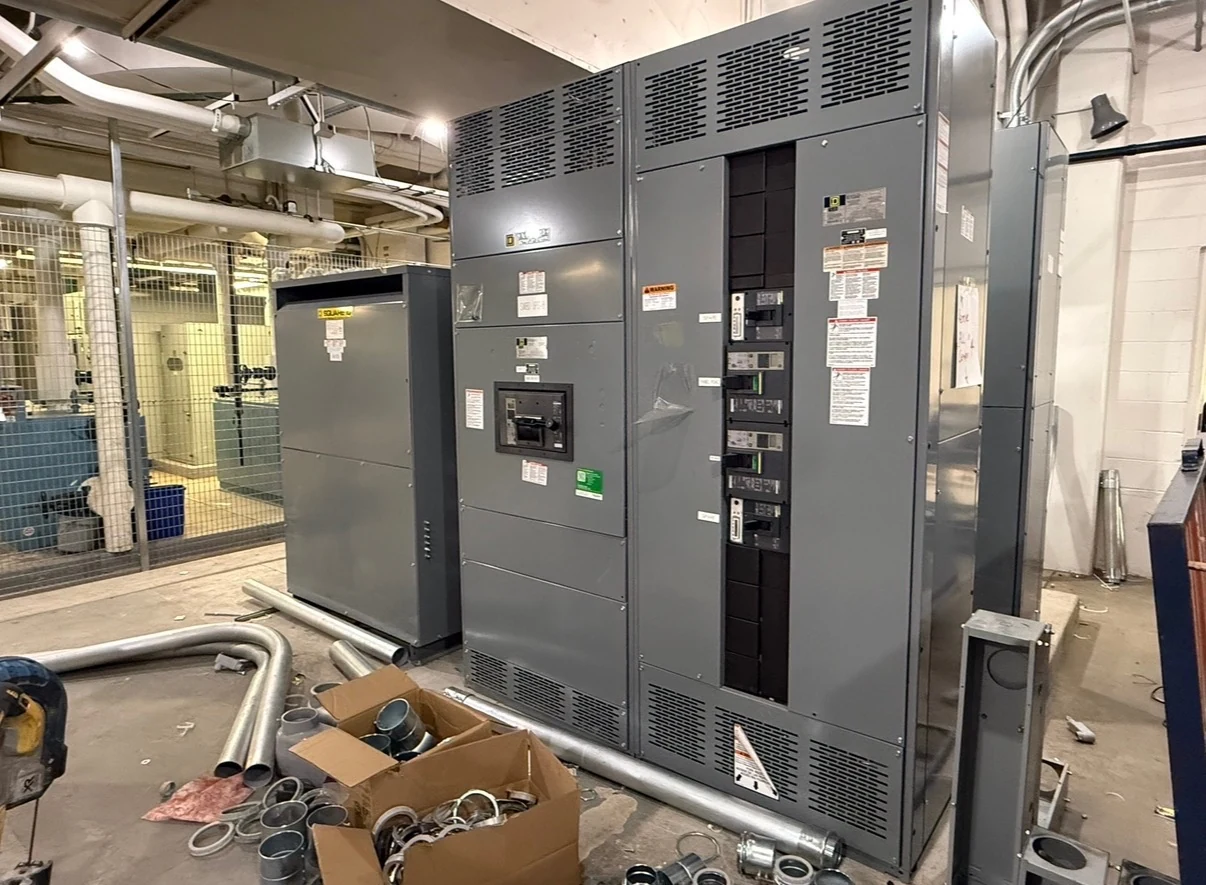
Electrical Switchboards for Military Bases
A military installation may distribute power among operational buildings, housing, maintenance facilities and support infrastructure, each with different consequences for an outage.
DIRECT FROM THE MANUFACTURER / NEW EQUIPMENT
THE MANUFACTURER’S PERSPECTIVE — 02
A military installation may distribute power among operational buildings, housing, maintenance facilities and support infrastructure, each with different consequences for an outage. A low-voltage switchboard can organize service and feeder distribution, but the right assembly depends on the installation’s electrical architecture and mission priorities. Owners and specifiers should settle those interfaces before comparing proposals for newly manufactured equipment.
Start with the installation’s distribution map
Provide a current one-line diagram showing sources, transformer secondary connections, switchboards, feeder destinations and major downstream equipment. Pair it with a load schedule that identifies operating demand, motor starting where relevant, anticipated additions and the facilities each feeder serves. The design engineer can then distinguish capacity needed now from space reserved for a later project.
Mission priorities can change how circuits are grouped. For example, separating feeders serving an operations building from those serving administrative loads may give the owner more flexibility in planning an outage. A spare feeder position consumes space and adds cost, so define whether the project requires an installed device, a prepared space or only a future expansion allowance.
Define continuity and alternate-source interfaces
Identify which functions must remain available during maintenance or a source interruption, along with the owner’s acceptable interruption windows. A switchboard distributes and protects circuits; it does not by itself establish redundancy. If an automatic transfer switch or generator is part of the system, show its location, connection point, capacity assumptions and responsibilities on the one-line.
For multiple sources or a bus tie, specify intended operating states, interlocks, control power and indications. The engineer should evaluate whether any permitted arrangement changes fault duty or risks unintended source paralleling. More elaborate arrangements may improve operating flexibility, but they require additional space, controls, testing and an agreed operating philosophy.
Match protection and construction to the specification
Supply the system voltage and configuration, service or feeder current requirements, grounding arrangement and available fault-current information for each relevant source condition. The proposed assembly and its protective devices must be evaluated together for their intended duty. Identify who provides the short-circuit and coordination studies, including review of upstream and downstream protective devices.
Where selective coordination is required by the project, define the applicable circuits and study criteria rather than assuming every device combination achieves it. Owner specifications may call for a switchboard evaluated to UL 891; confirm the proposed assembly’s specific listing, scope and ratings with the manufacturer and authority responsible for acceptance. Listing alone does not resolve every contractual requirement.
Resolve room, cable and facility interfaces
Dimension the equipment room and the route from delivery point to final position, including doors, turns and any lifting constraints. Indicate top or bottom cable entry, conductor quantities and sizes, termination preferences and adjacent equipment connections. The manufacturer’s proposed footprint must be checked against applicable working space, access and heat-removal requirements by the design team.
For outdoor locations, define exposure, enclosure requirements, foundation interfaces and provisions for condensation or corrosion as appropriate to the site. On a campus with several buildings, long feeder routes and existing duct banks may influence where the switchboard belongs. Coordinate civil work, cable installation and field connections explicitly rather than assuming they are included in the equipment package.
Control project information and access
Base security requirements can affect submittals, factory witness visits and site delivery. The owner should identify required personnel access approvals, escort arrangements, delivery restrictions and document handling rules in the procurement package. Share only information appropriate for the approved communication channel; arrange authorized secure handling separately when drawings or operating details are controlled.
If meters or status points connect to a facility monitoring system, identify the protocol, point list, network boundary and responsibility for cybersecurity review. A communications interface may be useful for operators, but it also creates configuration and acceptance work. Include these requirements in the owner’s specification and confirm the proposed scope before equipment is released.
Buy against deliverables and a coordinated schedule
Request a quotation for the same one-line, device schedule, enclosure and documentation scope from each proposed supplier. Compare exceptions, metering, spare provisions, shipping splits and component substitutions as well as price. As a direct manufacturer serving San Antonio, South Texas and projects nationwide, we can review the project inputs and identify items requiring clarification before an equipment scope is finalized.
Define shop drawings, applicable listing evidence, factory inspection or test records, manuals and final drawings, with review and acceptance responsibilities. Schedule time for owner approvals, component availability, fabrication, delivery access and commissioning alongside any permitted outage window. Installation, protective settings, testing and energization must be planned and performed by qualified personnel under site procedures and applicable requirements.
LET'S BUILD SOMETHING RELIABLE — 03
Ready to talk
switchgear?
Tell us about the new equipment your project needs. Include as much or as little detail as you have today.
(951) 403-5738CALL TO DISCUSS YOUR PROJECT