
BUILT IN THE USA. READY FOR YOUR PROJECT.
Low-Voltage Switchgear for Universities
A university distribution system must support lecture halls, residences, laboratories and campus services with different tolerances for interruption.
DIRECT FROM THE MANUFACTURER / NEW EQUIPMENT
THE MANUFACTURER’S PERSPECTIVE — 02
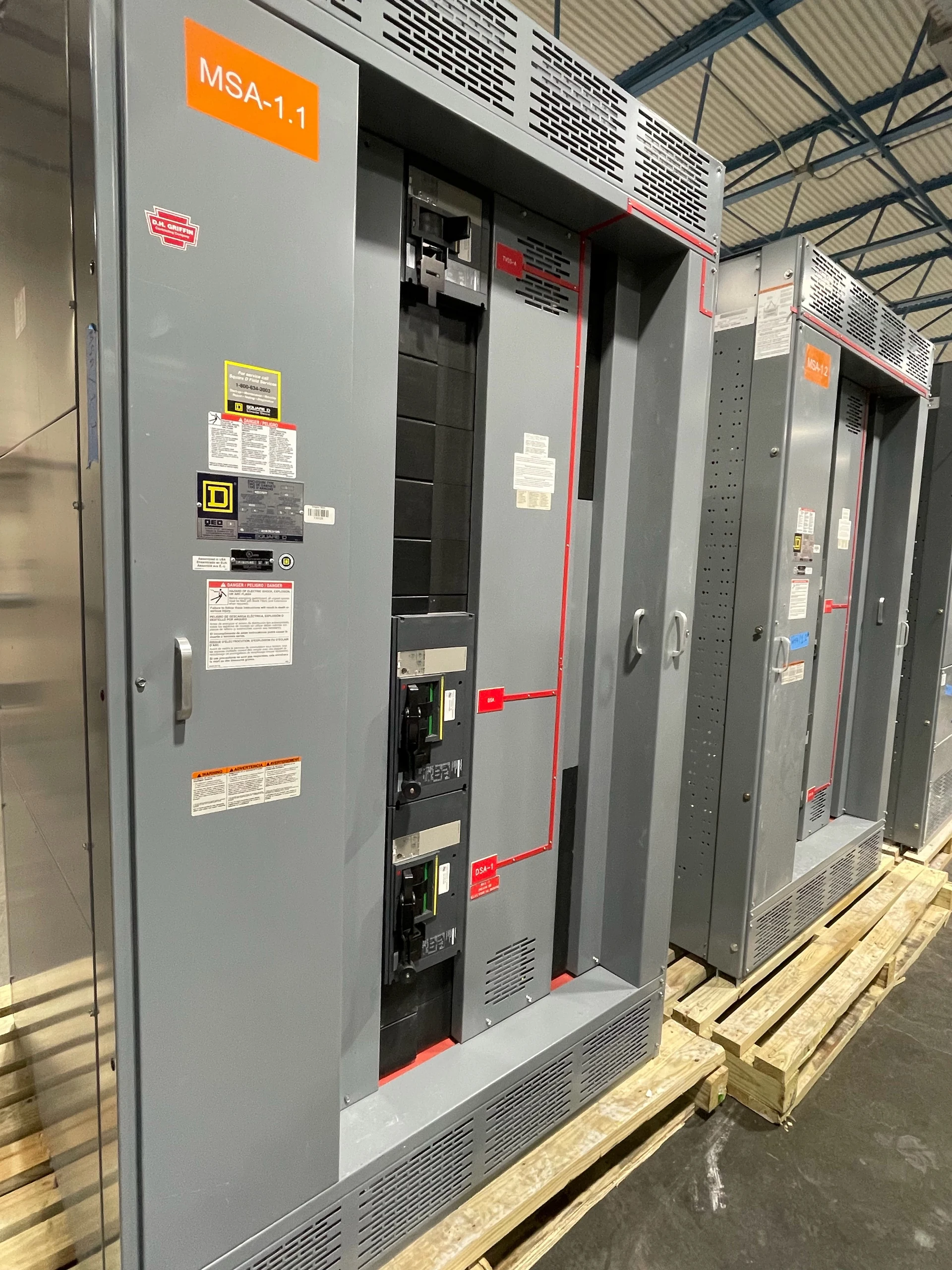
A university distribution system must support lecture halls, residences, laboratories and campus services with different tolerances for interruption. New low-voltage power circuit breaker switchgear can provide a deliberate point for protecting and distributing campus feeders, but its value depends on the system around it. Owners and specifying engineers should define operating priorities, electrical duty and the realities of an occupied campus before selecting a lineup.
Map feeders to campus priorities
Start with a current one-line diagram showing sources, transformers, main and feeder breakers, downstream distribution and normal operating boundaries. Pair it with a feeder schedule identifying destination buildings, present demand, conductor details and known future loads. A research building with sensitive equipment may need a different continuity plan from an administrative building that can tolerate a scheduled interruption.
Identify which loads truly need an alternate supply and how they connect to transfer equipment or generators. Campus facilities staff, the design engineer and affected building representatives should agree on priorities rather than assume an entire building requires the same level of backup. That decision affects feeder arrangement, controls and the space reserved for equipment.
Match protection to the whole system
Provide the manufacturer with system voltage and configuration, expected loading, available fault-current information, grounding details and the protective device requirements. The engineer must check breaker interrupting duty together with the assembly short-circuit withstand and relevant clearing times. Load, fault and coordination studies help establish settings and reveal whether an upstream breaker may interrupt more of the campus than intended.
A main-tie-main arrangement may offer an alternate distribution path if source capacity, protection and operating logic support it. It also adds devices, space and control complexity. Define normal and contingency states, interlocks and any permitted source paralleling in the design; do not assume a tie breaker by itself guarantees continuity or selective coordination.
Design around an occupied calendar
Installing new equipment at an operating campus requires an owner-led outage plan, not simply a delivery date. Map every affected feeder to classes, housing, laboratory processes, data systems and building operations. Academic breaks may reduce classroom impacts while leaving research, summer programs and residence loads active. Establish who approves each window and how occupants receive notice.
The contractor and engineer should evaluate temporary power, transition interfaces, testing, contingency time and a practical return-to-service plan. The university controls access and scheduling; qualified personnel plan and perform isolation, installation, testing and energization under site procedures and applicable requirements. Factory completion alone does not mean the campus is ready for a changeover.
Resolve the room and field interfaces
Document the electrical room, available working and equipment access space, floor loading, ventilation, door sizes and delivery route. Show incoming and outgoing cable entry, conductor quantities, termination provisions and any busway connection. Shipping splits and lifting arrangements can determine whether a lineup reaches a basement room without redesigning the route.
Drawout breakers may simplify some planned maintenance activities, but their use must be evaluated against access, footprint and project requirements; they do not make adjacent energized equipment safe to work on. Confirm which party supplies field cable, anchorage, control wiring and any connections across shipping sections. The design team verifies applicable clearances and installation conditions.
Reserve growth with an electrical basis
Campus expansion is more useful to discuss as a feeder and load scenario than as a vague spare percentage. Identify proposed buildings, their anticipated demand and timing, then ask the engineer to assess transformer capacity, bus loading, fault duty and downstream pathways. Space for a future breaker is not the same as verified electrical capacity to serve it.
Compare an equipped spare feeder, a prepared space and a provision for a future section. Each has different initial cost, space and future outage implications. Record the assumptions in the one-line and drawings, including limits that require a fresh engineering review before a later addition is designed.
Buy against a defined scope and schedule
For a meaningful direct-manufacturer quotation, issue the one-line, load and feeder schedules, room constraints, protection criteria, requested equipment standard and required submittals. Ask for equipment elevations, connection details, device schedules, identified exceptions and project-specific confirmation of ratings and any required listing. The engineer should select standards appropriate to the specified switchgear rather than assume switchboard listing requirements apply.
Compare proposals for included testing, witness arrangements, documentation, delivery splits and responsibilities at the campus boundary. Allow time for drawing review, component procurement, fabrication, inspections and the installer’s commissioning work; unresolved inputs or revisions can change the schedule. At turnover, collect final drawings, test records, manuals and approved protection information so the university can maintain a reliable system record.
LET'S BUILD SOMETHING RELIABLE — 03
Ready to talk
switchgear?
Tell us about the new equipment your project needs. Include as much or as little detail as you have today.
(951) 403-5738CALL TO DISCUSS YOUR PROJECT