
BUILT IN THE USA. READY FOR YOUR PROJECT.
Automatic Transfer Switches for Universities
An automatic transfer switch (ATS) connects selected loads to an alternate source when the normal source is unavailable, then manages their return according to the approved operating sequence.
DIRECT FROM THE MANUFACTURER / NEW EQUIPMENT
THE MANUFACTURER’S PERSPECTIVE — 02
An automatic transfer switch (ATS) connects selected loads to an alternate source when the normal source is unavailable, then manages their return according to the approved operating sequence. On a university campus, that decision reaches beyond one electrical room: residence halls, research facilities and classrooms may have different continuity needs, while shared feeders and academic schedules complicate construction.
Map campus sources and essential loads
Begin with a current one-line diagram showing normal and alternate sources, transformers, campus feeders, proposed transfer points and downstream loads. Identify whether a source is a generator, another utility-derived feeder or a separately engineered supply. A second feeder is not automatically independent; the design team should examine the common points that could interrupt both sources.
Separate life-safety, legally required and optional standby loads as the project requirements and applicable code dictate. A residence hall may need different continuity than a laboratory with sensitive experiments. The engineer and owner should decide which loads require separate transfer arrangements, which can tolerate interruption and which may be shed when alternate-source capacity is limited.
Agree on the transfer sequence
An open-transition transfer briefly interrupts power while changing sources. That interval may be acceptable for some building loads but not for network equipment or experiments; an appropriately designed uninterruptible power supply may be needed downstream. Closed-transition arrangements can reduce the interruption, but momentary source paralleling requires compatible equipment, utility permission where applicable and a project-specific engineering review.
Define source sensing, generator start and availability signals, transfer and retransfer delays, load-shed commands and alarms in a written sequence. Campus staff should identify when an automatic return could disrupt classes or research. If the owner wants supervision or a restricted retransfer window, the engineer must establish how that preference fits safety and code obligations.
Coordinate fault duty, protection and grounding
The quotation needs system voltage, phase and wire configuration, load current, motor-starting characteristics and available fault current from each source. The engineer must compare the proposed transfer equipment’s withstand and closing rating with the associated protective devices and their clearing characteristics. Generator and utility contributions can differ, making a single assumed fault condition insufficient.
The protection study should consider both source configurations and the coordination of upstream and downstream devices. Neutral switching is another consequential choice: a solid or switched neutral affects the grounding arrangement and ground-fault sensing. The engineer must review the generator, service grounding and transfer topology together rather than treating the pole count as a purchasing preference.
Resolve physical and control interfaces
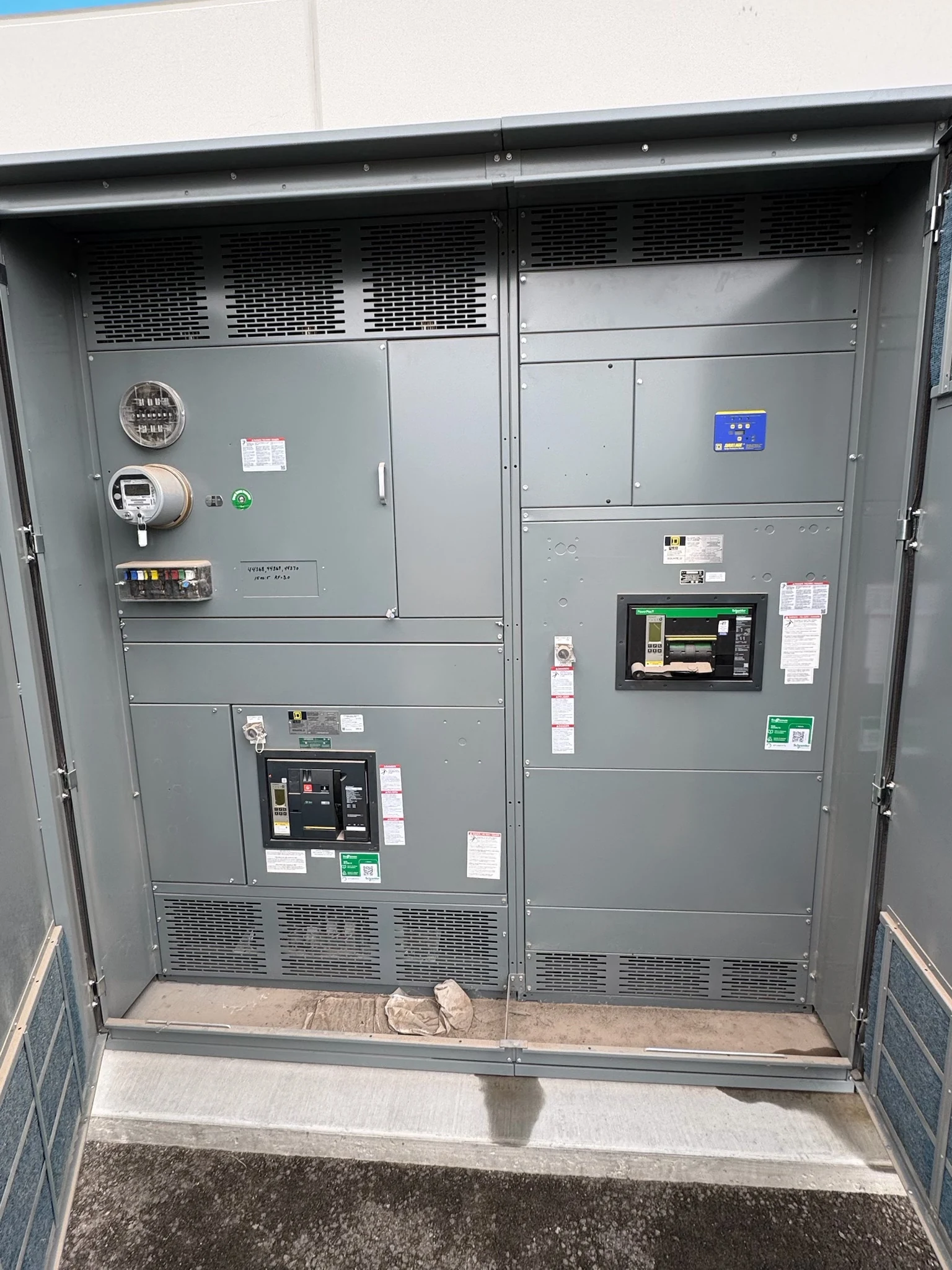
Show the intended location, enclosure environment, cable entry, conductor sizes and quantities, available termination space, access route and required working clearances. A compact transfer arrangement may save room but leave less flexibility for cable routing or future work. Coordinate any connection to a switchboard or campus feeder with the respective equipment drawings and installation responsibilities.
Controller power, generator start contacts, source-available signals, monitoring points and communications protocols must match equipment supplied by others. Specify who provides field wiring, programming and the network connection, and define alarm and loss-of-control-power behavior. Request the applicable product listing and verify that the proposed transfer equipment and assembly match the project’s requirements.
Schedule work around an occupied campus
The owner and electrical contractor should map affected buildings and stakeholders before selecting outage windows. Semester breaks can help, but housing, research, data services and events may continue when classrooms are quiet. Document the loads that need temporary power, available connection points, temporary-source capacity and the party responsible for approvals and temporary distribution.
Sequence design review, equipment approval, fabrication, delivery and site commissioning against those windows, allowing for procurement and review uncertainty rather than assuming a delivery date. Qualified personnel should perform installation, isolation, testing and energization under site procedures and applicable codes. The campus team should coordinate notifications, contingency arrangements and restoration with the contractor.
Buy for the next campus expansion
Include a load schedule distinguishing present demand from planned buildings, lab conversions or residence-hall additions. Reserve space and capacity only where the system design supports them; extra enclosure space alone does not establish spare electrical capacity. Future feeders, conductor terminations, protection and alternate-source capability should be reviewed as one expansion scenario.
For a useful direct-manufacturer quotation for new equipment, provide the one-line, sequence, site constraints, applicable standards, inspection requirements and target schedule. Ask for drawings showing ratings, terminals and scope boundaries, along with proposed factory checks and documented exceptions. Assign ownership of field connections, settings, integrated source testing and final records before placing the order.
LET'S BUILD SOMETHING RELIABLE — 03
Ready to talk
switchgear?
Tell us about the new equipment your project needs. Include as much or as little detail as you have today.
(951) 403-5738CALL TO DISCUSS YOUR PROJECT