
BUILT IN THE USA. READY FOR YOUR PROJECT.
Low-Voltage Switchgear for Commercial Buildings
A commercial building’s electrical distribution has to accommodate changing occupants without making every tenant alteration a building-wide event.
DIRECT FROM THE MANUFACTURER / NEW EQUIPMENT
THE MANUFACTURER’S PERSPECTIVE — 02
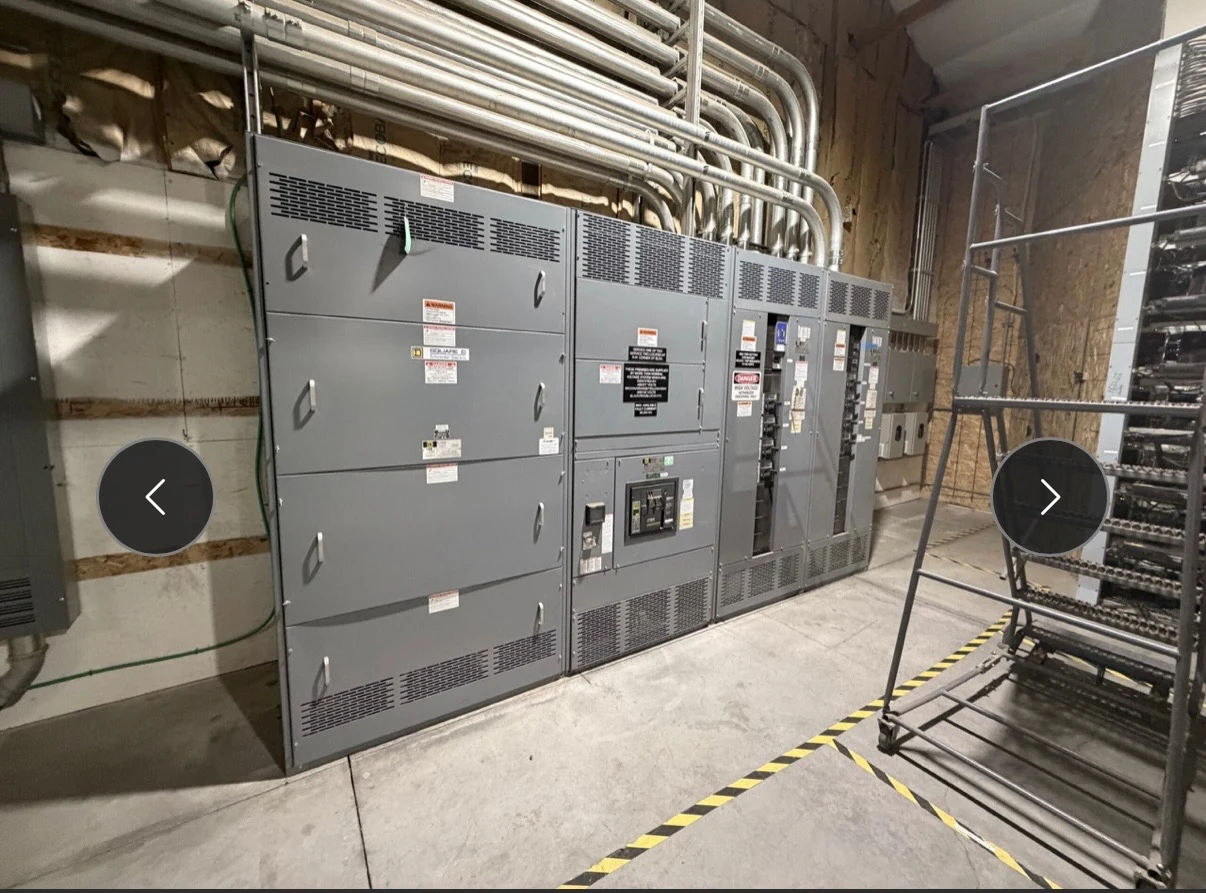
A commercial building’s electrical distribution has to accommodate changing occupants without making every tenant alteration a building-wide event. Low-voltage power circuit breaker switchgear can organize service and major feeders around those needs, but its value depends on fault duty, room constraints and the operating plan. Owners and specifiers should settle those interfaces before requesting a new assembly.
Design the lineup around tenant distribution
Begin with a one-line diagram and a load schedule identifying the service, major mechanical loads, common areas and proposed tenant feeders. Show present demand assumptions separately from connected load and anticipated changes. A building with divisible floors may need more feeder positions and flexible allocation than one with a single occupant, even if their calculated demand is similar.
Decide whether spare breakers, equipped spaces or space reserved for future sections justify their cost and footprint. An empty position is not an unconditional promise of future capacity: bus capacity, fault duty, physical fit and approvals still require review. Identify whether floor panels or busway will distribute tenant loads downstream and who supplies those connections.
Resolve service and metering boundaries
Before finalizing the service section, obtain utility requirements for the service arrangement, available fault current, metering equipment and access. The engineer and utility should agree on equipment ownership, service termination locations and the metering approval process. A utility interface that looks simple on a preliminary drawing can determine the section width and construction.
Distinguish utility revenue metering from the owner’s tenant submetering or building-management monitoring. Define which feeders need measurement, the required meter functions, instrument transformer arrangements, communications and responsibility for data integration. Where tenant billing is intended, confirm the applicable metering and billing requirements rather than assuming a monitoring meter is suitable.
Match protection to the operating objective
Provide the manufacturer with system voltage and configuration, calculated load, source information and a current short-circuit study or the data needed to prepare one. The engineer must check breaker interrupting duty and assembly withstand against available fault current and clearing times. On-site generation or future service changes can affect those calculations and should be disclosed.
Coordination is particularly important when a fault on one tenant feeder should not unnecessarily interrupt other occupants. A qualified engineer compares protective-device characteristics over the relevant fault range and identifies required settings and any coordination limitations. Emergency or legally required systems may have additional requirements; the design team should define those separately instead of treating all feeders alike.
Fit the equipment to the electrical room
An accessible, maintainable lineup may occupy more space than a compact arrangement. Compare fixed and drawout breaker construction where available, considering isolation provisions, maintenance strategy, access and cost. Provide room dimensions, ceiling and door restrictions, cable entry direction, structural limits and required working clearances. The manufacturer can then review a proposed layout against the project information.
Coordinate feeder quantities, conductor sizes, lug requirements and bending space with the installing contractor. Check the neutral design against the load profile, including nonlinear office and tenant loads, and identify grounding and bonding interfaces. Room ventilation and expected ambient conditions also matter because equipment performance depends on the actual installation and verified assembly ratings.
Plan delivery and outages around occupancy
For an occupied building, map the loads affected by each construction phase, including elevators, life-safety functions, tenant systems and common-area services. The owner, contractor and utility should agree on outage windows, tenant notices and any temporary power strategy. Temporary sources and their connection points need their own engineering, protection review and approvals.
The delivery plan should cover truck access, rigging, equipment dimensions, shipping sections and the route into the electrical room. Reserve time for field installation, inspection, testing and review before the planned service date. Switching, isolation, testing and energization belong to qualified personnel following the site’s safety procedures and authorization process.
Make the purchase scope reviewable
A useful request to a direct manufacturer includes the one-line, load and feeder schedules, utility criteria, fault-duty data, room constraints, intended construction and a target project schedule. For projects in San Antonio, South Texas or elsewhere nationwide, identify the applicable equipment standard, required listing and inspection criteria. UL 891 concerns switchboards; verify listing and scope for the assembly actually specified.
Compare proposals by drawings, protective devices, metering, factory tests, shipping splits, exclusions and revision control rather than price alone. Assign responsibility for utility approval, field cabling, protection studies, settings and commissioning. Agree on submittal review dates and document delivery requirements; design changes or component availability can affect the schedule, so confirm updates as the project develops.
LET'S BUILD SOMETHING RELIABLE — 03
Ready to talk
switchgear?
Tell us about the new equipment your project needs. Include as much or as little detail as you have today.
(951) 403-5738CALL TO DISCUSS YOUR PROJECT