
BUILT IN THE USA. READY FOR YOUR PROJECT.
Switchgear Suppliers Near Me
A search for a switchgear supplier near your project should answer more than a question of mileage.
DIRECT FROM THE MANUFACTURER / NEW EQUIPMENT
THE MANUFACTURER’S PERSPECTIVE — 02
A search for a switchgear supplier near your project should answer more than a question of mileage. A direct American manufacturer of new power-distribution assemblies can serve projects in San Antonio, South Texas and nationwide without a nearby office or factory. Compare the supplier’s ability to understand the electrical design, coordinate delivery and provide the documentation your project team needs.
Define what local support actually means
For one owner, proximity means a quick technical conversation with the person preparing drawings. For another, it means someone present for a site meeting or factory test. Ask which discussions can happen remotely, who will answer technical questions and whether any requested on-site support is included or must be arranged separately.
A supplier farther from the job may still be a good fit if shipping, review meetings and field handoff are clearly planned. Conversely, a nearby sales presence alone does not establish manufacturing capability or responsibility for installation. Confirm where work will be performed and how the parties will communicate before relying on an assumed local service.
Give each supplier the same electrical starting point
Send a current one-line diagram, load and feeder schedules, and the intended service arrangement. Identify system voltage, phase and wire configuration, expected continuous loads, future feeders and any source transfer or metering functions. Include available fault-current information from the utility or the project engineer, along with the assumptions and revision dates.
If information is missing, flag it rather than allowing bidders to guess silently. The engineer can resolve fault duty, protective coordination and applicable equipment standards as the design develops. Where a low-voltage switchboard is specified, ask about the applicability of UL 891 and verify the proposed assembly’s project-specific listing; other equipment requires its own standards review.
Verify the proposed manufacturing scope
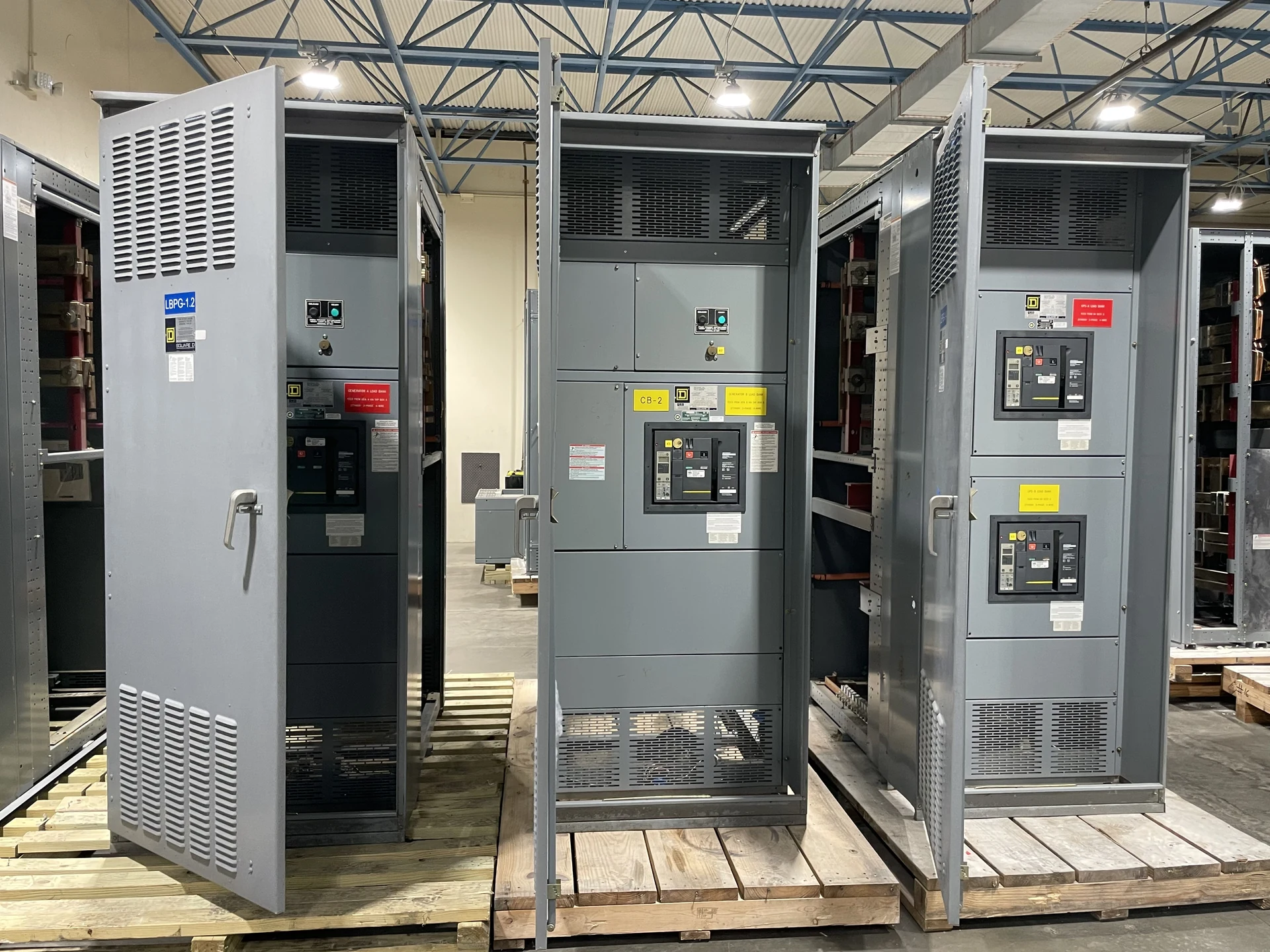
Buying directly from a manufacturer gives the project team a path to discuss the new assembly’s design and construction with the organization responsible for building it. Ask for a written scope identifying the proposed main and feeder devices, bus arrangement, enclosure, controls, metering interfaces and any assumptions about component availability.
Also establish who produces drawings and who reviews them. A useful submittal can include a one-line, elevations, connection details, device schedule and a list of exceptions to the specification. The design engineer remains responsible for the project’s overall electrical design and for coordinating the assembly with upstream and downstream equipment.
Compare proposals beyond the equipment price
A lower quote may exclude items another proposal includes. Compare freight, unloading, factory inspection or witness testing, documentation, spare components and any field assistance as separate line items. Check whether protective settings, a coordination study, installation and commissioning are included, assigned to others or expressly excluded.
Review deviations and proposed substitutions before making a selection. A different protective device or enclosure may affect fault duty, controls, listing or physical fit, even if the lineup appears similar on paper. Ask how design changes are priced and approved, and request clear commercial terms for schedule revisions, warranty and support.
Plan the route from shipment to equipment room
Provide the delivery address, receiving constraints and site access information early. Door dimensions, route obstructions, equipment-room layout, cable entry direction and required working clearances can influence the arrangement. For outdoor installations, describe the exposure and foundation interface; for indoor rooms, coordinate ventilation and heat rejection with the design team.
Ask the manufacturer for expected shipping dimensions, weights, lifting provisions and any proposed shipping splits as the design is developed. The contractor and rigging team should verify access and handling arrangements. Drawings should distinguish manufacturer-supplied connection provisions from field cables, anchors and other work furnished by the installation team.
Build a realistic approval and handoff schedule
Request a schedule showing engineering review, submittal approval, component procurement, fabrication, inspection and shipping as separate dependencies. Availability and approval cycles can change the sequence, so ask how revisions affect it rather than assuming a delivery promise. Coordinate utility review, permits and the contractor’s installation window with those milestones.
Before turnover, agree on the records required: final drawings, equipment instructions, applicable test results and identification of outstanding items. Qualified electrical personnel should plan installation, testing and energization under site procedures and applicable requirements. A well-defined handoff makes the distance between supplier and job less important than having clear responsibilities.
LET'S BUILD SOMETHING RELIABLE — 03
Ready to talk
switchgear?
Tell us about the new equipment your project needs. Include as much or as little detail as you have today.
(951) 403-5738CALL TO DISCUSS YOUR PROJECT