
BUILT IN THE USA. READY FOR YOUR PROJECT.
Low-Voltage Switchgear: Enclosure and Environment
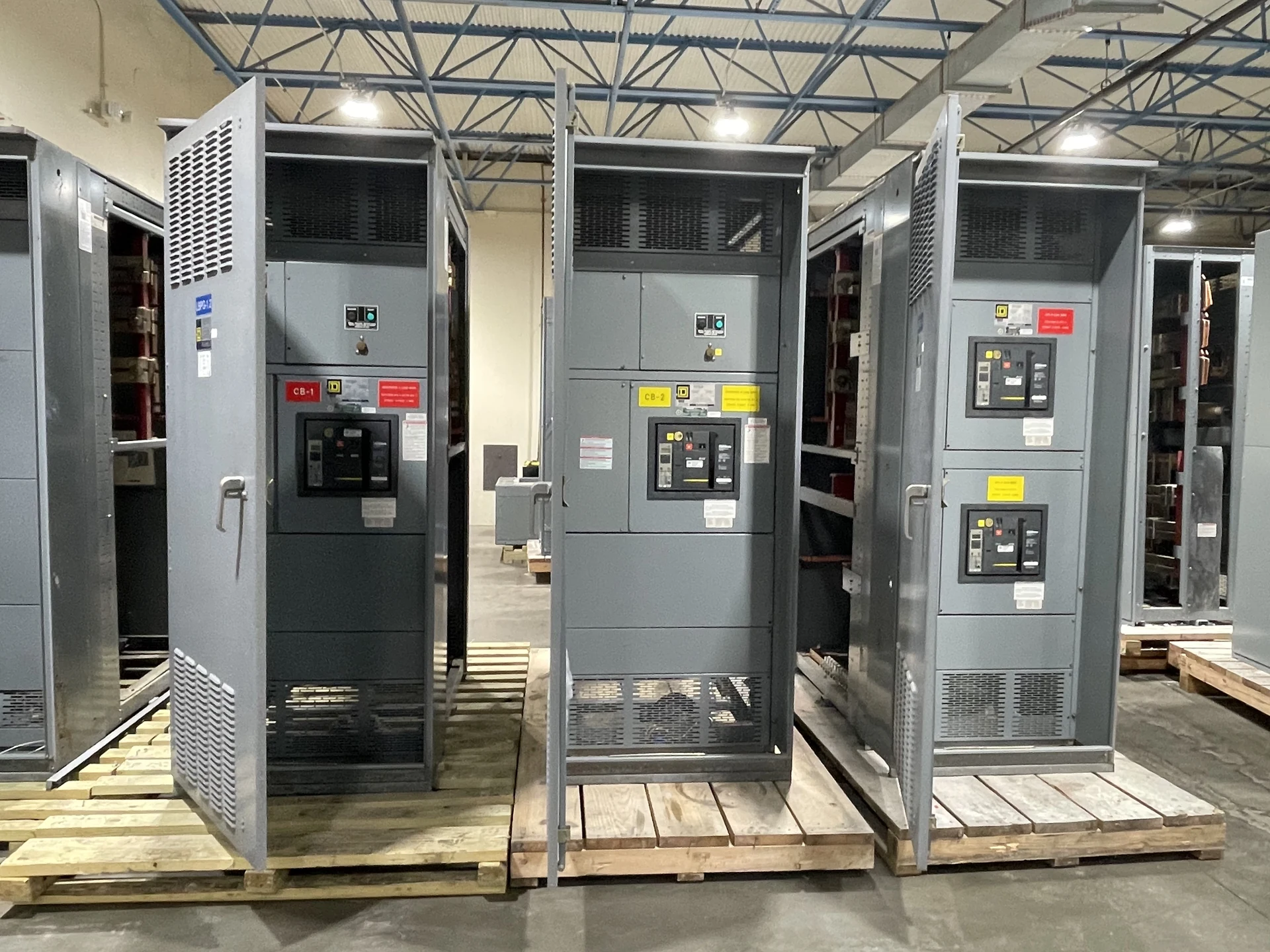
Low-voltage power circuit breaker switchgear does more than distribute current: its enclosure also shapes how heat leaves the lineup, how breakers are accessed, and how the assembly tolerates its surroundings.
DIRECT FROM THE MANUFACTURER / NEW EQUIPMENT
THE MANUFACTURER’S PERSPECTIVE — 02
Low-voltage power circuit breaker switchgear does more than distribute current: its enclosure also shapes how heat leaves the lineup, how breakers are accessed, and how the assembly tolerates its surroundings. For engineers, contractors, and purchasing teams, a useful specification starts with actual room or outdoor conditions, not a generic weatherproof label, and ties those conditions to the complete manufactured assembly.
Describe the exposure before choosing an enclosure
Tell the manufacturer whether the lineup will be indoors, outdoors, or beneath a shelter, then describe the environment rather than relying on location alone. Relevant inputs include ambient temperature ranges, humidity, altitude, airborne dust, corrosive chemicals, salt exposure, sunlight, rain, and potential flooding. Distinguish routine cleaning from direct washdown; a covered location can still experience wind-driven rain.
Specify the required enclosure designation and applicable standard with the design team. A NEMA enclosure type and an IP designation are not automatically interchangeable, and protection depends on the completed enclosure and its permitted openings. If the area is electrically classified as hazardous, identify that separately: an ordinary outdoor enclosure designation does not establish suitability for it.
Balance ingress protection with heat removal
Circuit breakers, bus connections, and other components release heat while carrying load. Supply the expected operating and future load conditions, including coincident demand and any significant nonlinear loads, along with the site ambient and elevation. Ask for equipment heat-dissipation information and the assumptions behind it so the mechanical engineer can evaluate the room or enclosure cooling.
Ventilated construction, filtered air paths, heat exchangers, or a conditioned electrical room may be considered where appropriate. Each changes the tradeoff among heat removal, ingress protection, maintenance, and space. Confirm that the proposed arrangement and operating environment are acceptable for the complete assembly; a field-added opening can undermine its evaluated construction and protection.
Plan for moisture and corrosion
Temperature swings can cause condensation even when rain cannot enter. Discuss whether enclosure heaters, humidity controls, or alarms are appropriate, including the source and continuity of their control power. Identify who provides the external supply and monitoring connections, and consider what happens during shipment, storage, or an extended period when auxiliary power is unavailable.
Corrosion protection should reflect the actual contaminants and maintenance environment. Describe chemical exposure, nearby processes, expected cleaning agents, and whether coastal air is a concern. The manufacturer can review enclosure materials, coatings, hardware, and ventilation components against those inputs; the buyer should request any specific finish requirements and inspection expectations rather than assuming one coating fits every site.
Make breaker access and cable routes fit
A compact footprint is not the same as a serviceable layout. Share room plans, ceiling restrictions, door openings, and access routes, and identify whether front or rear access is feasible. Allow the design team to review breaker withdrawal and handling space, doors, lifting devices, and applicable working and dedicated equipment spaces for the actual installation.
Show proposed top or bottom cable entry, conductor quantities and sizes, busway connections, and nearby obstructions. Termination and bending space can affect section depth and lineup length. Coordinate conduit entries, seals, supports, and any outdoor weather protection so field interfaces preserve the intended enclosure performance. Shipping splits and the route from unloading to the equipment pad also affect the layout.
Connect environmental choices to the electrical design
Include the one-line diagram, system voltage and configuration, load schedule, available fault-current information, protective-device requirements, and desired spare capacity with the environmental brief. Enclosure selection does not establish a breaker interrupting rating or the assembly fault duty. The responsible engineer and manufacturer must evaluate electrical ratings and environmental conditions together for the proposed construction.
Request drawings showing elevations, dimensions, access, cable entry, ventilation, auxiliary power, shipping weights, and anchorage interfaces. Ask which equipment standards and any required third-party listing apply to this specific switchgear design, and review supporting documentation and exceptions. Check that the heat-rejection and environmental assumptions on the submittal match the site information rather than merely the purchase description.
Set scope and schedule around the interfaces
A direct manufacturer serving San Antonio, South Texas, and nationwide can evaluate a new lineup against the project information provided. During quotation, compare not only the enclosure type but also the included heaters, ventilation, finishes, drawings, inspection, and shipping provisions. Confirm component availability and any requested US-origin sourcing rather than assuming either from the assembly description.
Agree on drawing-review dates, design freeze, delivery constraints, and responsibilities for foundations, room ventilation, field penetrations, auxiliary power, and acceptance testing. Late changes to openings or cooling can affect fabrication and approvals, so track their schedule impact with the manufacturer. Installation, testing, and energization belong to qualified personnel following applicable requirements, site procedures, and equipment instructions.
LET'S BUILD SOMETHING RELIABLE — 03
Ready to talk
switchgear?
Tell us about the new equipment your project needs. Include as much or as little detail as you have today.
(951) 403-5738CALL TO DISCUSS YOUR PROJECT