
BUILT IN THE USA. READY FOR YOUR PROJECT.
Low-Voltage Switchgear: Installation and Access
A low-voltage switchgear lineup must fit the electrical system and the route into its final room.
DIRECT FROM THE MANUFACTURER / NEW EQUIPMENT
THE MANUFACTURER’S PERSPECTIVE — 02
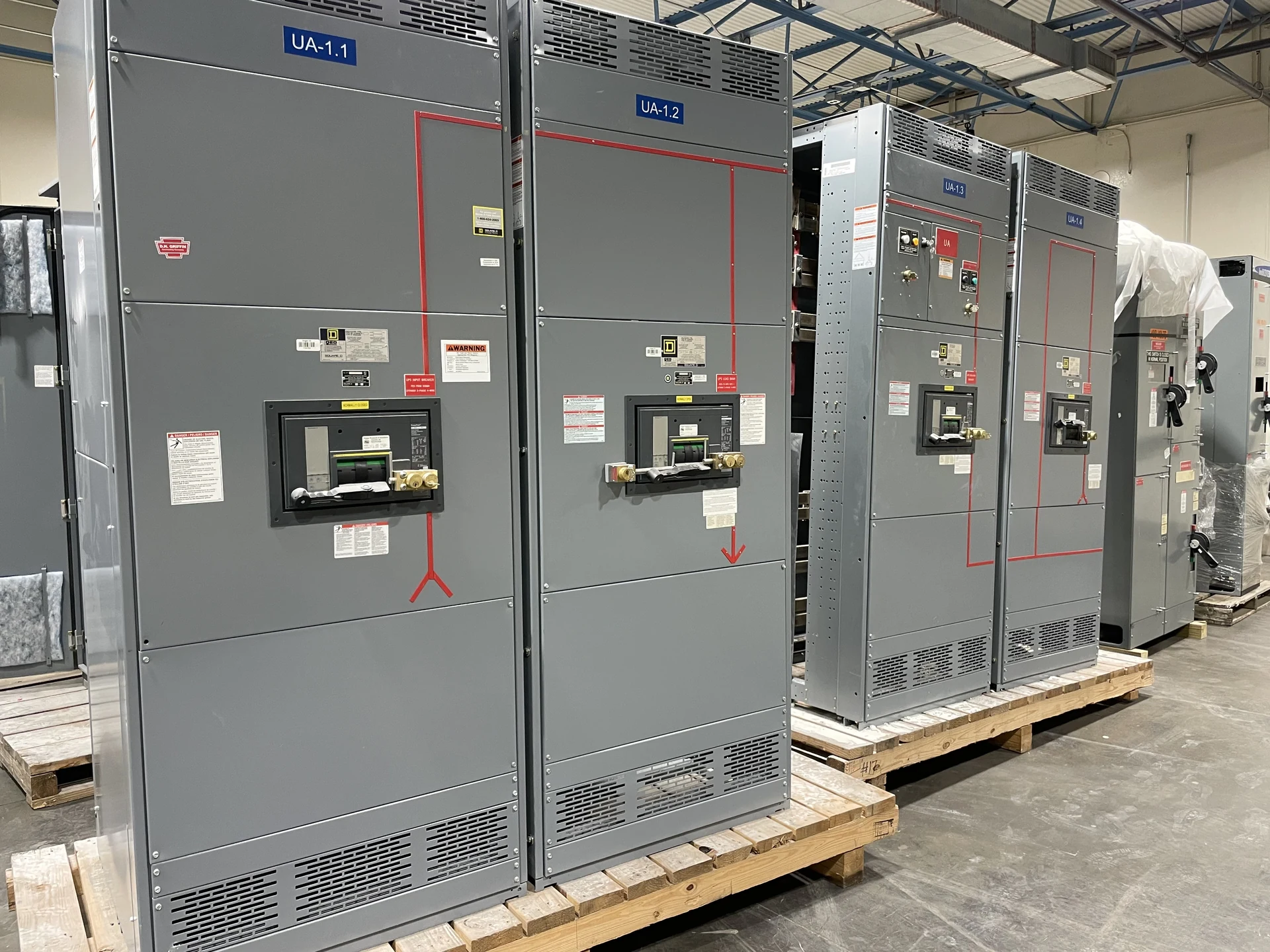
A low-voltage switchgear lineup must fit the electrical system and the route into its final room. For owners, engineers and contractors, installation planning starts before the equipment order: breaker access, cable geometry, shipping divisions and field work all influence the design. A direct manufacturer can coordinate these decisions with the project team serving San Antonio, South Texas or a site elsewhere in the United States.
Design the room around actual access
Provide the manufacturer with the room plan, finished floor elevations, door sizes, overhead restrictions and the proposed equipment position. Review the complete lineup footprint, including any end sections and projections. A compact arrangement may save floor space but leave less room for cable terminations or future feeder additions.
Ask for drawings showing door swing, required front and rear access, and the space needed to remove or handle drawout breakers where specified. The engineer and authority having jurisdiction should determine working space, dedicated equipment space and egress under applicable requirements. Front-access construction does not automatically eliminate every rear or side clearance.
Plan receiving before the truck arrives
Compare the building route with the proposed shipping sections, not just the assembled lineup. Measure the loading opening, corridors, turns, lifts and temporary obstructions, and check floor and elevator capacities against shipping weights. If a section cannot reach the room, a different shipping split or installation sequence may be needed.
Request section dimensions, weights, center-of-gravity information and approved lifting provisions with the submittals. The contractor and rigging professionals select suitable handling equipment and protect the gear during movement and storage. Coordinate foundation elevations, anchor locations, structural loads and any seismic criteria with the structural designer before concrete work is finalized.
Resolve cable entry and termination geometry
Specify whether each source and feeder approaches from above or below, and supply conductor material, size, quantity, insulation and raceway layout. The manufacturer can then review entry areas, termination provisions and bending space with the engineer and installer. Large parallel conductors may require a wider or deeper section than a preliminary one-line suggests.
Coordinate neutral and grounding conductor connections separately, including the number and type of terminals required. For a busway or transformer connection, exchange flange dimensions, phase arrangement, support details and tolerances with the mating equipment supplier. Proposed field modifications to entry openings should be reviewed for effects on the assembly and any project-specific listing.
Define what happens at field interfaces
Shipping splits can make delivery feasible, but they also introduce field alignment, bus connection and inspection work. Identify who supplies the joining materials and instructions, who performs the work, and what records are required. The manufacturer’s drawings should distinguish factory-completed connections from those left for the installation contractor.
Control wiring deserves the same attention as power cables. Identify control power sources, terminal assignments, interlocks, metering signals and any remote monitoring interface. Agree on the boundary between the switchgear supplier, controls contractor and commissioning team, including who checks the point list and witnesses functional tests.
Sequence the site work and safe handoff
For a new lineup at an occupied facility, the owner and contractor should map affected loads, construction boundaries, temporary power needs and requested outage windows. Align the equipment delivery with room readiness, rigging availability, installation, inspections and commissioning. Changes to building access or cable routes can affect the sequence even after drawings are approved.
Electrical installation, testing and energization belong to qualified personnel working under the site’s safety procedures and applicable requirements. The owner should arrange the necessary isolation, approvals and coordination with the utility when relevant. Final protection settings and any arc-flash analysis require project-specific engineering; equipment delivery alone does not establish readiness to energize.
Buy against a documented installation scope
A useful quote request includes the one-line, system voltage and grounding, load and feeder schedule, available fault-current information, required device functions, site conditions and room constraints. Identify applicable equipment standards and listing requirements for the specified assembly. Confirm the actual ratings and listing scope during the project review rather than assuming them from a generic product description.
Compare proposals for drawings, shipping splits, lifting information, field connection materials, tests, manuals and exceptions as well as equipment configuration. Confirm who supplies anchors, conduit, cables and commissioning services. Track drawing approval and component availability as schedule dependencies, and require revised interface drawings when an approved change affects footprint or connection locations.
LET'S BUILD SOMETHING RELIABLE — 03
Ready to talk
switchgear?
Tell us about the new equipment your project needs. Include as much or as little detail as you have today.
(951) 403-5738CALL TO DISCUSS YOUR PROJECT