
BUILT IN THE USA. READY FOR YOUR PROJECT.
Motor Control Centers: Testing and Documentation
A motor control center (MCC) groups motor starters, protective devices and control interfaces in one assembly, but a passing factory check does not prove that the entire process will work on site.
DIRECT FROM THE MANUFACTURER / NEW EQUIPMENT
THE MANUFACTURER’S PERSPECTIVE — 02
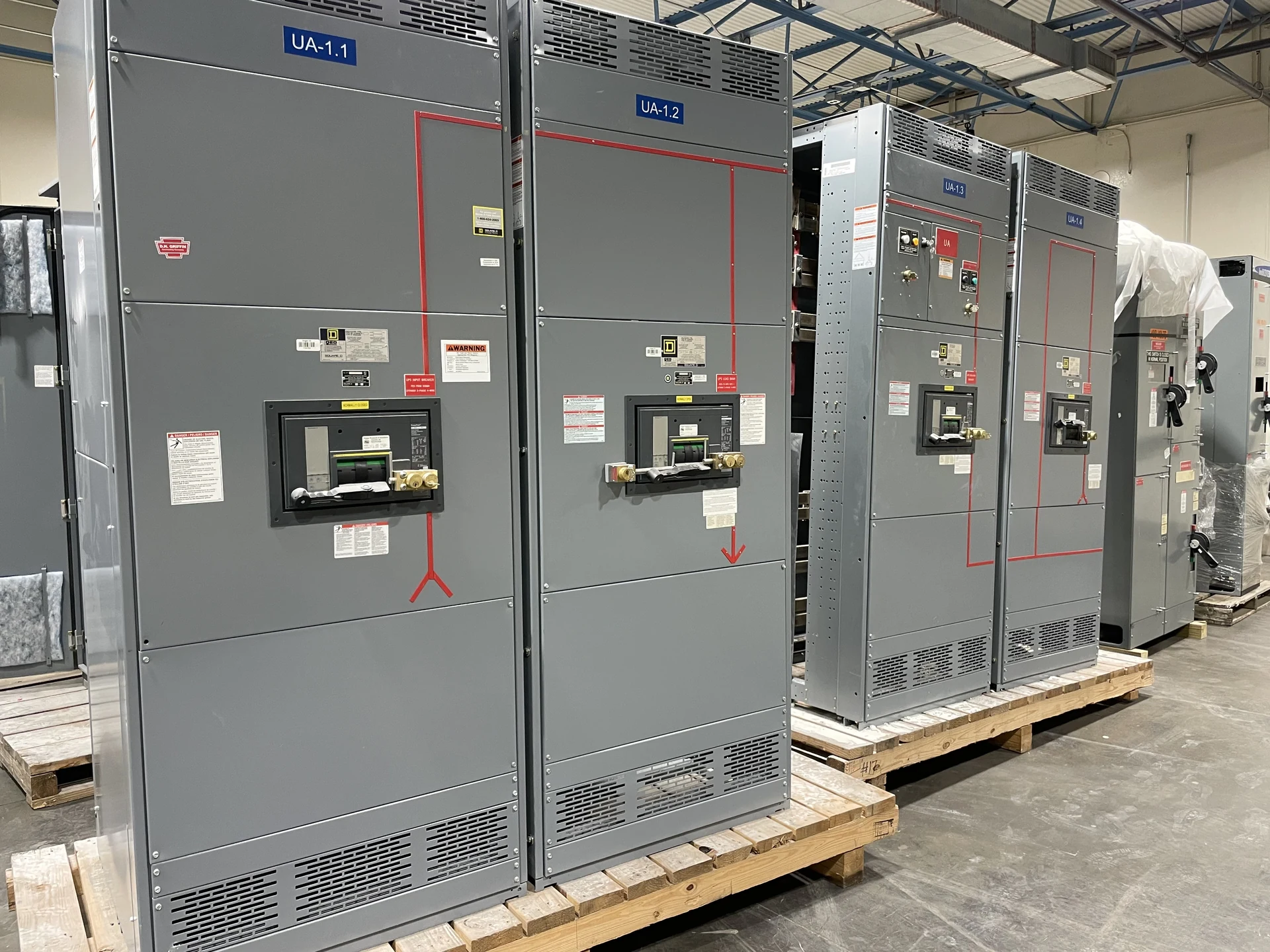
A motor control center (MCC) groups motor starters, protective devices and control interfaces in one assembly, but a passing factory check does not prove that the entire process will work on site. Owners, contractors and engineers should define what will be inspected, demonstrated and recorded before ordering a new lineup from a direct manufacturer serving San Antonio, South Texas and nationwide.
Start with the motor and control schedule
Provide the one-line diagram and a load schedule identifying each motor, its rated current and voltage, starting method, duty and destination. Identify the incoming supply, available fault current, grounding arrangement and any required short-circuit rating. The manufacturer and project engineer can then review whether the proposed incoming section, bus, feeder devices and starter units suit the specified application.
For each unit, describe control power, local and remote commands, overload protection, permissives, alarms and status feedback. A pump starter controlled by a level system, for example, needs a defined interface to that system; testing the starter alone cannot establish that the level sensors or field wiring are correct. Include communication protocols, point lists and ownership of external programming.
Agree on acceptance before production
Ask for a test plan that separates routine assembly checks from optional functional demonstrations, witness requirements and special reports. Identify the applicable drawing revision, acceptance criteria, test equipment and who can approve a deviation. Request a clear description of which units will be checked individually and which checks depend on simulated signals or external equipment.
Specify the applicable standard and any required listing early; UL 845 may be relevant to an MCC, but the listing agency, assembly marking and actual scope must be verified for the proposed equipment. A specification can require additional checks beyond a listing. Compare quotations on those added checks and witness arrangements, not on a generic promise of testing.
Inspect construction and electrical integrity
Visual and mechanical inspection can compare section arrangements, device identification, barriers, terminals, wire markings and accessibility with approved drawings. Document connection verification against the relevant component instructions and the assembly procedure. Such records help distinguish a production inspection from a later field check after shipping splits and site connections have been completed.
Electrical integrity checks may include protective bonding continuity and insulation resistance where appropriate to the design. Sensitive electronics and connected devices can affect what procedures are suitable, so qualified personnel should select methods consistent with component instructions and the agreed test plan. Record equipment identification, results and acceptance criteria; a single satisfactory reading is not a substitute for every required verification.
Demonstrate the control interfaces
Functional testing should follow an agreed sequence matrix: which command is presented, which permissive is assumed, what indication should appear and what response is expected if a permissive is absent. A factory demonstration can exercise specified control wiring and simulate external contacts without claiming that remote devices, connected motors or the complete plant process were tested.
Clarify how overload indications, interlocks and communication points will be verified, including any provision for loss-of-control-power behavior. If protective-device injection or trip verification is required, identify the method, device access and qualified party in the purchase scope. A successful start-command demonstration alone does not establish protection coordination or confirm the final field settings.
Make the records useful after delivery
Request submittals with the one-line, elevations, unit and device schedules, control schematics, terminal details and identified field connection points. Check that tags correspond to the motor list and that external interfaces and proposal exceptions are visible. Review the drawings for cable entry, control wiring separation and space constraints before approving release to manufacture.
At turnover, request the approved drawings with recorded changes, test reports, component instructions and a list of unresolved exceptions. Reports should identify the assembly, test date, relevant procedure, results and disposition of failures. The owner and engineer should separately retain the coordination study, approved settings and site commissioning records, with responsibility for final updates assigned in the contract.
Plan factory and site handoffs
Set review deadlines for the test plan and drawings, and allow time for witness scheduling, component availability and resolution of any failed checks. Additional communications demonstrations or third-party witnessing can improve confidence, but they add coordination and may affect cost and schedule. Confirm what evidence is required before shipment and how changes after approval will be documented.
Assign the installing contractor, controls integrator and commissioning team their respective field inspections, point checks and documentation. Site acceptance must address shipping condition, connections, actual control interfaces and the approved protection settings before the owner authorizes energization. All electrical work and testing belong to qualified personnel following site safety procedures and applicable requirements, not to an untrained equipment buyer.
LET'S BUILD SOMETHING RELIABLE — 03
Ready to talk
switchgear?
Tell us about the new equipment your project needs. Include as much or as little detail as you have today.
(951) 403-5738CALL TO DISCUSS YOUR PROJECT