
BUILT IN THE USA. READY FOR YOUR PROJECT.
Electrical Switchboards: Testing and Documentation
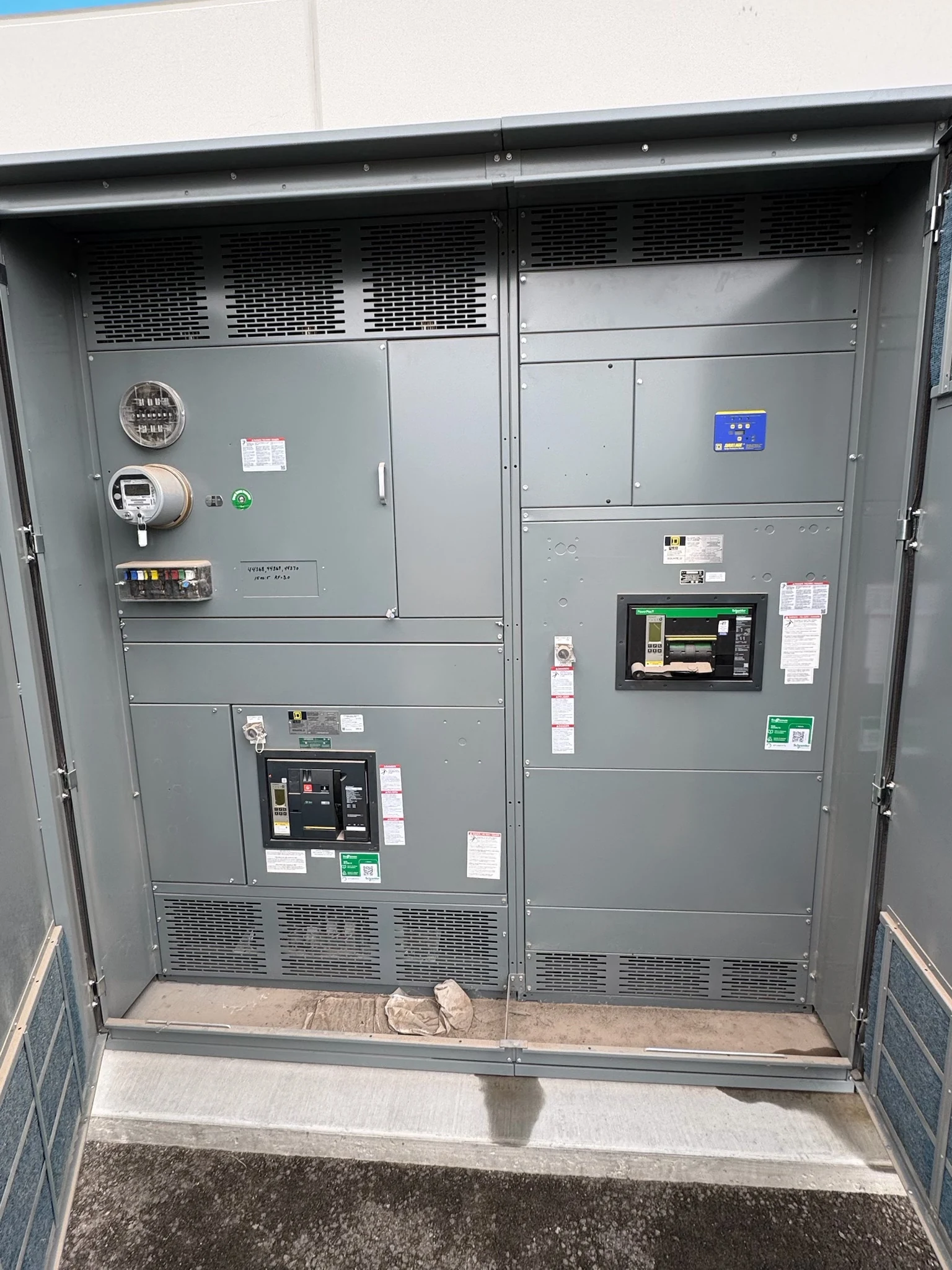
A low-voltage switchboard can distribute a service or feed several downstream loads, but a finished lineup still needs evidence that it matches the approved design.
DIRECT FROM THE MANUFACTURER / NEW EQUIPMENT
THE MANUFACTURER’S PERSPECTIVE — 02
A low-voltage switchboard can distribute a service or feed several downstream loads, but a finished lineup still needs evidence that it matches the approved design. Owners, engineers and contractors should agree on inspection, functional testing and records before ordering. A useful acceptance plan separates the checks performed on the new assembly from commissioning work that depends on field connections and the complete power system.
Set acceptance requirements before procurement
Give the manufacturer the current one-line diagram, feeder schedule, system configuration, available fault-current information and project specifications. Identify service-entrance requirements, metering, protective functions and any intended future circuits. These inputs establish what the switchboard must contain and which interfaces require verification; a generic test checklist cannot resolve missing design decisions.
In the purchase documents, name the applicable standards, inspections, test methods, acceptance criteria and record format. Specify whether the owner or engineer will witness tests and how advance notice and retesting will be handled. Additional witness points and customized reports can improve oversight, but they also add coordination and may affect the manufacturing schedule.
Review drawings and ratings as a connected package
Submittals should show the one-line, elevations, device and feeder schedules, wiring diagrams, cable entry, termination provisions and nameplate information. Compare the drawings with the approved load and short-circuit studies, not just the purchase description. A breaker’s interrupting rating alone does not establish the short-circuit rating of the complete assembly.
For a switchboard specified to be listed to UL 891, verify the proposed assembly’s project-specific listing and its scope, including any conditions on components or configurations. Listing is distinct from compliance with the full project specification and from local acceptance. Resolve exceptions and substitutions in writing before components are committed or drawings are released.
Inspect construction and physical interfaces
The inspection plan should compare the completed lineup with approved drawings: section arrangement, protective devices, circuit identification, barriers, grounding and bonding provisions, and accessible connection spaces. Check that shipping splits, lifting information and field connection details agree with the installation plan. A missing neutral termination or unexpected cable entry can delay a project even when the electrical devices are correct.
Mechanical and visual checks can document enclosure condition, assembly completeness and connections using approved procedures and manufacturer instructions. The plan should identify what was inspected, how deficiencies are recorded and who authorizes closure. Inspection is not proof of field fit unless the contractor has also checked actual room dimensions, clearances and incoming routes.
Choose electrical tests that answer a question
Factory electrical checks may include continuity, insulation resistance or dielectric testing where appropriate to the assembly and the approved test plan. The manufacturer should identify the procedure, test boundaries, acceptance criteria and treatment of sensitive connected devices. Insulation measurements are useful evidence of condition, but their interpretation depends on the equipment and test conditions.
A factory test does not reproduce every fault the switchboard may face in service or replace an engineering review of available fault current. Request records showing the tests performed and results against defined criteria rather than assuming every project receives the same test. Document any exceptions and corrective action before shipment is accepted.
Define the functional-test boundary
Where the design includes metering, control wiring or interlocks, agree which indications, signals and operating states will be demonstrated. For example, a factory test may verify a control circuit with simulated external inputs, while the actual building management system remains outside the factory boundary. A point list makes that distinction visible to both teams.
Protective-device testing deserves the same precision: distinguish a device check from verification of the complete sensing and tripping path. Specify ground-fault protection testing where applicable and assign responsibility for final settings based on the approved coordination study. The engineer, manufacturer and commissioning provider should identify any tests that cannot be completed until field interfaces are connected.
Coordinate site acceptance and final turnover
After delivery, the contractor and qualified testing personnel should plan receiving inspection, shipping-split connections, field wiring verification and commissioning against the project documents. Utility metering or service equipment may require separate utility and authority review. Factory results establish a baseline; they do not automatically verify work completed after shipment or authorize energization.
Schedule review comments, testing notices, discrepancy resolution and final records alongside installation milestones. The turnover package should identify the assembly and drawing revisions and include agreed test reports, approved settings, manuals, applicable listing information and outstanding items. Qualified persons must perform electrical work under site safety procedures, applicable requirements and manufacturer instructions; the owner should assign energization authorization explicitly.
LET'S BUILD SOMETHING RELIABLE — 03
Ready to talk
switchgear?
Tell us about the new equipment your project needs. Include as much or as little detail as you have today.
(951) 403-5738CALL TO DISCUSS YOUR PROJECT