
BUILT IN THE USA. READY FOR YOUR PROJECT.
Electrical Switchboards: Maintenance and Serviceability
A switchboard that fits the electrical design should also fit the way a facility will maintain it.
DIRECT FROM THE MANUFACTURER / NEW EQUIPMENT
THE MANUFACTURER’S PERSPECTIVE — 02
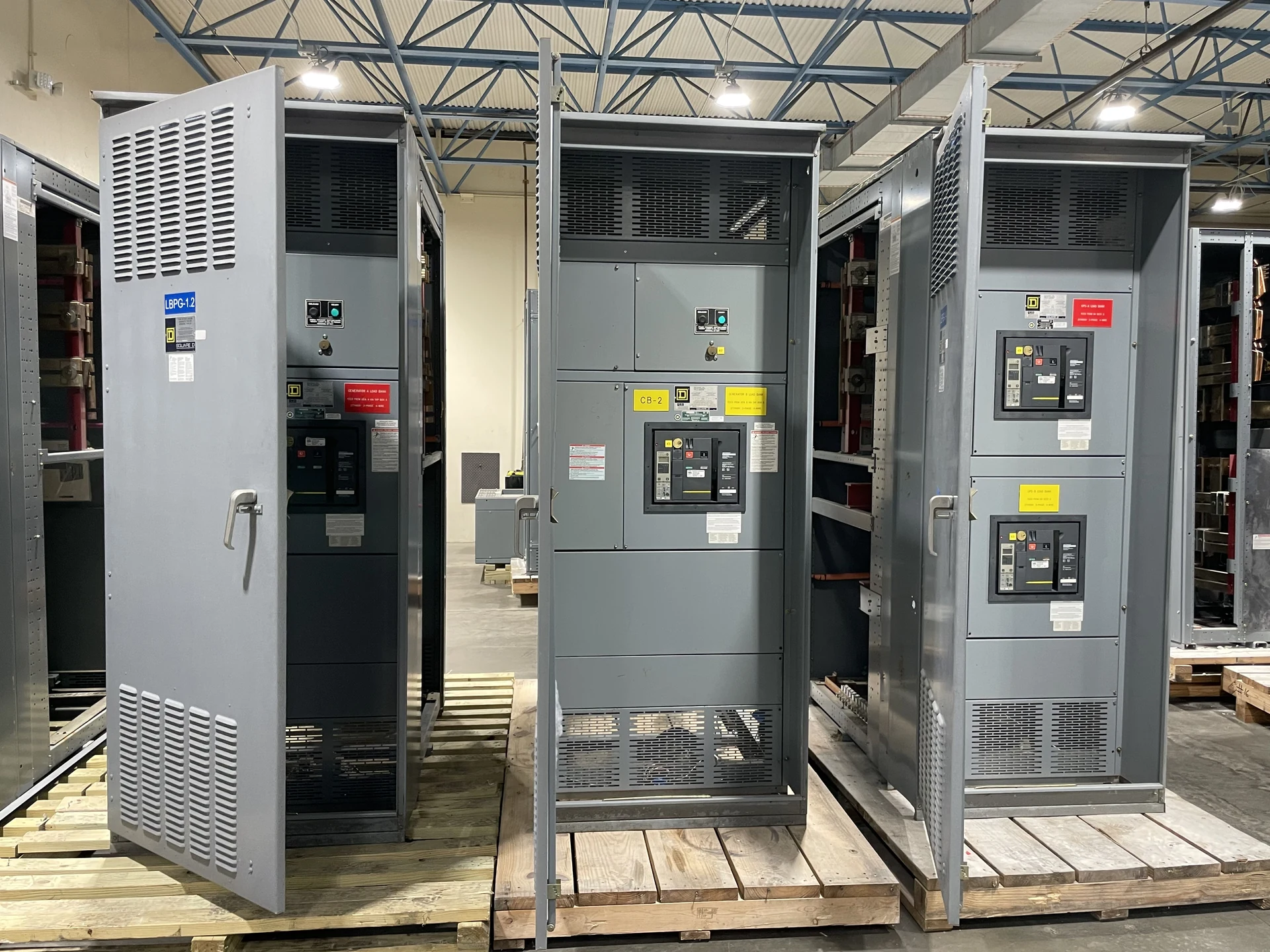
A switchboard that fits the electrical design should also fit the way a facility will maintain it. Owners, engineers and contractors can make that possible when ordering a new low-voltage assembly: map the sources, decide which loads can tolerate an outage, and reserve physical access before the lineup is built. Serviceability is a design decision, not simply a promise of convenient access.
Define what can actually be isolated
Start with a current one-line diagram showing the utility service, main device, distribution sections, feeders and any alternate sources. Identify critical loads and the outage boundaries the owner needs. A feeder disconnect may limit the loads affected by work on that circuit, but it does not automatically isolate the entire switchboard.
An open main device does not necessarily de-energize its incoming terminals, and generators, solar connections or control supplies may introduce additional sources. The engineer and owner should determine where isolation is possible, whether a utility outage is needed, and how switching and interlocks support the intended arrangement. Qualified personnel follow the site’s electrical safety program.
Design access around real tasks
Review the equipment elevation and plan against the actual room, door swing, cable entry and working-space requirements. Allow for removal of covers and devices, cable termination access, and the route for moving components through the building. The governing clearances depend on the installation and applicable code; a footprint alone is not enough.
Front-access construction can help in a constrained room, but verify which connections and components are actually accessible from the front. Barriers and separate compartments can improve organization and limit incidental contact, yet they do not by themselves establish an electrically safe work condition. Confirm the access arrangement and limitations on the approved drawings.
Compare device designs and spare parts
Fixed-mounted devices can provide a compact, straightforward arrangement, while removable or drawout devices, where available and suitable for the assembly, may simplify future component exchange. The latter can require more space and expense. Neither configuration eliminates the need to assess upstream energy, backfeed, and the specific work to be performed.
Ask for a device schedule with manufacturer and catalog identification, protective functions, and any permitted alternatives. Agree on which fuses, control components or other parts are sensible to stock based on criticality and availability. Compatibility, ratings and the assembly’s listing must be verified before selecting a replacement part; physical fit alone is not sufficient.
Plan for inspection and environmental conditions
The surrounding environment affects service effort. Dust, humidity, corrosive exposure and restricted ventilation can change the inspection plan and influence enclosure selection. Give the manufacturer the installation location and expected conditions, including indoor or outdoor exposure, so the enclosure, ventilation and any condensation controls can be evaluated together.
Discuss whether metering, status indications or remote monitoring would help staff identify abnormal trends without unnecessary intervention. These features add wiring, communication interfaces and maintenance obligations of their own. The owner should assign responsibility for interpreting data and arranging any follow-up assessment; a normal indication does not prove equipment is safe to work on.
Specify useful turnover records
Request approved one-lines, elevations, wiring diagrams, component schedules, identification labels, and the applicable operating and maintenance instructions. Include factory inspection and test records within the agreed scope. If a UL 891 listing is specified for an appropriate switchboard assembly, verify the proposed assembly’s actual listing and any conditions that affect field modifications.
Protective device settings and coordination studies often belong to the project engineer or another designated specialist, not automatically to the assembly manufacturer. Establish who provides final settings, site test results, and updated drawings after installation. Those records give future technicians a reliable baseline and clarify where the manufacturer’s supply ends and field work begins.
Build maintenance into the project schedule
Set maintenance priorities before final design approval. For example, a facility that cannot interrupt a production feeder during normal hours may need a different source arrangement or an owner-coordinated outage plan. More segregation or redundancy can reduce operational disruption, but adds equipment, space and coordination costs that should be compared in the quotation.
Identify review milestones for drawings, component procurement, factory testing, delivery and commissioning, then allow time for the owner to plan outages and qualified personnel. Ask for assumptions and exclusions in writing rather than treating a proposed ship date as a guarantee. Maintenance intervals and tasks should follow applicable instructions, site conditions and the owner’s safety procedures.
LET'S BUILD SOMETHING RELIABLE — 03
Ready to talk
switchgear?
Tell us about the new equipment your project needs. Include as much or as little detail as you have today.
(951) 403-5738CALL TO DISCUSS YOUR PROJECT