
BUILT IN THE USA. READY FOR YOUR PROJECT.
Low-Voltage Switchgear: Maintenance and Serviceability
A low-voltage power circuit breaker switchgear lineup should be specified not only for the day it is energized, but also for the maintenance it will need over its working life.
DIRECT FROM THE MANUFACTURER / NEW EQUIPMENT
THE MANUFACTURER’S PERSPECTIVE — 02
A low-voltage power circuit breaker switchgear lineup should be specified not only for the day it is energized, but also for the maintenance it will need over its working life. Owners, engineers and contractors can use the purchasing stage to decide what must be isolated, how breakers will be accessed and which records and components should accompany a newly manufactured assembly.
Start with the operating and maintenance plan
Provide the manufacturer with a current one-line diagram, system voltage and grounding arrangement, load and feeder schedule, available fault-current information, protective-device requirements and anticipated expansion. Identify essential loads, acceptable outage windows and any alternate sources. This information helps the design team evaluate whether the proposed arrangement supports the owner’s maintenance objectives without assuming every feeder can remain energized.
For a new lineup serving an existing facility, document connection locations, room dimensions and upstream isolation responsibilities as well. A main-tie-main arrangement, for example, may offer different maintenance possibilities from a single-main arrangement, but continuity depends on source capacity, protection, interlocks and the approved operating plan. Extra sections and devices can also increase footprint, complexity and procurement cost.
Design isolation around every source
Ask the engineer to identify the boundaries of each intended maintenance zone, including incoming service, generator or other alternate-source connections, feeder backfeeds and separately supplied control power. Define which disconnecting means and interlocks are part of the new assembly and which are supplied elsewhere. A breaker open position alone should not be treated as proof that an entire compartment or lineup is electrically safe.
The owner’s qualified electrical personnel must plan and perform isolation, lockout/tagout and verification of an electrically safe work condition under applicable requirements, site procedures and equipment instructions. Remote controls, indications and interlocks can support an operating strategy, but they do not replace that process. Review abnormal states and loss of control power before the layout and control logic are approved.
Make physical access a design input
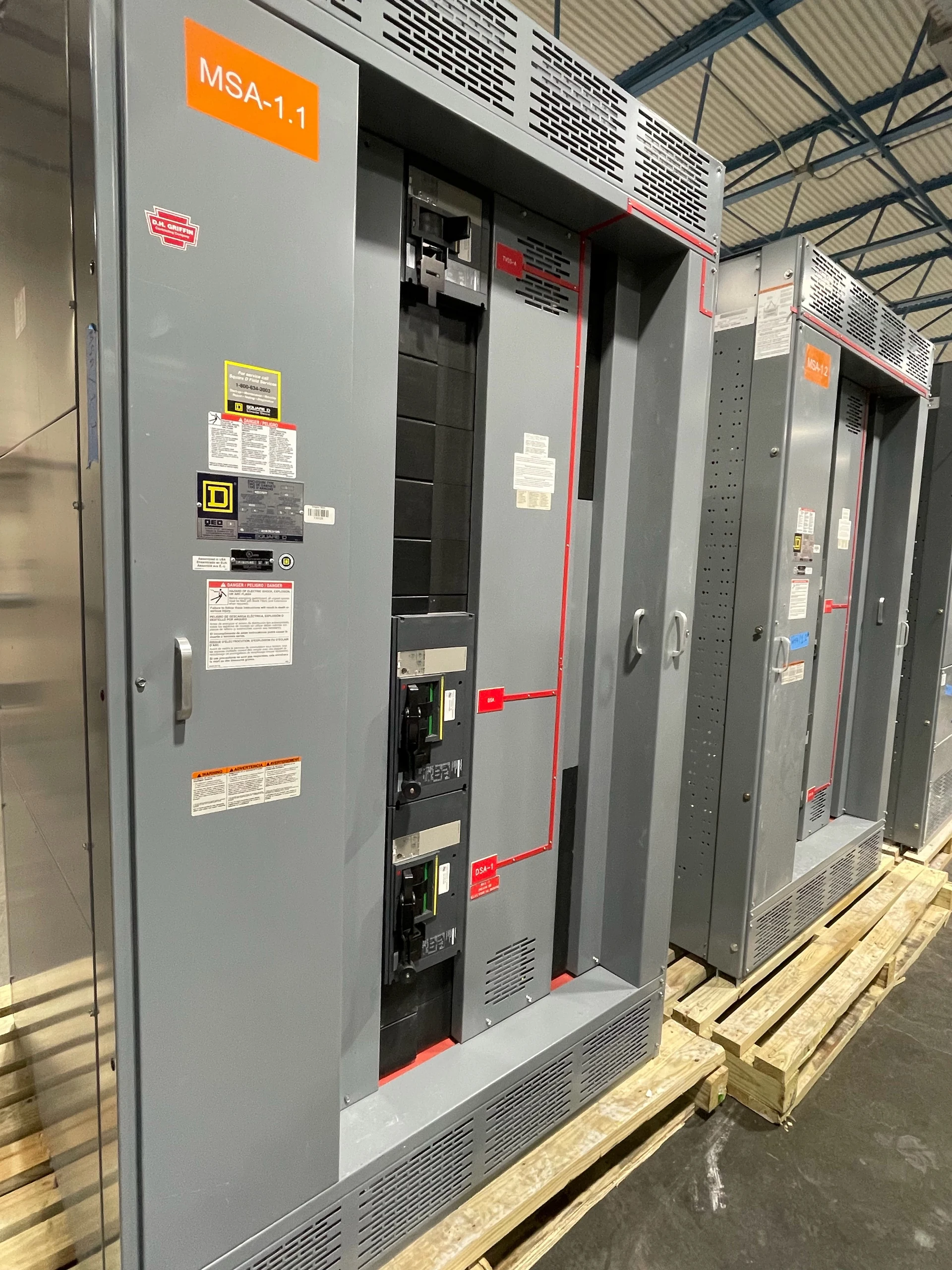
Drawout power circuit breakers can support removal for inspection or replacement where the selected assembly is designed for that arrangement. Fixed-mounted equipment may use less space or involve a different initial cost, but it can require a broader outage for comparable access. Confirm the actual device construction, compartmentation, shutters and interlocks rather than assuming all switchgear provides identical features.
Review equipment elevations and the room plan for door swing, rear access where required, breaker withdrawal, lifting equipment, cable bending space and the path to a maintenance area. Allow for applicable working clearances and the manufacturer’s service requirements; neither can be established by a generic floor-plan allowance. Access provisions must not undermine enclosure performance, ventilation or the approved assembly design.
Choose maintainable devices and spares
Build a project-specific spare-parts list around consequences of failure, replacement availability and the maintenance plan. Possible candidates include compatible trip units, closing or trip coils, auxiliary contacts and control components. Where a spare breaker is justified, document its approved frame, electrical duty, mounting, control interfaces and interchangeable positions; physical resemblance is not evidence of compatibility.
Ask for part numbers, revision or configuration information, storage requirements and the process for confirming future substitutions. Specify required domestic component origin separately and verify sourcing and availability for the proposed bill of materials. More spares tie up funds and need controlled storage, while too few can extend an outage if a critical component is unavailable.
Specify the records technicians will need
Request approved one-line and three-line diagrams as applicable, general arrangement drawings, schematics, wiring and terminal details, device schedules, nameplate information and installation and maintenance instructions. Include the approved protection settings or a clear assignment for the study provider to supply them. Identify control-power sources, alarms, communication points and interfaces with the facility monitoring system.
Agree on factory inspection and functional-test scope, acceptance criteria and test records before release. Commissioning results and any field changes should be added to the turnover package so future qualified personnel can compare equipment condition against a documented baseline. Confirm the applicable product standard and any required listing for this specific assembly rather than assuming a switchboard designation applies to power circuit breaker switchgear.
Coordinate procurement and turnover
When requesting a quote from a direct manufacturer, separate included equipment and factory testing from field installation, protective studies, settings, site acceptance tests and operator training. State who supplies lifting arrangements and who updates drawings after field changes. This makes competing proposals easier to compare and exposes gaps between manufacturer, contractor, engineer and owner.
Build the schedule around design review, submittal approval, component availability, fabrication, testing, shipment and the owner’s planned outage; confirm actual milestones with the project team rather than relying on a standard lead time. Before turnover, establish the responsible maintenance organization, access to documentation and a site-specific maintenance program based on operating conditions and manufacturer guidance. The manufacturer serves projects in San Antonio, South Texas and nationwide.
LET'S BUILD SOMETHING RELIABLE — 03
Ready to talk
switchgear?
Tell us about the new equipment your project needs. Include as much or as little detail as you have today.
(951) 403-5738CALL TO DISCUSS YOUR PROJECT