
BUILT IN THE USA. READY FOR YOUR PROJECT.
Electrical Safety Around Switchgear
Switchgear safety starts before anyone approaches an electrical enclosure.
DIRECT FROM THE MANUFACTURER / NEW EQUIPMENT
THE MANUFACTURER’S PERSPECTIVE — 02
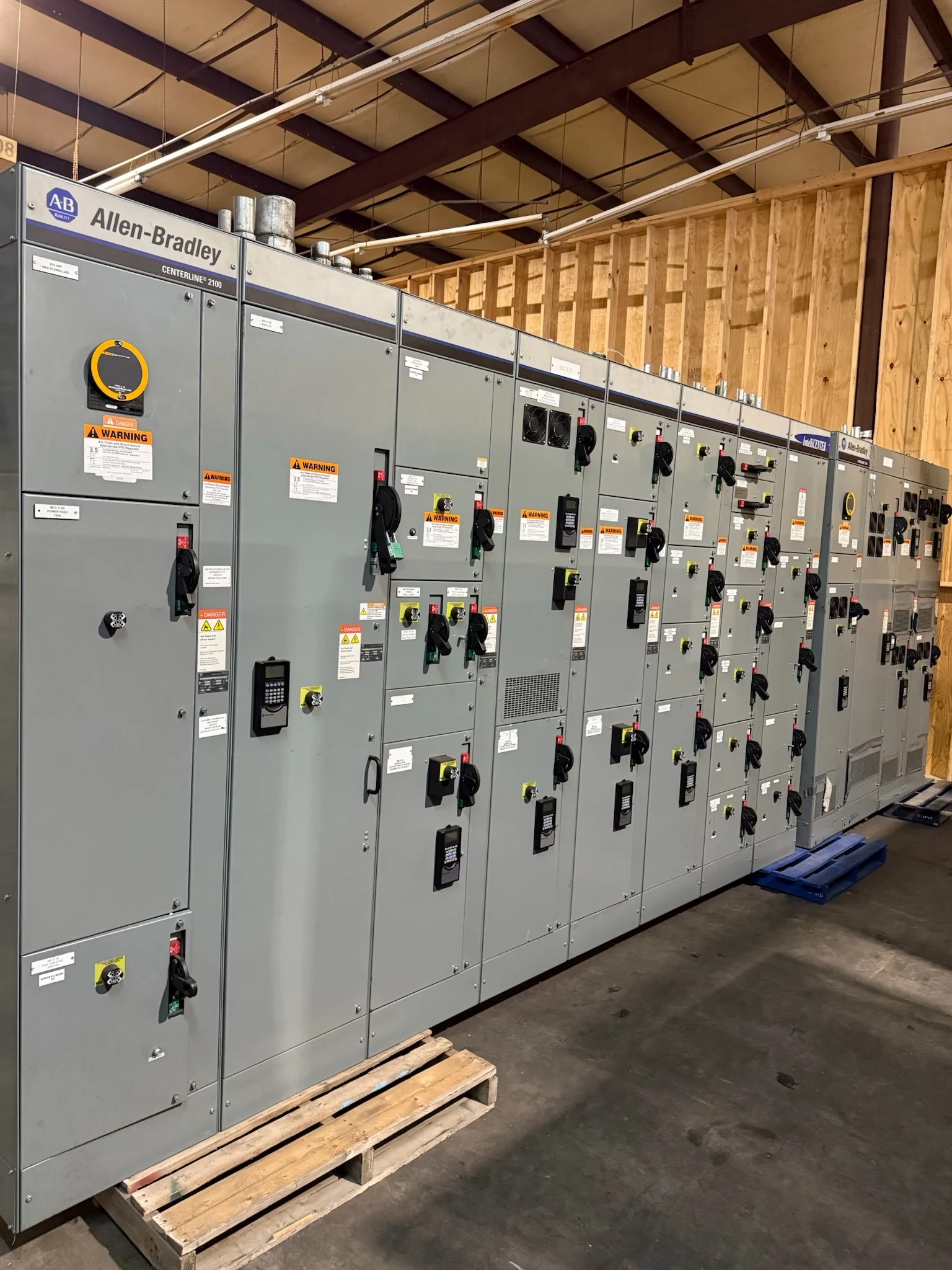
Switchgear safety starts before anyone approaches an electrical enclosure. Designers, contractors and facility owners need a common understanding of the work, the power sources and the people authorized to act. A new assembly can support safer work through thoughtful design and clear information, but equipment features do not replace a site safety program or qualified judgment.
Assess the task, not just the equipment
Risk depends on what a person must do, the equipment condition and the potential exposure. A routine visual check from an appropriate location is different from work that exposes electrical parts. Shock, arc flash and unexpected equipment movement can present distinct hazards; identify the people and nearby activities that could be affected.
The employer should assign people qualified for the particular equipment and task, not merely assume that a general electrical credential covers every situation. Applicable OSHA rules, the site electrical safety program and relevant NFPA 70E guidance inform planning. Protective equipment is one layer of protection, not a substitute for eliminating exposure where possible.
Plan isolation and account for every source
OSHA electrical work-practice rules generally require exposed live parts to be deenergized before an employee works on or near them, unless an applicable exception applies. Energized work is not simply a schedule choice. The employer must determine the justification, authorization, safeguards and qualified personnel required for the particular situation.
A site plan must address utility supply, generators, interconnected sources, control power and possible backfeed, along with stored energy. Qualified persons use the applicable lockout and verification procedures to establish the required safe condition. A switch position, status light or interlock alone does not establish that an area is safe to work in.
Make access and protection design decisions early
Provide the manufacturer and specifying engineer with the intended operating and maintenance tasks. The arrangement of barriers, access doors and compartments can affect what is exposed during a task. Remote operation may reduce some worker exposure, but its benefit depends on the task, equipment condition and site procedures; it is not a blanket safety guarantee.
Consider working space, equipment removal paths, lighting and access alongside the electrical room layout. More separation or compartmentation can require additional space and affect cost. Discuss practical options during design review rather than assuming a particular construction feature eliminates the need for isolation or satisfies every clearance requirement.
Keep study inputs and labels current
The project engineer and qualified study provider need a current one-line, source information, available fault current, equipment data and protective-device settings. Generator and utility operating modes may produce different conditions. Missing clearing times or outdated settings can change an arc-flash assessment, so identify who will obtain and verify each input.
Confirm responsibility for the study, warning labels and later updates in the project scope. An equipment label communicates information for a defined system condition; it does not by itself make work safe. Changes to sources, protection or settings should trigger the facility’s review process and any revisions the applicable program requires.
Compare proposals against the safety interface
For a new assembly, provide the direct manufacturer with the one-line, required ratings, enclosure environment, incoming and outgoing connections, and the operating philosophy. Request drawings showing access, device arrangement and control interfaces. State which protective functions, interlocks and remote-control features are required, and ask for exceptions to be identified.
Compare proposals by the actual assembly scope, documentation and interfaces, not by a safety feature name alone. Ask whether proposed devices and arrangements suit the reviewed system duty and required listing, where applicable. Define who supplies protective settings, field wiring, studies and commissioning so that a purchasing gap does not become a site hazard.
Coordinate outages and handover
Contractors, the owner and any affected utility should coordinate outage windows, neighboring equipment, critical loads and possible alternate supplies before installation. Reserve time for drawing review, site preparation, field testing and approval to energize. Unresolved interfaces or late design changes can affect the sequence, so update the schedule as project decisions are made.
At turnover, identify who receives final drawings, equipment manuals, test records, settings information and open issues. The owner should incorporate these records into its operating and safety program and arrange task-specific training. Site personnel and their employers retain responsibility for safe field work and authorization; manufacturer documentation supports, but does not replace, those decisions.
LET'S BUILD SOMETHING RELIABLE — 03
Ready to talk
switchgear?
Tell us about the new equipment your project needs. Include as much or as little detail as you have today.
(951) 403-5738CALL TO DISCUSS YOUR PROJECT